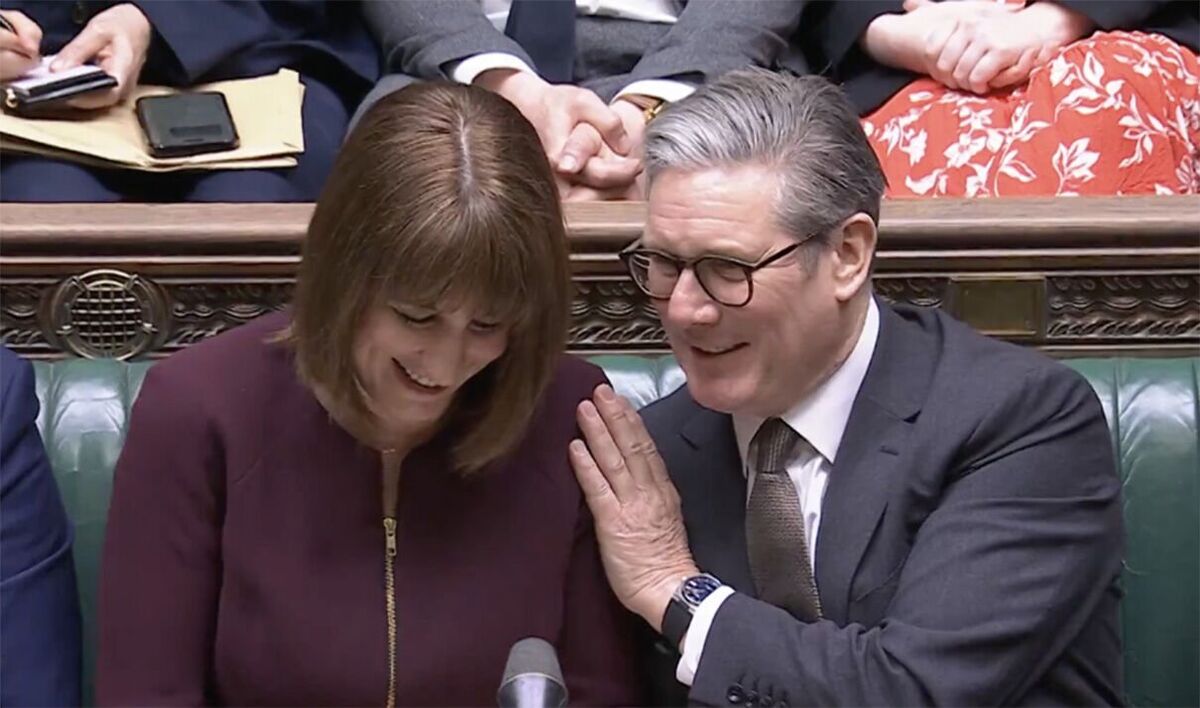
Andy Burnham’s second Prime Minister’s Questions produced a sentence which may prove more revealing about his premiership than he intended.
Challenged by Kemi Badenoch over defence spending, he insisted that Britain must support its national security, “but it can’t come at the expense of social security”.
It was a very Burnham answer. A question about defence had somehow arrived at housing, homelessness and the pressures facing families. It also raised eyebrows around Westminster. Armies, missiles and intelligence services cannot normally be financed with good intentions about social cohesion.
But there was an intriguing echo from another Labour government, 57 years ago.
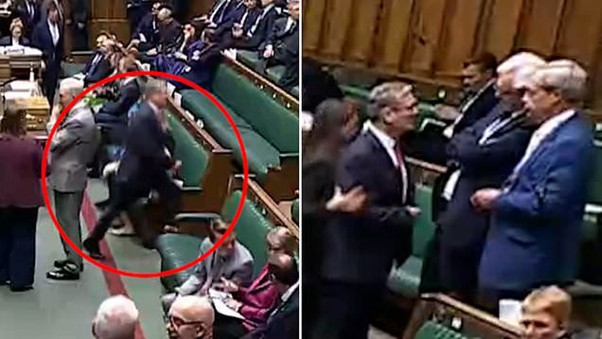
From the Press Gallery, a familiar pattern emerged: precise questions on Mandelson, evasive answers from the Prime Minister, and a growing sense that judgement, not just politics, is now under scrutiny.
By Adel Darwish
From the Press Gallery, certain patterns are becoming increasingly predictable. Prime Minister’s Questions, once an arena of sharp exchange and occasional clarity, now often follows a familiar script: questions asked, answers diverted, and the argument redirected elsewhere. This week, however, the pattern mattered — because it went to the question of judgement at the top of government.
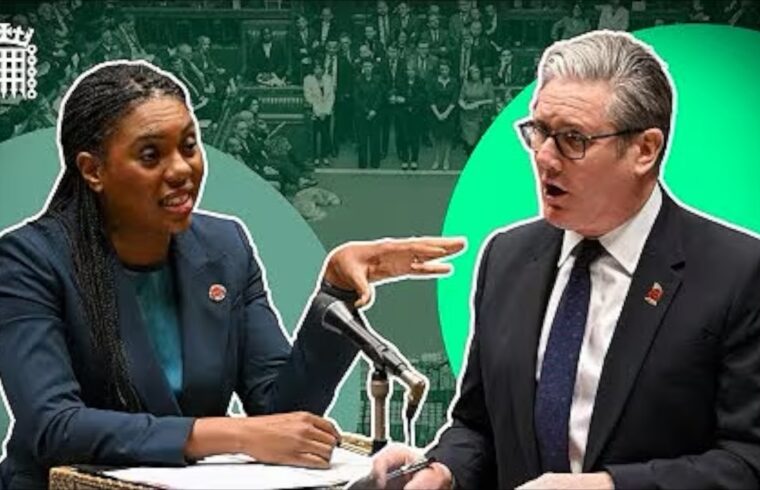
Kemi Badenoch used all six of her allotted questions to focus on the appointment of Peter Mandelson as ambassador to Washington. Drawing on material released under a Humble Address, her questions were structured to test the Prime Minister’s judgement and the basis on which the appointment had been made, and to probe whether his account to the House could be sustained.
Her line of argument was precise: to establish what the Prime Minister knew, what questions he had asked, and how he could now claim that Peter Mandelson had misled him. If, as Starmer suggested, Mandelson had not been truthful about his past association with Jeffrey Epstein, then the obvious question followed: had that issue been put to him directly at the time of the appointment?
The Prime Minister did not engage with that line of questioning. Instead, he repeatedly shifted the exchange onto Badenoch’s stance on the Iran conflict, accusing her of inconsistency and attempting to recast the session as a debate on foreign policy. By his sixth answer, the tone had hardened into outright attack, extending criticism to Reform UK and what he characterised as its proximity to positions he associated with the far right.
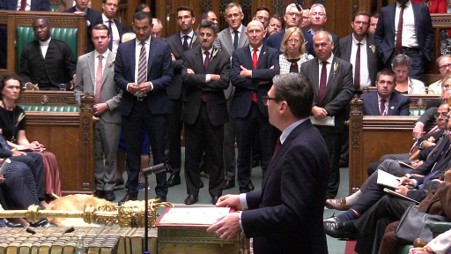
The Speaker intervened twice. On the first occasion, he reminded the House that he was not responsible for the Prime Minister’s replies. On the second, the rebuke was sharpened: nor was he responsible for the questions from the Leader of the Opposition. The message was unmistakable — that the exchange was failing to address the substance of what had been asked.
From the gallery, the reason for that pattern was not difficult to discern. The Prime Minister appeared acutely aware of the risks of what he said — and what he chose not to say. Having already faced questions about the Mandelson appointment, his answers at the despatch box now carry potential weight beyond the chamber. With further papers released under a Humble Address, any inconsistency between what he knew at the time and what he told Parliament could invite the most serious accusation in Westminster: that of having misled the House. That risk may explain the caution — and, at times, the conspicuous evasiveness — that marked his responses.
The difficulty for Downing Street is that the Mandelson affair is not an isolated embarrassment but a question of judgement. Documents now in the public domain indicate that warnings were raised about the reputational risks of the appointment. Yet the decision went ahead, and has since unravelled with striking speed. The subsequent financial settlement, agreed at £75,000, has reinforced the political impression of a decision taken against advice and corrected only under pressure.
That question of judgement extends beyond personnel into policy, particularly in energy. The latest tensions in the Gulf — including attacks on gas infrastructure, have revived concerns about supply vulnerability at precisely the moment Britain’s domestic capacity has been scaled back. Critics argue that successive governments once drew the opposite lesson from earlier crises, maintaining both a strategic naval presence in the region and a degree of domestic resilience. The current approach, which combines reduced North Sea production with continued reliance on imports, is now being tested under pressure. At such moments, the balance between long-term transition and immediate security becomes less theoretical and more immediate.
In another era, a foreign crisis might have provided political cover. Governments have often found that external threats rally domestic support and soften internal divisions. This time, the effect has been more limited. While the Prime Minister’s cautious stance on the conflict with Iran broadly reflects public sentiment, it has not translated into any discernible political dividend. Nor has it eased strategic uncertainty. Britain’s role in the region appears more constrained than in previous decades, when a quieter but consistent naval presence helped secure key shipping routes. The contrast is not merely nostalgic; it raises questions about capability as well as policy.
More troubling for Downing Street is that the pressure is no longer confined to the opposition benches. Within Labour, signs of unease are becoming more visible. Angela Rayner’s recent intervention, widely interpreted as a challenge to elements of the government’s economic direction, has underscored the extent to which internal consensus cannot be taken for granted. At the same time, many Labour MPs have signalled resistance to proposed changes in welfare policy, warning that they may not support measures to curb or freeze benefits. These are not yet coordinated rebellions, but they point to a party that is beginning to test the limits of its own leadership.
Even among Labour-leaning commentators, the tone has shifted. Sympathy for the government’s early difficulties has given way to a more questioning assessment of its choices and priorities. That, perhaps, is the more subtle change. Governments can weather opposition attacks; they find it harder to navigate scepticism from those broadly inclined to support them.
The Prime Minister therefore faces a convergence of pressures: scrutiny over decisions already taken, uncertainty over policies still unfolding, and a party that is no longer entirely aligned behind him. None of these challenges is, in isolation, insurmountable. Together, they form a pattern that is becoming increasingly difficult to dismiss.
In politics, individual missteps can often be contained. Patterns, once established, are far harder to break.
After a bruising week in Westminster, the Prime Minister found his most honest audience in a Belfast nursery.
By Adel Darwish
A prime minister who finds himself aligned with public opinion during a foreign crisis might reasonably expect a little political relief. Keir Starmer’s cautious distancing from the American strikes on Iran reflects the instinct of most British voters, who remain wary of another Middle Eastern war. Yet even this rare moment of alignment has done little to improve the government’s political fortunes.
The latest polling suggests a remarkably stagnant landscape. A seven-poll rolling average published this week places Reform UK on 27.4 per cent, Labour on 19.4, the Conservatives on 17.9, the Greens on 14.9, and the Liberal Democrats on 11.9. Despite rising oil prices and the geopolitical tensions surrounding the Iran conflict, there has been no sudden movement in public opinion. Labour has even edged slightly upward over the week. If higher petrol prices were provoking a backlash against the government, we would expect the opposite: a sharp fall in Labour support and a surge for opposition parties. Instead, the numbers suggest voters currently blame global events rather than domestic policy.
That did not spare Starmer a bruising encounter in the Commons. At Wednesday’s Prime Minister’s Questions, Kemi Badenoch used all six of her allotted questions to focus on fuel prices and the looming prospect of higher fuel duty. With Brent crude fluctuating sharply in response to Middle East tensions, petrol and diesel costs are once again creeping upward. For millions of people outside London, Badenoch argued, driving is not a luxury but a necessity — especially for tradesmen, delivery drivers and small businesses whose vans keep the economy moving.
Starmer attempted to deflect the pressure by attacking the opposition’s stance on Iran, accusing Badenoch of shifting positions and suggesting she had previously called for Britain to support American strikes. The exchange grew increasingly heated. At one point the Speaker intervened to remind the Prime Minister that his task was to answer questions rather than ask them of the Leader of the Opposition.
Fuel prices are not a trivial political issue. Rising oil costs ripple quickly through the economy: transport, food distribution, and ultimately inflation itself. Should the surge in energy prices persist, the Bank of England may hesitate before cutting interest rates, delaying the relief many mortgage holders had hoped for this spring. It is precisely this chain reaction that makes petrol prices such a sensitive political subject.
The government’s response has been to summon oil company representatives to Downing Street. Chancellor Rachel Reeves and Energy Secretary Ed Miliband called the industry in for talks at No.11, warning them against “profiteering” by raising prices at the pump. The Prime Minister’s spokesman said ministers were monitoring the situation closely and hinted that companies could face referral to the competition authorities if evidence of manipulation emerged.
The meeting itself became contentious. Retailers accused ministers of using “inflammatory language” about alleged profiteering, warning that it had led to members of the public abusing staff at petrol stations. Some companies even threatened to boycott the talks unless the government agreed that the opening of the meeting would not be filmed by television cameras.
Yet the week’s most awkward development for Downing Street came not from global oil markets but from Westminster itself. Documents released under parliamentary pressure revealed that officials had warned about the reputational risks of appointing Peter Mandelson as Britain’s ambassador to Washington. Mandelson is no stranger to controversy. During Tony Blair’s government he was twice forced to resign from cabinet — first in 1998 after failing to disclose a £373,000 loan from fellow minister Geoffrey Robinson, and again in 2001 after contacting the Home Office about the passport application of the wealthy Hinduja brothers. His post as ambassador quickly became politically untenable once questions resurfaced about his past association with the convicted sex offender Jeffrey Epstein, an association Mandelson had earlier sought to minimise. Despite those concerns, the appointment went ahead. The saga took another turn when it emerged that Mandelson had sought compensation reportedly exceeding £500,000, before eventually agreeing to a settlement of £75,000 — a figure Downing Street insists represented “good value for money” compared with the potential cost of litigation.
The episode culminated in an unusual moment of contrition. On Thursday, the Prime Minister acknowledged that appointing Mandelson had been a mistake and apologised to victims connected to the Epstein scandal. It was a rare public admission of error from a sitting prime minister, though whether it draws a line under the affair remains to be seen.
At Friday’s lobby briefing, Downing Street declined to elaborate on what lessons the Prime Minister had drawn from the episode, with the spokesman cautioning journalists against speculation until the remaining documents are released.
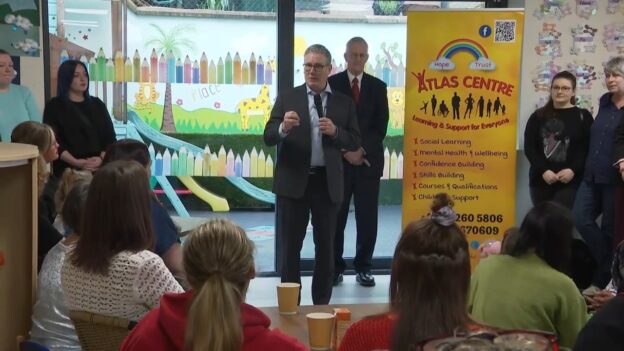
By then, Starmer had already left Westminster for Belfast, that familiar corner of the kingdom where ministers sometimes find themselves dispatched when the political temperature rises in London. Hilary Benn, the Northern Ireland Secretary, stood dutifully beside him like a silent chaperone. The once formidable Downing Street spin machine of the Blair years, when communications were run by Alastair Campbell with Mandelson advising discreetly in the background, might have handled the optics differently. This week the Prime Minister’s team made a simpler logistical decision: Parliament lobby reporters were left behind and Starmer took questions only from local media in an off-camera informal huddle. After a bruising week in Parliament, the controlled environment was perhaps understandable. A nursery classroom, after all, offers a famously undemanding audience — one unlikely to ask awkward questions about fuel duty, oil prices, or the wisdom of appointing Peter Mandelson.
He took refuge in Belfast, well away from Westminster’s turbulence, and, not insignificantly, from the lobby journalists whose questions had been sharpening throughout the week. There, during a visit to a nursery school, he acknowledged he had made a mistake in appointing Mandelson and apologised to Epstein’s victims. Whether the wider public will be quite so forgiving remains uncertain. While he spoke, several toddlers began crying and fidgeting. “I know… I’m nearly finished,” he reassured them. Westminster instincts, including heckling, it seems, can develop remarkably early.
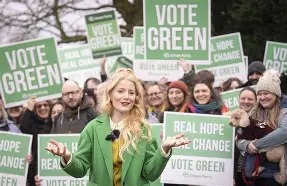
As Labour chased Reform voters, the Greens patched together a coalition on the left — and breached a seat once thought watertight. Adel Darwish analyses the Gorton & Denton By-Election.
Green’s MP for Gorton&Denton, plumber Hannah Denton
The headline numbers were stark. Hannah Spencer of the Green Party of England and Wales won Gorton and Denton seat with 40.7 per cent of the vote — a swing that carved out 26.7 per cent from Labour’s previous share. Reform came second on 28.7 per cent, some 4,500 votes behind. Labour slumped to third with 25.4 per cent, nearly 6,000 votes adrift of the winner. The Conservatives trailed in fourth and lost their deposit, bleeding support to Reform. More telling still is the combined vote of the three traditional Westminster parties — barely 29 per cent between them. This is not an isolated aberration but part of a longer trajectory that began with the Brexit referendum, when distrust of the political establishment first broke through the surface of British electoral behaviour. A decade on, that distrust has not dissipated; it has diversified. Voters are no longer merely alternating between two governing parties. They are actively seeking alternatives to both.
In a constituency long regarded as a Labour stronghold — one of those seats entered in red ink before a campaign even begins — the symbolism is devastating. For almost 100 years the seat, in its various boundary incarnations, had returned a Labour member. It was woven into the party’s industrial north narrative — mill towns, municipal socialism, trade union roots. That continuity has now been severed, not by the Conservatives, but by a party that until recently struggled to break through Westminster’s first-past-the-post barrier.
The Greens’ victory is historic for another reason: it was only their first Westminster by-election win. Yet it was not even among their top hundred priority battlegrounds. It reportedly sat at 127 on their “target seat” list — a ranking system small parties use to allocate limited resources to constituencies deemed realistically winnable. For readers unfamiliar with the mechanics: minor parties compile internal hierarchies of seats based on past vote share, demographic shifts and organisational presence. Money, activists and leadership visits are funnelled to the top tranche. A win outside that tier suggests either extraordinary local momentum or systemic weakness in the dominant party. Here, plainly, it was both.
Within Labour, the muttering has grown louder. Some MPs whisper to journalists in corridors; others air their concerns openly on radio and television. The charge is blunt: the problem is the leader. They recall how Starmer and the party’s National Executive blocked Greater Manchester’s popular mayor, Andy Burnham, from standing. The implication is clear — a locally rooted, high-profile Labour figure might have stemmed the tide. Instead, the party machine imposed caution where charisma was needed. For a leader already battered by poor polling and a faltering narrative on the economy, this mini-earthquake compounds the sense of drift.
Yet beyond the immediate party calculus lies something more troubling for British democracy itself. Two strata of voters deserve close attention: Muslim voters, particularly of South Asian heritage, and younger voters — including first-time 18–19-year-olds and the substantial student population in the area.
At first glance, this was a protest vote about living standards. The acceptance speech and subsequent press conference by Ms Spencer emphasised bread-and-butter themes: services, wages, fairness, and making work pay. A local plumber and plasterer by background — white, working class, and plainly spoken — she projected authenticity. But here lies the paradox. The white working class who prioritise precisely those issues did not vote Greens in large numbers. They moved to Reform, whose agenda speaks more directly to their anxieties about jobs, wages, immigration and public services.
Reform’s 28.7 per cent suggests a coherent transfer from Conservative and disaffected Labour voters who see economic strain as intertwined with immigration pressures — a subject the Greens largely sidestepped and Labour downplayed. Reform’s disappointment will be that second place is cold comfort, yet the numbers show a consolidated base among traditional white working-class voters.
The Greens’ surge appears instead to have been powered by a coalition of Muslim voters and younger, university-educated electors. The party’s literature was carefully segmented by language and theme. Leaflets in Urdu and Punjabi addressed Muslim voters and highlighted grievances facing Muslims in India, invoking allegations of Hindu nationalism; Gaza and the grievances of fellow Muslims in another land were also featured prominently in this material. English-language leaflets, by contrast, foregrounded Gaza in a broader humanitarian frame and criticised Conservative and Labour policy in the Middle East. For students and younger voters, the message returned to climate, redistribution and social justice, with Gaza again serving as an emotional rallying point.
This multi-track messaging raises uncomfortable questions about whether voters were being addressed as citizens sharing a common civic debate, or as discrete identity blocs receiving tailored narratives calibrated to their particular sensitivities.
First, the use of foreign-language leaflets. In practical terms, community outreach in voters’ preferred languages is hardly unprecedented; parties of all stripes have done so in diverse constituencies. Yet it also underscores a democratic concern: segments of the electorate may be engaging with politics through issue-specific or identity-based lenses rather than through a shared civic discourse. A national democracy depends on common reference points. When campaigns fragment messaging by ethnicity and language, the risk is political balkanisation.
Second, the ideological contradictions are more profound than polite commentary suggests. Some of the Greens’ flagship policies — liberalisation of drug laws, expansive LGBT education in schools, socially progressive curricula, and a broad secular social platform — sit uneasily, and in some cases directly at odds, with the traditional religious and cultural values held by many Muslim families in the constituency.
It may be that, in this election, foreign policy grievances and perceived injustices abroad outweighed domestic social policy differences. But such alliances are transactional by nature and rarely durable. They depend on the continued primacy of an external cause over internal contradictions.
There is also a more delicate question concerning language and integration. When campaign material is issued primarily in languages other than English, it is legitimate to ask whether some voters may not be fully exposed to the wider spectrum of domestic policy debates shaping British society — debates that will inevitably affect their English-speaking children in schools, universities and workplaces. A democratic choice is most meaningful when it is made with full awareness of the broader policy platform, not solely on a subset of emotionally resonant issues.
For younger voters, particularly students, Gaza appears to have been a galvanising issue. Yet foreign policy was scarcely central to the daily concerns of older, economically pressed residents. The divergence between the priorities of students and those of long-standing working-class families reveals a constituency split along generational as well as ethnic lines.
For Reform, the lesson is equally sobering. Their candidate, reportedly an academic rather than a locally embedded figure, may have lacked the personal resonance needed in a by-election where retail politics still matters. More fundamentally, Reform faces a structural dilemma. To broaden its appeal among ethnic minority and younger voters, it would need to soften elements of its platform — particularly on immigration and cultural issues. But doing so risks alienating the white working-class voters who form its current backbone. Electoral arithmetic can be merciless.
For Labour, the strategic quandary is deeper still. If Muslim and younger voters drift leftwards towards the Greens on foreign policy and identity issues, while white working-class voters defect to Reform over economic and immigration concerns, the party’s traditional coalition fractures. Reassembling it requires more than managerial competence; it demands a narrative that bridges class, culture and generational divides. At present, critics argue, that narrative is absent.
Thus the by-election becomes more than a local protest. It signals a fragmentation of the political landscape in which the two historic governing parties command barely a third of the vote combined. The Greens celebrate a breakthrough; Reform consolidates insurgency status; Labour questions its leadership; the Conservatives slide further into irrelevance in a seat they once contested seriously.
Five weeks running, each worse than the last, is not merely bad luck. It suggests structural weakness. Whether Sir Keir can arrest that trajectory — or whether internal pressure will grow for change — remains to be seen. But Gorton and Denton has delivered a verdict that Westminster cannot easily ignore: the electorate is restless, divided, and increasingly willing to experiment.
In politics, by-elections are often dismissed as mid-term tantrums. Sometimes they are. But occasionally they are tremors before a larger shift. This one feels less like a tantrum and more like a warning.
There was a time when the Labour Party could summon idealists, intellectuals, and political giants from the pavements of Britain. The Fabian Society debated the future of civilisation, not the future price of printer toner. Its members wrote books, not bullet points; they dealt in ideas, not invoices. They spoke of building a better world, not balancing the petty cash drawer. Today, the party’s intellectual inheritance has been pawned for a stack of spreadsheets, and its ideological flame entrusted to a woman we now know, affectionately and despairingly, as Rachel from Accounts.
(The Express picture)
Political nicknames rarely land with such devastating accuracy. This one encapsulates not merely her demeanour but her method: the belief that government is a question of reconciled columns rather than reconciled ambitions. The Budget she delivered on Wednesday did not feel like a national plan. It felt like an internal memo leaked from an HR director defending cuts to the biscuits fund. And yet this is the moment Labour promised would herald a “new era” — a Britain rejuvenated, reenergised, and ready to lead. Instead, Rachel Reeves produced the long talked about written with the emotional range of a procurement manual. It wasn’t a Budget; it was a defibrillator applied to the dying political career of Sir Keir Starmer. It bought him time, nothing more. The economy was merely the collateral.
Let us be clear: Reeves did not govern — she bargained. Her primary audience was not Britain but Labour’s backbenches. The Budget was one long bribe disguised as fiscal discipline, designed to placate the party’s left flank, who, having mistaken slogans for policy, now regard taxation as a sacrament and aspiration as a sin. Seven Labour MPs already had the whip withdrawn for rebelling over the two-child benefit policy, only for a U-turn this week; this Budget was the ransom note required to forestall further mutiny.
Meanwhile, Starmer, a man increasingly resembling a hostage reading demands under duress, watched his Chancellor hack away at the country in order to keep the party intact. It is governance in reverse: the Starmer-Reevs regime survives, the nation pays.
Reeves’s media round the morning after confirmed what the Opposition, economists, and even cheery breakfast presenters warned all along: Labour’s election promises were fantasy. Reeves was repeatedly challenged on the simple arithmetic she once dismissed as cynicism. Freezing the income tax threshold at £12,570, she insisted, was not a tax rise. This was a heroic attempt to redefine the English language. Independent think tanks note the threshold freeze will leave families on around £35,000 a year £1,400 worse off — a hit far larger than a modest 1p or 2p rise in income tax would have delivered. In other words, Reeves has achieved the political miracle of taxing the many more painfully than taxing the few.
Then came the leaks — a farce that would embarrass a parish council, let alone the Treasury. Reeves held a Budget press conference two weeks early, despite the long-standing, near-sacred principle of Budget secrecy. Shadow Chancellor Mel Stride pointed out, with barely suppressed disbelief, that releasing market-sensitive fiscal measures ahead of time isn’t merely foolish — it is potentially illegal. Even the Deputy Speaker rebuked her, an act as rare in Parliament as a unicorn sighting.
And then the crowning humiliation: the Office for Budget Responsibility uploaded the entire Budget online forty minutes before she spoke. It vanished shortly thereafter, but the damage was done. Reeves stood at the Despatch Box like someone gamely reading out a surprise party invitation that had already been tweeted by the venue. Ministers once resigned for less. Reeves shrugged.
For context, when Hugh Dalton whispered a few Budget titbits to a journalist while walking into the Commons in 1947, he resigned the next day. When Jimmy Thomas leaked the Budget proposals in 1936, he left the Cabinet and public life. Reeves did not merely whisper; she broadcast — and yet she remains, the beneficiary of a political age that has forgotten what shame feels like.
But the true scandal is not procedure; it is purpose. Labour has raised £26 billion in taxes without allocating a penny to growth. Not a farthing for productivity. Nothing for enterprise. No relief for the industries crippled by the Net Zero policy. Reeves has built a fiscal fortress without an exit — a country where money circulates but does not multiply, where public services are funded but no wealth is created to sustain them.
Consider the property tax raid: heralded as a strike against the idle wealthy, it raises just £400 million — scarcely 1.5% of the total tax take. A drop in the Red Sea. Yet its ideological purpose is vast. It punishes those who are not deemed “working people” — the retired, landlords, homeowners who have saved rather than spent. These individuals will now either increase rents, worsening the housing crisis, or sell assets, withdrawing supply entirely. Schools, orphanages, and hospices with buildings worth more than this arbitrary threshold could be caught in the crossfire. Reeves has taxed philanthropy and called it justice.
Meanwhile, the wealth creators Labour insists have nowhere else to go have, in fact, gone. 10,800 millionaires left the UK in 2024 — many of them business owners and investors. The Adam Smith Institute calculates that replacing the tax contribution of a single millionaire requires 49 ordinary taxpayers. Reeves has effectively exported the fiscal equivalent of the population of Manchester. Britain has become the world’s only country where you are free to make money, provided you do it somewhere else.
Here lies the eulogy for Labour’s soul. The party of Attlee and Bevan sought to expand opportunity; the party of Reeves and Starmer seeks to itemise it. Old Labour asked how to build a future. New Labour asks how to fund yesterday. The Fabians once dreamed of progress. Rachel from Accounts dreams of a tidy balance sheet.
She has not crashed the economy. She has audited it into paralysis.
And the irony? The only growth Labour has delivered is in political nicknames. Reeves may yet go down in history not as Britain’s first female Chancellor but as the woman who proved that when you run a country like a spreadsheet, you eventually discover the nation has clicked “Delete” — and moved abroad.
Keir Starmer used Labour’s biggest stage not to set out a vision but to attack Nigel Farage—granting his rival the oxygen of free publicity. By Adel Darwish
The Labour Party’s annual conference this year was meant to be a decisive moment, a chance to remind its members, supporters and the wider electorate that Labour is ready to govern. Instead, it closed with more disappointment than inspiration. Speeches by party leaders are usually designed to be rallying cries, moments of energy that fire up activists and volunteers and arm them with a clear narrative to take to the doorstep. Keir Starmer, however, chose to spend the bulk of his address not outlining Labour’s vision for Britain but attacking Reform UK and its leader, Nigel Farage. In doing so, he handed his rival the one thing every politician craves—free publicity on the biggest stage available to Labour.
Nor was it only Starmer who fell into this trap. Several of his cabinet colleagues followed his lead, devoting large sections of their own speeches to attacks on Farage. The effect was to shift the image of the conference away from a confident party showcasing its programme of government, towards the spectacle of an anxious leadership rattled by a challenger advancing fast in the polls. It was an error of tone and judgement that made Labour look reactive rather than authoritative.
Alongside these speeches came policy announcements that seemed tailored more to mimic Reform’s rhetoric than to present Labour’s original ideas. Tougher migration policies were unveiled, including extending the waiting period before long-term visa holders can apply for British citizenship. These were clearly designed to signal that Labour, too, could be firm on immigration. Yet the question inevitably arises: will the public believe these are born of genuine conviction, or dismiss them as panicked reactions to Farage’s rise?
The polling numbers paint a sobering picture. Reform UK is projected to be ahead by between 100 and 170 seats in the next parliament, a gap that looks less like a swing of the pendulum and more like a landslide in waiting. Inside Labour itself, discontent is spreading: 54% of members want Starmer to go, while 34% of the party’s own MPs are also reported to favour his replacement. These are not marginal murmurs of dissent but signs of a party that no longer trusts its leader.
Starmer’s response to these pressures—attacking Farage harder and borrowing parts of his agenda—seems doomed to fail. Voters are unlikely to reward imitation. They may reasonably ask: why support a leader who shifts position under pressure, when they could vote for the original brand? By pursuing this path, Starmer risks strengthening Farage’s legitimacy instead of undermining it.
The deeper danger lies in what this conference says about Labour’s identity. Instead of presenting itself as the natural party of government, ready to step in after years of Conservative turmoil, Labour came across as nervous, uninspired and lacking in courage. The stage that should have projected authority and vision was reduced to a platform for settling scores with a rising rival.
What Labour urgently needs is not reactionary mimicry but authenticity: bold, convincing policies that feel rooted in its own values and a narrative that inspires confidence. It requires a leadership capable of finding a language (not just to scare the electorate of Reform), reflecting the hopes of ordinary Britons. Until that happens, Farage and his party will continue to fill the vacuum, gathering strength in both public opinion and parliamentary projections. Starmer, meanwhile, will go on squandering chances—perhaps the last chances—for Labour to reassert itself as a credible alternative government.
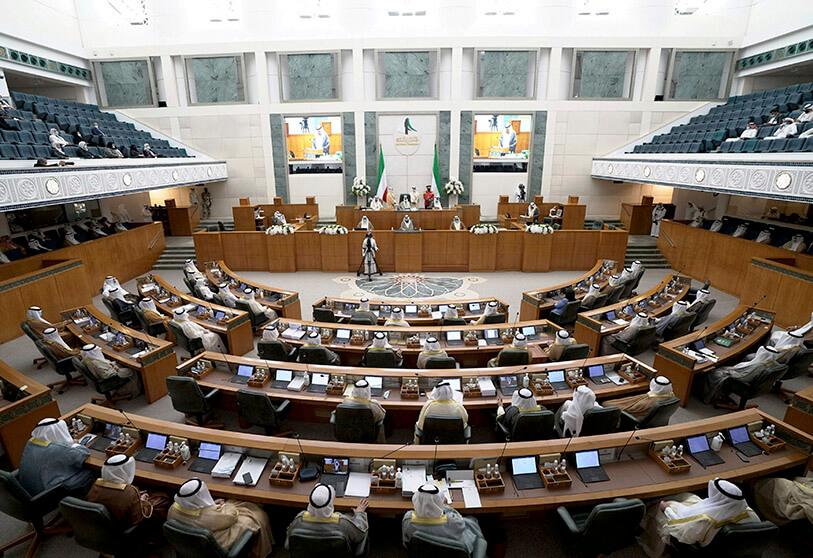
Kuwaitis voted to replace over half of their MPs in the country’s 50-member National Assembly and elected two women to the legislature last Thursday (29 September 2022); Kuwaitis voted to replace over half of their MPs in the country’s 50-member National Assembly and elected two women to the legislature last Thursday (29 September 2022); while only two women were elected. only two women were elected.
The new Kuwaiti National Assembly will include 27 new members, around a dozen of whom were part of previous parliaments. Although twenty two women stood and many of whom received a high percentage of votes, only two were elected. The previous parliament, dissolved after a stand off with government over budget and mass protests led by women, were all male since December 2020 when the only female MP lost her seat in a byelection.
The country’s Shia sect strengthened its position in the new parliament increasing their share to 18 percent ( from six to nine seats). The ultra-conservative Islamic Constitutional Movement also made good gains while the tribes MPs share declined to 46 per cent after losing six of their 29 seats. Younger candidates are on the increase, according to local media observers continuing the trend of the last parliament elected two years ago.
However, many doubt whether the new parliament will change the awkward three way lock between the ruling Sabah family, their appointed executive cabinet ( 16 members. 15 of whom can also sit in the Assembly ) and the elected 50 MPs that has often played the role of opposition. This customary deadlock with the cabinet, which has delayed the approval of a state budget for the fiscal year 2022/2023 and other economic reforms, is unlikely to get any better. The budget, which has to be voted on before November, had set spending at 23.65 billion dinars ($77.2 billion) compared with 23.48 billion for the 2021/2022 budget. But observers are not too optimistic about ending the stand-off. Political analyst Naser al-Abdali, told Reuters news agency the rise of MPs from Islamist movements in these elections will have a great impact in the next National Assembly.
It is worth noting a few other observations I made during a four day to the oil rich OPEC member country, which had the first elected parliament in the Arabian Peninsula.
Hardly any of the candidates during the campaign bothered with regional or security issues, since all were campaigning on local demands; which, apparently, is a healthy phenomenon; however, I noticed that Middle Eastern reporters saying candidates not taking grave regional, and international issues seriously. But it is worth bearing in mind the that the parliament, in general, has little say in foreign policy or defence under the current constitution.
The slogan, or the catchphrase of this election season, endlessly repeated in the state media and copied by the independent outlets, was ‘correcting [ or readjusting] the path’ : ” تصحيح المسار… This was a bold statement indicating that the previous ( dissolved ) parliament and the way it was performing and the process of electing it had gone wrong somehow; although there has been no change in the electoral law, this is something up to the parliament itself to address. But with an assembly with a majority opposing the government reforms, little is likely to be corrected in order to push the process on the desired path.
At the international press centre, the TV tape put on loop on the election channel was about the resistance during the 1990-1991 Iraqi occupation of Kuwait, and the ‘martyrs’ especially women murdered by the Iraqis. This was a departure from the visual and TV message in previous elections, thus the emphasis was on regional threats and security.
Since it is government controlled press centre, this is likely to reflect government and state strategic thinking in forming the next government and sending this message out as what should be the priority and what emphasise they should put. on the list of priorities
speaking with senior Kuwaiti politicians and diplomats ( both in office and in experience of long serving in office ) , they emphasise that ‘ national security is a prime issue that has been ” neglected ” for two decades . Although they did not spell out directly where is the threat coming from; western diplomats I managed to meet suggest they see now threat from Iraq and Iran as ‘ one threat with two heads’.
Furthermore, what I managed to glean, was a strong desire (some said ‘determination ‘ ) from the top, to go back to the traditional Kuwaiti doctrine of security through a bilateral defence pact with a superpower . They prefer this superpower to be America (since UK , the traditional ally , can’t afford it any more, as one veteran Kuwaiti diplomat put it ) but they are also weary and suspicious of the USA commitment during the Biden democratic administration , thus they hope for a republican administration and a major British role . Some senior Kuwaiti diplomats were critical of the regional policy ( which they saw as inseparable from national security) of the late Emir, Sheikh Sabah Al-Ahmad (1929-2020) who ruled for fourteen years, who carried a deep Pan-Arabism sentiment with some unrealistic expectations (, and being too involved, some said) in in Pan-Arab commitment,. Some said his obsession with the idea of collective Arab interest and security through collective Arab solidarity was neither realistic nor healthy. Veteran Kuwaiti politicians who were involved in the country’s defence and foreign policy for decades, and some were active in the resistance during Iraq’s occupation of Kuwait thirty years ago, emphasised that ‘ Kuwait must prioritise its national interests, mostly security regionally and internally’. Given that those officials and diplomats are still in office; I take it that this must have got some official approval from the top. This explains that lack of multiple Arab flags at the entrance of the hotel where world media has been packed into a national press centre; and also the loop tape emphasising the dangers and ” list of martyrs ( mostly women) ” and sacrifices during the Kuwait invasion by Iraq . However, the question remains – how much this message is taken in by ministers and officials and fully understood, especially the message of ” correcting the path ” ?
Media and many officials still mouth the old clichés… even top officials briefing the foreign press where using clichés that only a new independent third world country would raise when they hold elections for the first time . Meanwhile the secretary general of Parliament (-
I guess the equivalent to the Clerk of the House of Commons- ) was emphasising something different with his modernisation focusing on administrative and MPs services issues. The Assembly set accommodations like the US congress, where the MPs can physically sleep in, and good space for each member’s staff and researchers. However the new MPs quarters’ design resembles portcullis House, but smaller and half a circle shape with the other half into another building with large auditorium and modern digitalised reactive screens and other facilities including members library- and there is no traditional vote office like in Westminster. There was a talk about bringing back a veteran parliamentarian, the retired speaker Ahmad al-Sadoun ( speaker 1985-1999 and Feb-June 2012 ) who, in 2012, resigned his post declaring that the elections were invalid. The hope was Sadoun would help reform the electoral law ( ie from each voter voting for a single candidate, they would give a list of preference of four candidates ) , the idea was to combat tactical voting via bribing constituents with lavish gifts and grants Strangely there is no ceiling of how much a candidate could spend on their campaign.
Prime Minister Rt Hon Boris Johnson MP, elected December 2019, 365 MPs Majority 44 to pass bills.
Boris Johnson cabinet 14 February 2020
No 10 take more control of the Treasury and other departments. Rising star Rishi Sunak the new Chancellor of the exchequer, Suella Braverman Attorney General, want yo reform Judiciary relationship with westminster, John Whittingdale back in digital media culture and sport to keep an eye on the BBc and he is a strong believer in Free Speech, former army officer James Cleverly who did a great job as Chairman of the party is now a Min of State at Foreign and Commonwealth Office, will bring fresh experience especially he is jointly in charge of dept of international development.
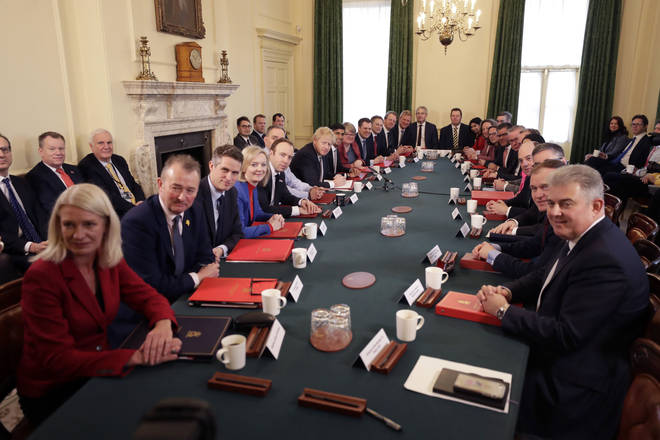
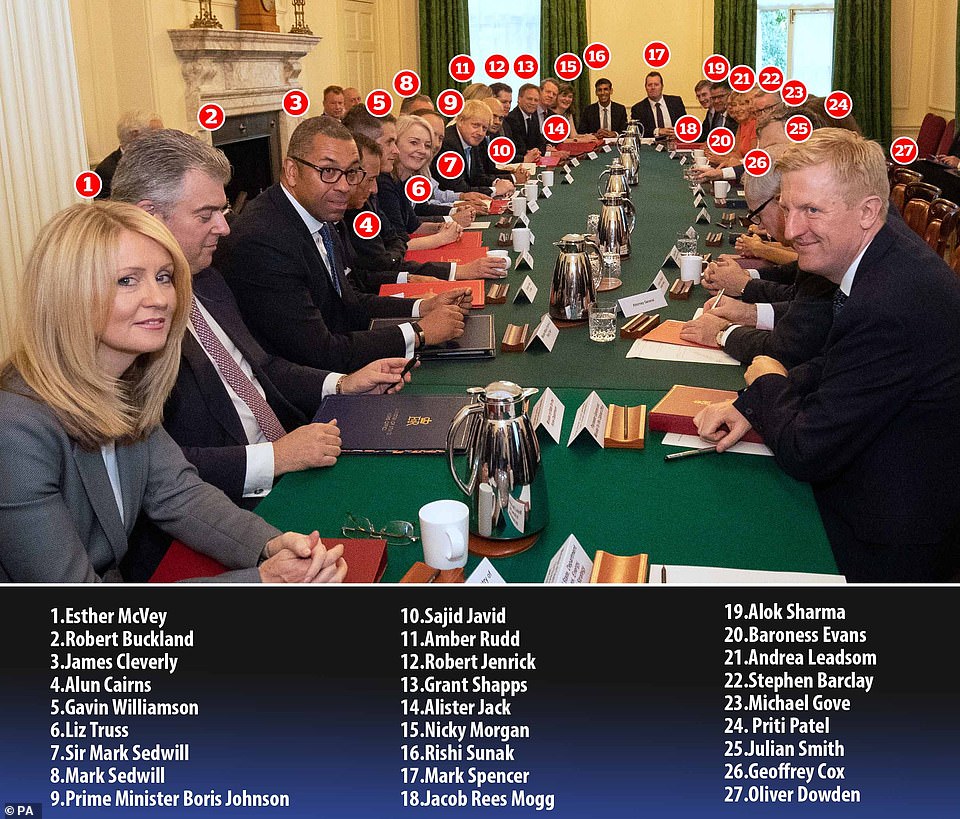
This is Boris Johnson’s full cabinet as on 31 July 2019, there are a few minor posts to fill , but is a strong ethnic and faith mix cabinet, and most important key posts are given to Thatcherite free-market economy and strong pro breast and for national independence from Brussels.
Cabinet First meeting, 23 July 2019 – PA photo
Key posts went to MPs like Sajid Javid at No 11 as Chancellor of the Exchequer , Dominic Raab MP at the Foreign and Commonwealth office; Priti Patel as Home Secretary and Liz Truss MP, who believes in free international trade and free market at Department of international Trade. In Addition, Vote leave activist Andrea Leadsom MP at the helm of Business and Industrial Strategy, while Boris’s old vote leave campaign comrade Michael Gove MP, is in the Cabinet Office as Chancellor of the Duchy of Lancaster, cracking the whip over the heads of the civil services to push for Brexit against sir Humphreys’s brakes-slamming on the Whihtehall machine that want to delay Brexit former. Continue reading →
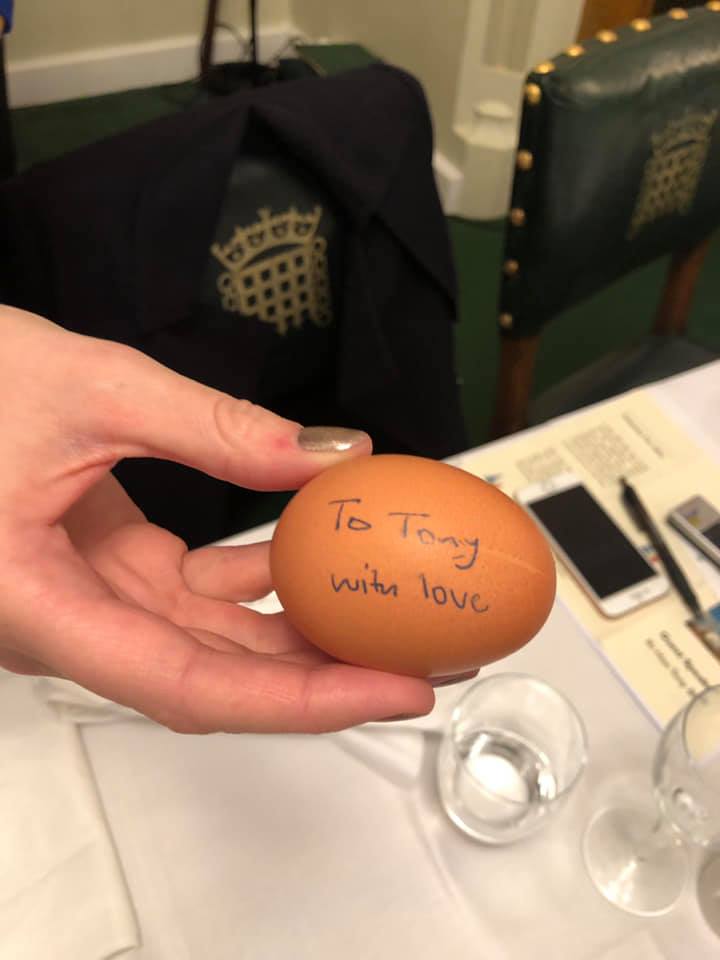
Brexit, There is no Third way , says Tony Blair, as he was handed an egg by a Tory Mp, saying, he wouldn’t throw it at him. Blair’s speech in full.
Former Prime Minister and Labour Leader the Rt Hon Tony Blair made a dramatic intervention today criticising the way the Tory Government lead by Theresa may conducted the the negotiations with the EU which was not ” handled very well”, as he said adding it became 2 half in-half out.” .Mr Blair wanted his message, that parliament was operating as a “shadow government by frustrating Theresa May over her Brexit deal and asserting control over the Government,” would accurately reach the entire nation, he gave a copy of a speech he made today at the Parliamentary Press Gallery monthly lunch, at which he was a guest speaker, to 200 Westminster reporters, MPs, Lords and influential media guests. The former Prime Minister backed MPs, arguing there was as much leadership on the backbenches as the frontbenches. He also suggested the Prime Minister would be better off pulling the Commons vote on her Brexit deal on Tuesday 11 December, as she remains on course for near-certain defeat.
Just before the Westminster crowd sat to Lunch, their was a light hearted touch by Conservative MP for Beckenham, Colonel Bob Stewart who told the former labour leader, who sent British troops on 12 intervention, the most controversial of them was the wars in Iraq and Afghanistan, ” I wont be throwing this at you,” presenting him with an egg inscribed with ” to Tony with Love” .
Mr Blair He said Prime Minster may had tried to square the circle of Brexit, with a deal that was “pain-less” but “point-full” – but lamented that there was no “acceptable third way” on the issue.
He argued that voters will feel betrayed by the deal put forward by the Prime Minister, and that a second referendum would be the only option if parliament ends up deadlocked.