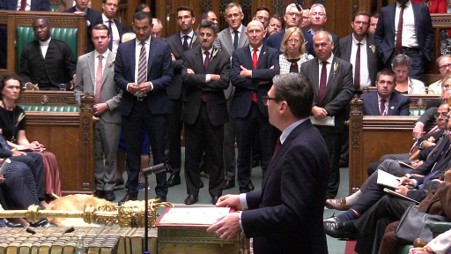
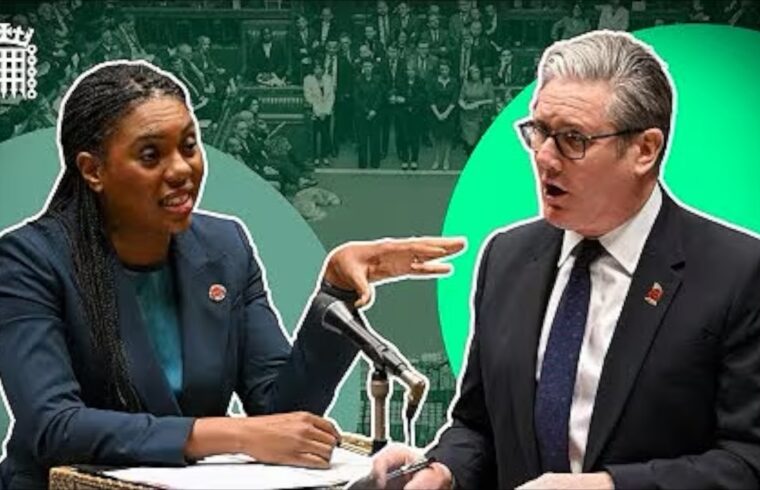
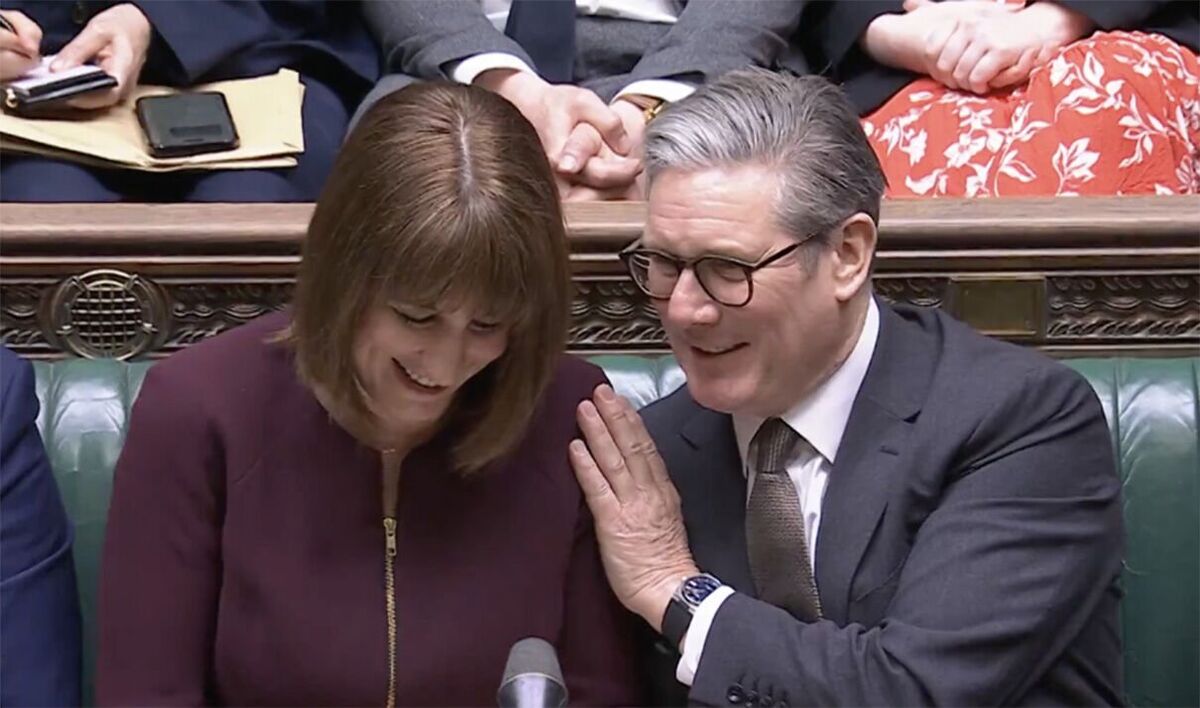
Andy Burnham’s second Prime Minister’s Questions produced a sentence which may prove more revealing about his premiership than he intended.
Challenged by Kemi Badenoch over defence spending, he insisted that Britain must support its national security, “but it can’t come at the expense of social security”.
It was a very Burnham answer. A question about defence had somehow arrived at housing, homelessness and the pressures facing families. It also raised eyebrows around Westminster. Armies, missiles and intelligence services cannot normally be financed with good intentions about social cohesion.
But there was an intriguing echo from another Labour government, 57 years ago.
From the Press Gallery, a familiar pattern emerged: precise questions on Mandelson, evasive answers from the Prime Minister, and a growing sense that judgement, not just politics, is now under scrutiny.
By Adel Darwish
From the Press Gallery, certain patterns are becoming increasingly predictable. Prime Minister’s Questions, once an arena of sharp exchange and occasional clarity, now often follows a familiar script: questions asked, answers diverted, and the argument redirected elsewhere. This week, however, the pattern mattered — because it went to the question of judgement at the top of government.
Kemi Badenoch used all six of her allotted questions to focus on the appointment of Peter Mandelson as ambassador to Washington. Drawing on material released under a Humble Address, her questions were structured to test the Prime Minister’s judgement and the basis on which the appointment had been made, and to probe whether his account to the House could be sustained.
Her line of argument was precise: to establish what the Prime Minister knew, what questions he had asked, and how he could now claim that Peter Mandelson had misled him. If, as Starmer suggested, Mandelson had not been truthful about his past association with Jeffrey Epstein, then the obvious question followed: had that issue been put to him directly at the time of the appointment?
The Prime Minister did not engage with that line of questioning. Instead, he repeatedly shifted the exchange onto Badenoch’s stance on the Iran conflict, accusing her of inconsistency and attempting to recast the session as a debate on foreign policy. By his sixth answer, the tone had hardened into outright attack, extending criticism to Reform UK and what he characterised as its proximity to positions he associated with the far right.
The Speaker intervened twice. On the first occasion, he reminded the House that he was not responsible for the Prime Minister’s replies. On the second, the rebuke was sharpened: nor was he responsible for the questions from the Leader of the Opposition. The message was unmistakable — that the exchange was failing to address the substance of what had been asked.
From the gallery, the reason for that pattern was not difficult to discern. The Prime Minister appeared acutely aware of the risks of what he said — and what he chose not to say. Having already faced questions about the Mandelson appointment, his answers at the despatch box now carry potential weight beyond the chamber. With further papers released under a Humble Address, any inconsistency between what he knew at the time and what he told Parliament could invite the most serious accusation in Westminster: that of having misled the House. That risk may explain the caution — and, at times, the conspicuous evasiveness — that marked his responses.
The difficulty for Downing Street is that the Mandelson affair is not an isolated embarrassment but a question of judgement. Documents now in the public domain indicate that warnings were raised about the reputational risks of the appointment. Yet the decision went ahead, and has since unravelled with striking speed. The subsequent financial settlement, agreed at £75,000, has reinforced the political impression of a decision taken against advice and corrected only under pressure.
That question of judgement extends beyond personnel into policy, particularly in energy. The latest tensions in the Gulf — including attacks on gas infrastructure, have revived concerns about supply vulnerability at precisely the moment Britain’s domestic capacity has been scaled back. Critics argue that successive governments once drew the opposite lesson from earlier crises, maintaining both a strategic naval presence in the region and a degree of domestic resilience. The current approach, which combines reduced North Sea production with continued reliance on imports, is now being tested under pressure. At such moments, the balance between long-term transition and immediate security becomes less theoretical and more immediate.
In another era, a foreign crisis might have provided political cover. Governments have often found that external threats rally domestic support and soften internal divisions. This time, the effect has been more limited. While the Prime Minister’s cautious stance on the conflict with Iran broadly reflects public sentiment, it has not translated into any discernible political dividend. Nor has it eased strategic uncertainty. Britain’s role in the region appears more constrained than in previous decades, when a quieter but consistent naval presence helped secure key shipping routes. The contrast is not merely nostalgic; it raises questions about capability as well as policy.
More troubling for Downing Street is that the pressure is no longer confined to the opposition benches. Within Labour, signs of unease are becoming more visible. Angela Rayner’s recent intervention, widely interpreted as a challenge to elements of the government’s economic direction, has underscored the extent to which internal consensus cannot be taken for granted. At the same time, many Labour MPs have signalled resistance to proposed changes in welfare policy, warning that they may not support measures to curb or freeze benefits. These are not yet coordinated rebellions, but they point to a party that is beginning to test the limits of its own leadership.
Even among Labour-leaning commentators, the tone has shifted. Sympathy for the government’s early difficulties has given way to a more questioning assessment of its choices and priorities. That, perhaps, is the more subtle change. Governments can weather opposition attacks; they find it harder to navigate scepticism from those broadly inclined to support them.
The Prime Minister therefore faces a convergence of pressures: scrutiny over decisions already taken, uncertainty over policies still unfolding, and a party that is no longer entirely aligned behind him. None of these challenges is, in isolation, insurmountable. Together, they form a pattern that is becoming increasingly difficult to dismiss.
In politics, individual missteps can often be contained. Patterns, once established, are far harder to break.
After a bruising week in Westminster, the Prime Minister found his most honest audience in a Belfast nursery.
By Adel Darwish
A prime minister who finds himself aligned with public opinion during a foreign crisis might reasonably expect a little political relief. Keir Starmer’s cautious distancing from the American strikes on Iran reflects the instinct of most British voters, who remain wary of another Middle Eastern war. Yet even this rare moment of alignment has done little to improve the government’s political fortunes.
The latest polling suggests a remarkably stagnant landscape. A seven-poll rolling average published this week places Reform UK on 27.4 per cent, Labour on 19.4, the Conservatives on 17.9, the Greens on 14.9, and the Liberal Democrats on 11.9. Despite rising oil prices and the geopolitical tensions surrounding the Iran conflict, there has been no sudden movement in public opinion. Labour has even edged slightly upward over the week. If higher petrol prices were provoking a backlash against the government, we would expect the opposite: a sharp fall in Labour support and a surge for opposition parties. Instead, the numbers suggest voters currently blame global events rather than domestic policy.
That did not spare Starmer a bruising encounter in the Commons. At Wednesday’s Prime Minister’s Questions, Kemi Badenoch used all six of her allotted questions to focus on fuel prices and the looming prospect of higher fuel duty. With Brent crude fluctuating sharply in response to Middle East tensions, petrol and diesel costs are once again creeping upward. For millions of people outside London, Badenoch argued, driving is not a luxury but a necessity — especially for tradesmen, delivery drivers and small businesses whose vans keep the economy moving.
Starmer attempted to deflect the pressure by attacking the opposition’s stance on Iran, accusing Badenoch of shifting positions and suggesting she had previously called for Britain to support American strikes. The exchange grew increasingly heated. At one point the Speaker intervened to remind the Prime Minister that his task was to answer questions rather than ask them of the Leader of the Opposition.
Fuel prices are not a trivial political issue. Rising oil costs ripple quickly through the economy: transport, food distribution, and ultimately inflation itself. Should the surge in energy prices persist, the Bank of England may hesitate before cutting interest rates, delaying the relief many mortgage holders had hoped for this spring. It is precisely this chain reaction that makes petrol prices such a sensitive political subject.
The government’s response has been to summon oil company representatives to Downing Street. Chancellor Rachel Reeves and Energy Secretary Ed Miliband called the industry in for talks at No.11, warning them against “profiteering” by raising prices at the pump. The Prime Minister’s spokesman said ministers were monitoring the situation closely and hinted that companies could face referral to the competition authorities if evidence of manipulation emerged.
The meeting itself became contentious. Retailers accused ministers of using “inflammatory language” about alleged profiteering, warning that it had led to members of the public abusing staff at petrol stations. Some companies even threatened to boycott the talks unless the government agreed that the opening of the meeting would not be filmed by television cameras.
Yet the week’s most awkward development for Downing Street came not from global oil markets but from Westminster itself. Documents released under parliamentary pressure revealed that officials had warned about the reputational risks of appointing Peter Mandelson as Britain’s ambassador to Washington. Mandelson is no stranger to controversy. During Tony Blair’s government he was twice forced to resign from cabinet — first in 1998 after failing to disclose a £373,000 loan from fellow minister Geoffrey Robinson, and again in 2001 after contacting the Home Office about the passport application of the wealthy Hinduja brothers. His post as ambassador quickly became politically untenable once questions resurfaced about his past association with the convicted sex offender Jeffrey Epstein, an association Mandelson had earlier sought to minimise. Despite those concerns, the appointment went ahead. The saga took another turn when it emerged that Mandelson had sought compensation reportedly exceeding £500,000, before eventually agreeing to a settlement of £75,000 — a figure Downing Street insists represented “good value for money” compared with the potential cost of litigation.
The episode culminated in an unusual moment of contrition. On Thursday, the Prime Minister acknowledged that appointing Mandelson had been a mistake and apologised to victims connected to the Epstein scandal. It was a rare public admission of error from a sitting prime minister, though whether it draws a line under the affair remains to be seen.
At Friday’s lobby briefing, Downing Street declined to elaborate on what lessons the Prime Minister had drawn from the episode, with the spokesman cautioning journalists against speculation until the remaining documents are released.
By then, Starmer had already left Westminster for Belfast, that familiar corner of the kingdom where ministers sometimes find themselves dispatched when the political temperature rises in London. Hilary Benn, the Northern Ireland Secretary, stood dutifully beside him like a silent chaperone. The once formidable Downing Street spin machine of the Blair years, when communications were run by Alastair Campbell with Mandelson advising discreetly in the background, might have handled the optics differently. This week the Prime Minister’s team made a simpler logistical decision: Parliament lobby reporters were left behind and Starmer took questions only from local media in an off-camera informal huddle. After a bruising week in Parliament, the controlled environment was perhaps understandable. A nursery classroom, after all, offers a famously undemanding audience — one unlikely to ask awkward questions about fuel duty, oil prices, or the wisdom of appointing Peter Mandelson.
He took refuge in Belfast, well away from Westminster’s turbulence, and, not insignificantly, from the lobby journalists whose questions had been sharpening throughout the week. There, during a visit to a nursery school, he acknowledged he had made a mistake in appointing Mandelson and apologised to Epstein’s victims. Whether the wider public will be quite so forgiving remains uncertain. While he spoke, several toddlers began crying and fidgeting. “I know… I’m nearly finished,” he reassured them. Westminster instincts, including heckling, it seems, can develop remarkably early.
Signals from Washington D.C., Tehran, Lebanon, and the Strait By Kate Jones, White House Bureau Chief
Wars are often narrated through explosions, declarations, and fear. In reality, outcomes are decided by quieter forces: logistics, geography, and time.
The unfolding crisis across the Middle East illustrates this principle with unusual clarity. Military movements along the Lebanese border, the strategic signaling emanating from Tehran, and the volatility of global oil markets are all expressions of a single underlying constraint: the movement of supply across geography.
Armies move on logistics. So does the world economy. War planners and oil traders rarely speak the same language, yet strategists from Carl von Clausewitz to Alfred Thayer Mahan understood that power ultimately rests on logistics. On this rare occasion, military conflict involving Iran and global markets converges on the same constraint in parallel. This is one of those moments.
The White House is attempting to reassure markets that the current volatility reflects disruption rather than structural scarcity.
“Under President Trump’s American energy dominance agenda, oil and gas production has hit record highs and prices at the pump had dropped to multi-year lows,” said White House spokeswoman Taylor Rogers in a statement provided today. “President Trump has been clear that these are short-term disruptions. Ultimately, once the military objectives are completed and the Iranian terrorist regime is neutralized, oil and gas prices will drop rapidly again, potentially even lower than before the strikes began. As a result, American families will benefit greatly in the long term.”
Washington has begun exploring several policy options aimed at easing upward pressure on crude prices. Officials have discussed a potential temporary waiver of the Jones Act to allow greater flexibility in transporting crude between U.S. ports, and the administration confirmed that approximately 172 million barrels remain available in the U.S. Strategic Petroleum Reserve. The White House has also signaled a willingness to loosen certain restrictions affecting global supply flows, including allowing greater purchases of Russian crude in global markets, while opening limited new offshore drilling opportunities along the California coast.
In aggregate, however, these incremental policy moves have so far done little to calm markets, where crude prices continue to respond primarily to geopolitical risk surrounding the conflict with Iran and the security of maritime shipping routes. Global demand growth had slowed modestly while supply across major producers continues at historically strong levels, leaving markets structurally well supplied. For United States, the economic backdrop remains relatively strong. Recent data on employment, trade balances, housing activity, and inflation have generally surprised to the upside, with price pressures remaining comparatively contained. Under normal circumstances such macroeconomic signals might anchor market confidence. Instead, geopolitical risk surrounding the conflict with Iran and the security of maritime shipping routes is dominating price behavior in global markets. A timely resolution to the conflict would likely reinforce expectations of continued economic resilience.
Global energy markets are grappling with a different question: how to price a war whose logistical boundaries remain unclear. Volatility is not coming from macro weakness, but from logistics of uncertainty.
The Psychological Threshold: $100 Per Barrel
West Texas Intermediate crude is approaching $100 per barrel, a level traders view as a psychological threshold capable of spilling quickly into equities, inflation expectations, and broader financial volatility. Policymakers therefore face an immediate question: whether the administration is preparing for that level and how it intends to communicate confidence if the threshold is crossed.
Concerns about market stability have already surfaced within the financial system itself. As the Financial Times reported this week, the chief executive of CME Group, Terry Duffy, warned that direct government intervention in oil futures markets could risk a “biblical disaster” by undermining confidence in the mechanisms used to establish global benchmark prices. Speaking to traders at an industry conference, Duffy cautioned that attempts to influence crude prices through derivatives markets could damage the credibility of the pricing system itself. Traders had begun asking who the large sellers in the market were, reflecting growing speculation that governments might attempt to calm prices during wartime volatility.
For traders and policymakers alike, the initial phases of war involve signals, noise, and the pricing of geopolitical risk amid uncertainty about the duration of disruption. Yet the deeper uncertainty lies in the real price of oil determined by the physical movement of supply.
The United States and members of the International Energy Agency have announced the largest releases from global strategic reserves, a record 400 million barrels, intended to stabilize markets. Yet the practical mechanics remain critical: the timing and volume of those releases and the speed at which those barrels can realistically reach global markets.
Energy traders are confronting a logistical paradox. Global oil production continues, but large volumes of supply may effectively remain offline if tankers cannot safely transit key shipping corridors.
Oil that exists but cannot move. War disrupts logistics before it destroys supply. Surplus builds.
When maritime risk increases through naval confrontation, insurance restrictions, or the mere threat of sea mines, missile strikes, or drone attacks, transport slows and storage pressures begin to build across the system. Production continues while shipping stalls, leaving supply stranded in storage or held at terminals awaiting safe passage.
Eventually producers face a stark choice: shut in wells. There is no simple off switch for production without risking damage to equipment. Refineries face similar constraints. Shutting down units abruptly can take days or weeks and may require costly maintenance before operations can resume.
These are complex chemical plants. Reactors cool. Catalysts destabilize. Pressure systems depressurize. Pipelines must be purged. Heaters must be restarted slowly. Safety systems trigger.
Unlike financial markets, the physical energy system cannot simply take a day off.
Markets struggle to price the situation because two critical variables remain unknown: the volume of disruption and the duration of disruption.
Until one of those variables becomes clearer, volatility persists. Markets are now shifting from signal toward calculating volume. The future calculus of supply surplus, stranded inventories, and potential shutdowns has not yet been fully reflected in price.
For analysts mapping supply chains and physical flows across the energy system, the central challenge is visibility. Disruptions propagate through shipping routes, insurance markets, storage capacity, and refining networks. Governments, traders, and central banks increasingly rely on supply-chain tracking and commodity-flow analysis to understand how shocks travel through the global energy system.
Alternative routes are part of the calculation. Saudi Arabia maintains east–west pipeline infrastructure capable of moving crude from Gulf fields to Red Sea export terminals, bypassing the Strait of Hormuz. The United Arab Emirates operates a similar corridor through the Abu Dhabi Crude Oil Pipeline. These routes reduce vulnerability but cannot eliminate it. The majority of Gulf exports still depend on maritime transit through narrow waterways. The global energy system remains constrained by geography. To understand the moment, however, one must begin not in Washington or in oil markets, but in Tehran.
The View from Tehran
From Tehran’s perspective the confrontation with Israel and the United States is not a conventional war to be won on the battlefield. It is a contest of endurance.
Iran’s leaders understand the asymmetry of power. They cannot match American military strength directly. Instead they have constructed a strategic architecture designed to complicate any confrontation in the region. Rather than relying solely on national forces, Tehran has long cultivated a network of regional partners stretching across the Middle East. These relationships create what Iranian strategists consider strategic depth: layers of pressure that expand the geography of any conflict. Within that architecture, Hezbollah occupies a central role.
For Tehran, Hezbollah is not simply an ally. It is a forward layer of deterrence positioned on Israel’s northern frontier. Any strike against Iran carries the risk of escalation across multiple theaters. The objective is not necessarily to win a war outright. It is to transform the strategic environment in which war occurs.
Lebanon and the Logic of Battlefield Shaping
Recent Israeli strikes in southern Lebanon illustrate this dynamic. Bridges and transportation routes have been targeted near the border. Such actions may appear tactical, but their meaning is operational. Military planners describe these strikes as battlefield shaping.
Infrastructure destruction serves several purposes simultaneously. It isolates the battle space, channels enemy movement into predictable routes, and complicates reinforcement and resupply. Destroying bridges does not necessarily signal an imminent ground invasion. Such strikes may support sustained air campaigns, cross-border raids, or deterrence signaling.
Analysts therefore look beyond individual attacks and instead search for clusters of logistical indicators. Fuel trucks begin staging forward. Ammunition depots appear near the frontier. Supply convoys accumulate. Maintenance units follow armored formations.
Medical infrastructure expands as well. Field hospitals deploy. Medevac helicopters move forward. Casualty evacuation systems prepare for sustained operations. Combat engineers arrive to reshape the terrain itself—clearing mines, breaching obstacles, and constructing crossings for armored units. Artillery positions move into range while drones and reconnaissance patrols map the battlefield. Special operations units often move ahead of main forces to reconnoiter terrain and confirm targets.
Individually none of these indicators proves an invasion is imminent. Together they form a pattern. When logistics staging, reconnaissance activity, engineering preparation, artillery positioning, and maneuver forces align, analysts begin to conclude that combined arms operations may be approaching.
Logistics reveals intent. The same logic governs global energy markets.
The Parallel Battlefield: Energy
Oil production may continue uninterrupted, yet supply can disappear from markets if transport corridors become insecure. In this sense energy markets operate on their own logistical front lines. Nowhere is this more evident than in the Strait of Hormuz. Roughly one-fifth of global oil shipments normally transit this narrow corridor connecting the Persian Gulf to the wider world.
Disruption here need not involve the destruction of tankers. Insurance restrictions, naval confrontation, or the mere threat of sea mines or drone attacks can slow maritime traffic dramatically. As one Wall Street commodities veteran and chief risk officer at a major firm put it, “No missiles, no drones. That has to stop.” Until the attacks stop, the oil won’t move. Fear of potential events alone can slow maritime traffic enough to remove millions of barrels from effective circulation. Supply cannot move logistically.
Traders refer to this phenomenon as held supply. The oil still exists. In such circumstances markets struggle less to price risk accurately. Two variables remain uncertain: the volume of disruption and the duration of disruption.
The uncertainty spreads beyond energy markets. Oil prices influence inflation expectations, central bank policy, and equity valuations. A disruption in maritime logistics therefore transmits financial pressure across the global economy. Other vital products, such as fertilizer, quickly become agricultural and food supply concerns.
The Data Before the Briefing
Wars begin with speeches and strikes. They become intelligible through data. The next important signal will come from Washington. The Pentagon is scheduled to brief at 0800 tomorrow morning. Energy markets, shipping insurers, commodity traders, and central banks will all be listening.
The critical questions are logistical. Can tanker escorts be provided? How quickly can maritime routes reopen? Can alternative pipelines absorb displaced supply? Have mine-clearing operations begun? The answers determine whether disruption is measured in days, weeks, or months.
Reserve releases from the International Energy Agency may soften the immediate shock. But they function primarily as a buffer or a band-aid. They do not reopen shipping lanes or restore maritime confidence. Markets therefore face a dilemma. Oil supply exists, but its movement remains uncertain.
A trader’s observation captures the problem precisely: markets can absorb a disruption if either the volume or the duration is known. They struggle when both variables remain uncertain. Until those questions are answered, volatility will dominate. Markets can price geopolitical risk immediately. Physical supply takes longer to reveal itself. Eventually the two must meet, and when they do the price settles into reality based on data rather than fear. Markets are now shifting from signal toward calculating volume. Markets price risk first. Logistics sets the price later.
War and the Movement of Supply
The first phase of a crisis is dominated by spectacle. The second phase is governed by logistics.
Tankers moving or not moving. Pipelines operating at capacity or not. Insurance costs rising or stabilizing. These are the signals that determine whether a geopolitical confrontation evolves into a structural economic disruption.
Iran’s strategy relies on complicating logistics across a region and destabilizing global markets. Israel’s strategy seeks to restore operational clarity by isolating battlefields and degrading infrastructure. The United States pursues a broader objective. As President Trump has stated and Special Envoy Steve Witcoff has reiterated, Washington intends to eliminate Iran’s nuclear infrastructure, its long-range strike capability and its defense industrial base, all while ensuring that global trade routes remain open.
In a message posted in the early hours of Friday morning on Truth Social, President Donald Trump said the United States was “totally destroying the terrorist regime of Iran, militarily, economically, and otherwise,” describing Iranian naval, air, and missile capabilities as being rapidly degraded.
The resolution of the conflict ultimately revolves around the same principle. Power must balance. Armies must move. Supplies must move. Energy must move. Logistics win wars and restore markets. Between these forces lies the real terrain of modern conflict.
Energy markets have behaved less like traditional commodity markets and more like instruments of geopolitical interpretation in recent days. Within roughly thirty-six hours, prices surged amid fears that the war could disrupt shipping through the Strait of Hormuz long term, before retreating as traders absorbed signals from Washington suggesting the conflict may prove shorter than initially feared. Brent crude was trading around $90–$91 per barrel as of midday EDT Wednesday, after briefly approaching $119 earlier this week before falling sharply as markets reacted to shifting signals about the duration and scope of the war with Iran.
The rapid swings reflect the reality that energy markets during wartime do not simply measure physical supply. They interpret political, military, and news signals to estimate what supply may look like weeks or months ahead.
In that sense, oil markets become a kind of strategic crystal ball, reacting less to the present flow of barrels than to expectations about the future course of the conflict. Even while there is more energy supply than demand, disruption at a strategic chokepoint makes the real flow of energy difficult for markets to price.
Governments Move to Stabilize Markets
Governments are also beginning to move emergency supply into the market.
Officials from major industrial economies have been discussing coordinated releases from strategic petroleum reserves to stabilize prices as the conflict threatens shipping in the Persian Gulf. The effort is being coordinated by the International Energy Agency, which organizes emergency stock releases among advanced industrial economies. This could be up to 400 million barrels total from IEA members.
Japan moved first, announcing plans to release roughly 80 million barrels from government and privately held emergency reserves in an effort to cushion markets from potential supply disruptions. Traders say the announcement itself has already been partially priced into markets.
Strategic reserve releases historically dampen price spikes even before the oil physically reaches the market because traders begin factoring future supply into pricing models. Reserve releases buy time, soften volatility, and increase supply temporarily. They cannot replace the roughly one-fifth of global oil supply that normally passes through the Strait of Hormuz, which remains the central risk driving market swings.
Markets Watching Washington
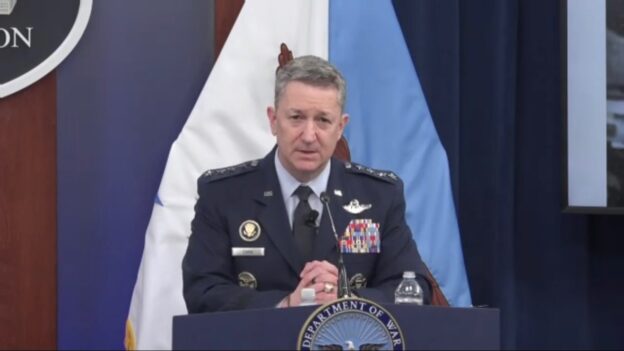
Speaking at the House Republican conference in Doral, Florida, President Donald Trump suggested the campaign against Iran might conclude relatively quickly, saying “We will ensure the routes.” The President later warned that any attempt by Iran to halt oil flows through the Strait of Hormuz would trigger a far stronger response. “If Iran does anything that stops the flow of Oil within the Strait of Hormuz, they will be hit by the United States of America twenty times harder than they have been hit thus far.” This was reiterated by General Caine when asked at a press conference Tuesday morning, when it was safe to do so, the U.S. would ensure safe passage. Development Finance Corporation CEO Ben Black, said, the “DFC is here to provide support and stability in order to ensure there are minimal disruptions to operations and markets,” and “DFC’s Political Risk Insurance and Guaranty products will help ensure commerce, capital, and energy can operate at capacity during the ongoing conflict.”
Battlefield Signals and the Oil Market
Defense officials say U.S. forces have struck more than 5,000 targets inside Iran, focusing primarily on missile systems, defense industrial manufacture, drone infrastructure, and nuclear-related facilities.The nuclear dimension of the conflict also remains central to Washington’s strategic rationale. During negotiations before the escalation, U.S. envoy Steve Witkoff said Iranian negotiators acknowledged that Iran possessed enough highly enriched uranium that, if further enriched to weapons-grade levels, could theoretically produce material for roughly eleven nuclear weapons.
Despite the numbers, and official statements daily that today is the biggest day, there should be caution that the effectiveness of the strikes will take time to fully evaluate. Analysts at the National Geospatial-Intelligence Agency typically require about a week to produce a comprehensive battle-damage assessment, meaning early claims about the impact of strikes remain preliminary. It could take a week from the final hit to know with certainty that shipping can be secured.
Mines, Missiles and Maritime Pressure
New battlefield analysis suggests Iran has explored mining the Strait of Hormuz as a way to disrupt maritime traffic. Yet mining the strait would also threaten Iran’s own exports.
U.S. Central Command reported that American forces destroyed 16 Iranian vessels capable of laying naval mines near the Strait of Hormuz, part of a broader Iranian effort to threaten maritime traffic and impose economic costs on Gulf states and the United States. Iran has historically used naval mines to threaten shipping lanes in the Persian Gulf, and even limited mining could halt commercial traffic because insurers and shipping companies typically suspend transit until mines are cleared. Iran had somewhere between 3000-5000 sea mines stockpiled, predominantly Russian and Chinese made.
Commercial maritime tracking indicates that traffic from vessels associated with Iran’s so-called “ghost fleet” has already dropped sharply in recent days.
Kharg Island and the Oil Lever
One strategic option discussed in Washington involves Iran’s primary export terminal at Kharg Island. The island handles the majority of Iran’s oil exports and represents the central node of Tehran’s energy revenue. President Trump has reportedly suggested the possibility of deploying U.S. forces. Troops could try to neutralize or seize the facility in an operation that could effectively strangle Iran’s oil exports without attempting to occupy Iranian territory.
Such a move would represent a major escalation, but it illustrates how maritime dominance alone can exert enormous economic pressure on an oil-exporting state. Even without physically closing the Strait of Hormuz, controlling the skies and having maritime control can impose similar effects, making such a plan less likely.
The challenge is that Iranian missile batteries, drones, and naval patrol craft positioned along the coast still threaten vessels passing through the narrow corridor. Until every drone is neutralized, insurers and shippers will remain shy of using the waterway.
Kurdish Regions and Internal Pressure
Western Iran may also become an arena for internal instability as the conflict continues. Several provinces along Iran’s border with Iraq including Kurdistan, Kermanshah, and Ilam have seen strikes targeting internal security forces and police facilities.
Reports indicate the Trump administration has encouraged Kurdish leaders in the region to challenge Tehran’s authority, raising the possibility that Kurdish groups could open a second internal pressure point against the Iranian government.
Analysts say Kurdish leaders seem prepared to act, but require external encouragement matched by sustained international support, while a Kurdish uprising could weaken Tehran’s internal control but would also carry risks of regional fragmentation.
Regional Escalation
The conflict widened as Iran and Hezbollah increased attacks on Israel. Israeli officials say that Iranian and Hezbollah forces launched coordinated missile barrages using cluster-munition warheads, weapons that disperse dozens of smaller bomblets over a wide area after a missile detonates at altitude. Military assessments indicate that a significant share of Iranian missiles fired during the conflict have carried cluster submunitions, complicating air-defense interception and increasing the risk to civilians. The coordinated use of such weapons widened the conflict into a broader regional confrontation involving Tehran’s proxy network.
Diplomacy and Intelligence
The war has also raised questions about Russian involvement, but Russian officials have denied sharing intelligence with Iran during the conflict. Asked whether Washington could rely on those assurances, U.S. envoy Steve Witkoff responded cautiously. “I’m not an intelligence officer, so I can’t tell you,” Witkoff said. “Let’s hope that they’re not sharing.”
Markets Waiting for the Next Signal
For traders, the decisive variable remains time. If the conflict proves short and shipping continues to move through the Strait of Hormuz, the geopolitical premium currently embedded in oil prices could fade quickly. The markets are the factor most carefully managed by the Trump administration, one can be sure it is closely watched to ensure stability, consumer confidence in the administration and at the pump, while economic statecraft combines with warfare.
The administration has a timeline on trust, if the war expands into a prolonged struggle over maritime control, insurance markets, and energy infrastructure, oil traders will begin pricing in a reality. This could be a much deeper disruption to global supply. With nearly one-fifth of the world’s oil moving through a corridor only a few miles wide, even the perception of danger in the Strait of Hormuz has proven to move markets and shape the global economy.
In modern energy markets, strategy and price now move together: every missile launch, naval maneuver, or diplomatic signal becomes another data point in the world’s attempt to predict the future. In modern warfare, the balance of power is an act of economic statecraft as much as surgical strikes.
As Labour chased Reform voters, the Greens patched together a coalition on the left — and breached a seat once thought watertight. Adel Darwish analyses the Gorton & Denton By-Election.
Green’s MP for Gorton&Denton, plumber Hannah Denton
The headline numbers were stark. Hannah Spencer of the Green Party of England and Wales won Gorton and Denton seat with 40.7 per cent of the vote — a swing that carved out 26.7 per cent from Labour’s previous share. Reform came second on 28.7 per cent, some 4,500 votes behind. Labour slumped to third with 25.4 per cent, nearly 6,000 votes adrift of the winner. The Conservatives trailed in fourth and lost their deposit, bleeding support to Reform. More telling still is the combined vote of the three traditional Westminster parties — barely 29 per cent between them. This is not an isolated aberration but part of a longer trajectory that began with the Brexit referendum, when distrust of the political establishment first broke through the surface of British electoral behaviour. A decade on, that distrust has not dissipated; it has diversified. Voters are no longer merely alternating between two governing parties. They are actively seeking alternatives to both.
In a constituency long regarded as a Labour stronghold — one of those seats entered in red ink before a campaign even begins — the symbolism is devastating. For almost 100 years the seat, in its various boundary incarnations, had returned a Labour member. It was woven into the party’s industrial north narrative — mill towns, municipal socialism, trade union roots. That continuity has now been severed, not by the Conservatives, but by a party that until recently struggled to break through Westminster’s first-past-the-post barrier.
The Greens’ victory is historic for another reason: it was only their first Westminster by-election win. Yet it was not even among their top hundred priority battlegrounds. It reportedly sat at 127 on their “target seat” list — a ranking system small parties use to allocate limited resources to constituencies deemed realistically winnable. For readers unfamiliar with the mechanics: minor parties compile internal hierarchies of seats based on past vote share, demographic shifts and organisational presence. Money, activists and leadership visits are funnelled to the top tranche. A win outside that tier suggests either extraordinary local momentum or systemic weakness in the dominant party. Here, plainly, it was both.
Within Labour, the muttering has grown louder. Some MPs whisper to journalists in corridors; others air their concerns openly on radio and television. The charge is blunt: the problem is the leader. They recall how Starmer and the party’s National Executive blocked Greater Manchester’s popular mayor, Andy Burnham, from standing. The implication is clear — a locally rooted, high-profile Labour figure might have stemmed the tide. Instead, the party machine imposed caution where charisma was needed. For a leader already battered by poor polling and a faltering narrative on the economy, this mini-earthquake compounds the sense of drift.
Yet beyond the immediate party calculus lies something more troubling for British democracy itself. Two strata of voters deserve close attention: Muslim voters, particularly of South Asian heritage, and younger voters — including first-time 18–19-year-olds and the substantial student population in the area.
At first glance, this was a protest vote about living standards. The acceptance speech and subsequent press conference by Ms Spencer emphasised bread-and-butter themes: services, wages, fairness, and making work pay. A local plumber and plasterer by background — white, working class, and plainly spoken — she projected authenticity. But here lies the paradox. The white working class who prioritise precisely those issues did not vote Greens in large numbers. They moved to Reform, whose agenda speaks more directly to their anxieties about jobs, wages, immigration and public services.
Reform’s 28.7 per cent suggests a coherent transfer from Conservative and disaffected Labour voters who see economic strain as intertwined with immigration pressures — a subject the Greens largely sidestepped and Labour downplayed. Reform’s disappointment will be that second place is cold comfort, yet the numbers show a consolidated base among traditional white working-class voters.
The Greens’ surge appears instead to have been powered by a coalition of Muslim voters and younger, university-educated electors. The party’s literature was carefully segmented by language and theme. Leaflets in Urdu and Punjabi addressed Muslim voters and highlighted grievances facing Muslims in India, invoking allegations of Hindu nationalism; Gaza and the grievances of fellow Muslims in another land were also featured prominently in this material. English-language leaflets, by contrast, foregrounded Gaza in a broader humanitarian frame and criticised Conservative and Labour policy in the Middle East. For students and younger voters, the message returned to climate, redistribution and social justice, with Gaza again serving as an emotional rallying point.
This multi-track messaging raises uncomfortable questions about whether voters were being addressed as citizens sharing a common civic debate, or as discrete identity blocs receiving tailored narratives calibrated to their particular sensitivities.
First, the use of foreign-language leaflets. In practical terms, community outreach in voters’ preferred languages is hardly unprecedented; parties of all stripes have done so in diverse constituencies. Yet it also underscores a democratic concern: segments of the electorate may be engaging with politics through issue-specific or identity-based lenses rather than through a shared civic discourse. A national democracy depends on common reference points. When campaigns fragment messaging by ethnicity and language, the risk is political balkanisation.
Second, the ideological contradictions are more profound than polite commentary suggests. Some of the Greens’ flagship policies — liberalisation of drug laws, expansive LGBT education in schools, socially progressive curricula, and a broad secular social platform — sit uneasily, and in some cases directly at odds, with the traditional religious and cultural values held by many Muslim families in the constituency.
It may be that, in this election, foreign policy grievances and perceived injustices abroad outweighed domestic social policy differences. But such alliances are transactional by nature and rarely durable. They depend on the continued primacy of an external cause over internal contradictions.
There is also a more delicate question concerning language and integration. When campaign material is issued primarily in languages other than English, it is legitimate to ask whether some voters may not be fully exposed to the wider spectrum of domestic policy debates shaping British society — debates that will inevitably affect their English-speaking children in schools, universities and workplaces. A democratic choice is most meaningful when it is made with full awareness of the broader policy platform, not solely on a subset of emotionally resonant issues.
For younger voters, particularly students, Gaza appears to have been a galvanising issue. Yet foreign policy was scarcely central to the daily concerns of older, economically pressed residents. The divergence between the priorities of students and those of long-standing working-class families reveals a constituency split along generational as well as ethnic lines.
For Reform, the lesson is equally sobering. Their candidate, reportedly an academic rather than a locally embedded figure, may have lacked the personal resonance needed in a by-election where retail politics still matters. More fundamentally, Reform faces a structural dilemma. To broaden its appeal among ethnic minority and younger voters, it would need to soften elements of its platform — particularly on immigration and cultural issues. But doing so risks alienating the white working-class voters who form its current backbone. Electoral arithmetic can be merciless.
For Labour, the strategic quandary is deeper still. If Muslim and younger voters drift leftwards towards the Greens on foreign policy and identity issues, while white working-class voters defect to Reform over economic and immigration concerns, the party’s traditional coalition fractures. Reassembling it requires more than managerial competence; it demands a narrative that bridges class, culture and generational divides. At present, critics argue, that narrative is absent.
Thus the by-election becomes more than a local protest. It signals a fragmentation of the political landscape in which the two historic governing parties command barely a third of the vote combined. The Greens celebrate a breakthrough; Reform consolidates insurgency status; Labour questions its leadership; the Conservatives slide further into irrelevance in a seat they once contested seriously.
Five weeks running, each worse than the last, is not merely bad luck. It suggests structural weakness. Whether Sir Keir can arrest that trajectory — or whether internal pressure will grow for change — remains to be seen. But Gorton and Denton has delivered a verdict that Westminster cannot easily ignore: the electorate is restless, divided, and increasingly willing to experiment.
In politics, by-elections are often dismissed as mid-term tantrums. Sometimes they are. But occasionally they are tremors before a larger shift. This one feels less like a tantrum and more like a warning.
There was a time when the Labour Party could summon idealists, intellectuals, and political giants from the pavements of Britain. The Fabian Society debated the future of civilisation, not the future price of printer toner. Its members wrote books, not bullet points; they dealt in ideas, not invoices. They spoke of building a better world, not balancing the petty cash drawer. Today, the party’s intellectual inheritance has been pawned for a stack of spreadsheets, and its ideological flame entrusted to a woman we now know, affectionately and despairingly, as Rachel from Accounts.
(The Express picture)
Political nicknames rarely land with such devastating accuracy. This one encapsulates not merely her demeanour but her method: the belief that government is a question of reconciled columns rather than reconciled ambitions. The Budget she delivered on Wednesday did not feel like a national plan. It felt like an internal memo leaked from an HR director defending cuts to the biscuits fund. And yet this is the moment Labour promised would herald a “new era” — a Britain rejuvenated, reenergised, and ready to lead. Instead, Rachel Reeves produced the long talked about written with the emotional range of a procurement manual. It wasn’t a Budget; it was a defibrillator applied to the dying political career of Sir Keir Starmer. It bought him time, nothing more. The economy was merely the collateral.
Let us be clear: Reeves did not govern — she bargained. Her primary audience was not Britain but Labour’s backbenches. The Budget was one long bribe disguised as fiscal discipline, designed to placate the party’s left flank, who, having mistaken slogans for policy, now regard taxation as a sacrament and aspiration as a sin. Seven Labour MPs already had the whip withdrawn for rebelling over the two-child benefit policy, only for a U-turn this week; this Budget was the ransom note required to forestall further mutiny.
Meanwhile, Starmer, a man increasingly resembling a hostage reading demands under duress, watched his Chancellor hack away at the country in order to keep the party intact. It is governance in reverse: the Starmer-Reevs regime survives, the nation pays.
Reeves’s media round the morning after confirmed what the Opposition, economists, and even cheery breakfast presenters warned all along: Labour’s election promises were fantasy. Reeves was repeatedly challenged on the simple arithmetic she once dismissed as cynicism. Freezing the income tax threshold at £12,570, she insisted, was not a tax rise. This was a heroic attempt to redefine the English language. Independent think tanks note the threshold freeze will leave families on around £35,000 a year £1,400 worse off — a hit far larger than a modest 1p or 2p rise in income tax would have delivered. In other words, Reeves has achieved the political miracle of taxing the many more painfully than taxing the few.
Then came the leaks — a farce that would embarrass a parish council, let alone the Treasury. Reeves held a Budget press conference two weeks early, despite the long-standing, near-sacred principle of Budget secrecy. Shadow Chancellor Mel Stride pointed out, with barely suppressed disbelief, that releasing market-sensitive fiscal measures ahead of time isn’t merely foolish — it is potentially illegal. Even the Deputy Speaker rebuked her, an act as rare in Parliament as a unicorn sighting.
And then the crowning humiliation: the Office for Budget Responsibility uploaded the entire Budget online forty minutes before she spoke. It vanished shortly thereafter, but the damage was done. Reeves stood at the Despatch Box like someone gamely reading out a surprise party invitation that had already been tweeted by the venue. Ministers once resigned for less. Reeves shrugged.
For context, when Hugh Dalton whispered a few Budget titbits to a journalist while walking into the Commons in 1947, he resigned the next day. When Jimmy Thomas leaked the Budget proposals in 1936, he left the Cabinet and public life. Reeves did not merely whisper; she broadcast — and yet she remains, the beneficiary of a political age that has forgotten what shame feels like.
But the true scandal is not procedure; it is purpose. Labour has raised £26 billion in taxes without allocating a penny to growth. Not a farthing for productivity. Nothing for enterprise. No relief for the industries crippled by the Net Zero policy. Reeves has built a fiscal fortress without an exit — a country where money circulates but does not multiply, where public services are funded but no wealth is created to sustain them.
Consider the property tax raid: heralded as a strike against the idle wealthy, it raises just £400 million — scarcely 1.5% of the total tax take. A drop in the Red Sea. Yet its ideological purpose is vast. It punishes those who are not deemed “working people” — the retired, landlords, homeowners who have saved rather than spent. These individuals will now either increase rents, worsening the housing crisis, or sell assets, withdrawing supply entirely. Schools, orphanages, and hospices with buildings worth more than this arbitrary threshold could be caught in the crossfire. Reeves has taxed philanthropy and called it justice.
Meanwhile, the wealth creators Labour insists have nowhere else to go have, in fact, gone. 10,800 millionaires left the UK in 2024 — many of them business owners and investors. The Adam Smith Institute calculates that replacing the tax contribution of a single millionaire requires 49 ordinary taxpayers. Reeves has effectively exported the fiscal equivalent of the population of Manchester. Britain has become the world’s only country where you are free to make money, provided you do it somewhere else.
Here lies the eulogy for Labour’s soul. The party of Attlee and Bevan sought to expand opportunity; the party of Reeves and Starmer seeks to itemise it. Old Labour asked how to build a future. New Labour asks how to fund yesterday. The Fabians once dreamed of progress. Rachel from Accounts dreams of a tidy balance sheet.
She has not crashed the economy. She has audited it into paralysis.
And the irony? The only growth Labour has delivered is in political nicknames. Reeves may yet go down in history not as Britain’s first female Chancellor but as the woman who proved that when you run a country like a spreadsheet, you eventually discover the nation has clicked “Delete” — and moved abroad.
A failed airstrike on 9 September broke the stalemate, isolated Netanyahu and forced a deal. The only workable outcome now is an armistice with accounting: hostages for corridors, daily monitoring, and real penalties for breaches, Adel Darwish argues.
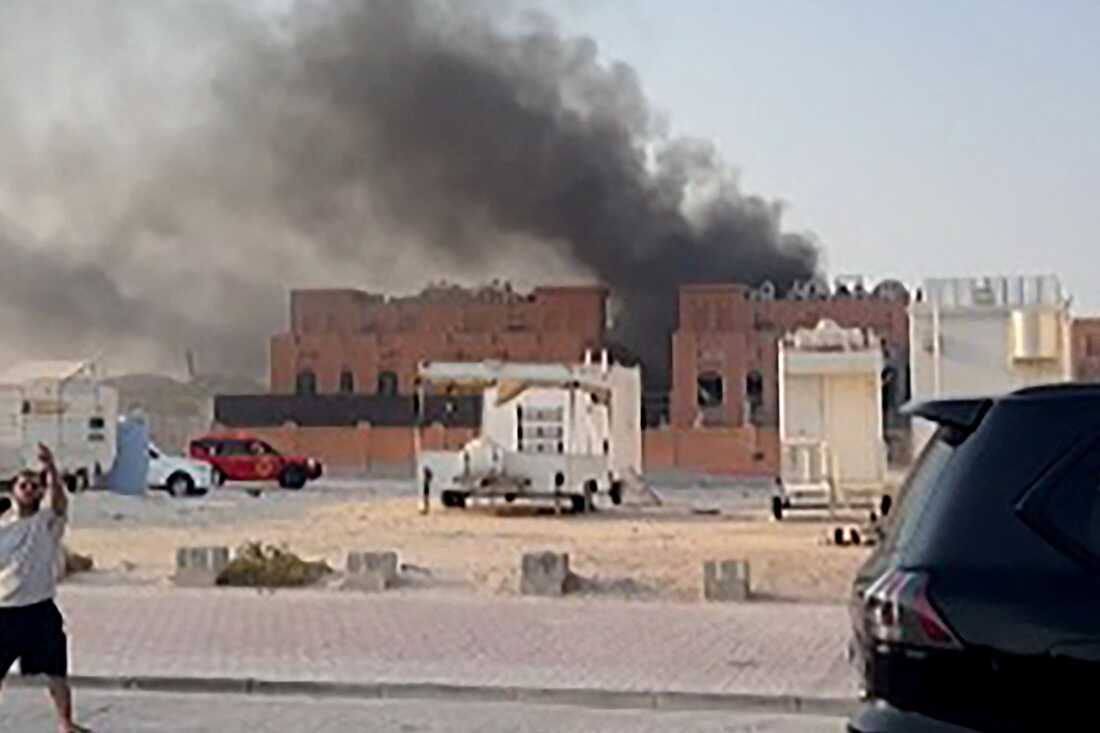
This frame grab taken from an AFPTV footage shows smoke billowing after explosions in Qatar’s capital Doha on September 9, 2025. Israel’s military said it carried out air strikes on September 9 targeting senior Hamas leaders in the Qatari capital Doha, the venue of multiple rounds of talks aimed at ending the Gaza war. (Photo by Jacqueline PENNEY / AFPTV / AFP) (Photo by JACQUELINE PENNEY/AFPTV/AFP via Getty Images)
Dates matter in the Middle East, and many dates became names of important sites and monuments. 9 September 2025 is one of them. An Israeli air strike on Hamas figures meeting in Doha did not decapitate the movement, but it detonated assumptions. It told Hamas there is no sanctuary left. It exposed the political ceiling facing Israel’s Prime Minister Benjamin (Bibi )Netanyahu. And it jolted Washington—President Trump, personally—into blunt engagement that turns fury into leverage. “Bibi, you cannot fight the whole world,” he reportedly said. That is not diplomacy by sonnet; it is the language of a dealmaker who knows when a war aim has outrun the coalition needed to sustain it. The point is not who was persuaded; it is that everyone was cornered by the same facts at the same time.
The strike changed the psychology inside Hamas. Doha had been the last place its leaders believed they could plan and bargain in relative comfort. Once you are targetable anywhere, your margin for waiting it out collapses. Hamas needed a ramp—any ramp—off a burning platform. The same date tolled another bell in Jerusalem. The operation failed to eliminate its intended targets. A failed audacious strike is costlier than no strike at all. It handed critics proof that maximalist rhetoric was outrunning results, while Israel’s allies—from Washington to European capitals—were signalling exhaustion. Several European states then moved to recognise a Palestinian state. Recognition alone does not change realities on the ground, but it sharpened Israel’s isolation just as the war was taxing its economy, its diplomacy and the patience of friends. There is a grim memory in the Israeli debate: when Israel left Gaza, Hamas, the masters of the strip, struck a nasty blow when it had the chance. That October trauma is not a talking point; it is an imprint—quietly understood across regional capitals that will not say it aloud for fear of inflaming their own streets. On 9 September, the arithmetic, not the slogans, mattered: Israel can strike back but cannot, alone, produce an end-state without partners.
Three regional actors suddenly mattered most: Egypt, Qatar and Turkey. Egypt is Israel’s consequential neighbour and Gaza’s only non‑Israeli exit. Since the 1979 peace treaty, Cairo and Jerusalem have been at peace longer than they were at war. Egyptian intelligence knows Gaza inside out and the red lines; when Cairo turns the screws, it hurts. Qatar is where Hamas leaders have sheltered, fund‑raised and politicked. Doha’s leverage is the guest list; without its facilitation, any prisoner‑hostage exchange or stabilisation plan loses the only channel the movement trusts. Turkey is NATO by treaty and Muslim Brotherhood by sympathy. President Erdoğan’s moves conduct Islamists’ calculated steps. Individually, each capital can stall. Together, they can compel. And together is how they came—first separately, then in concert on the margins of the UN—with one message to Washington: do not ask us to defend a process while you tolerate tactics that kill the process. That message landed.
This is the other half of 9 September. The American President’s anger at the strike was not moral theatre; it was transactional. He saw an Israeli move that shredded the coalition needed to stabilise Gaza, protect the hostages, keep the Red Sea from flashing over and prevent Lebanon from sliding from simmer to boil. The lesson of decades of bargaining is simple: coalitions make peace; loners make speeches. A White House that feels its coalition splintering slams the table—and did. Hence the intervention that followed: deal now. Hostages for corridors. Monitors who do monitor. Fuel that goes to bakeries and hospitals—with meters, not platitudes. Sanctions that hit violators, not bystanders. Draw the map. That is not appeasement; it is engineering.
Netanyahu’s critics say he blinked; his supporters say he bought time while keeping pressure on Hamas. Both can be true. What mattered on 9 September was that a loud, visible failure left him naked to his right flank and exposed abroad. A leader can survive one of those, not both. Add the Abraham Accords constituency—Saudi‑aligned and Gulf monarchies that built quiet bridges to Israel. They were livid, not from sudden sentimentality, but because high‑octane strikes with low‑value results wreck the scaffolding they assembled. Those capitals called Washington. Washington called Jerusalem. The conversation was not courteous.
There will be propaganda. Hamas will claim victory; Israeli ministers will claim strategic patience. But the only viable outcome after 9 September was the one that emerged: an enforceable ceasefire with named lines, frozen heavy‑weapon movements and third‑party monitoring that reports daily, not monthly; hostage releases tied to phased opening of land and sea corridors, with barcoded aid and fuel metering at hospitals and water plants; automatic penalties when either side breaches, including suspension of reconstruction funds, targeted sanctions on field commanders and a snap‑back clause for limited defensive action after repeated violations; and regional custodianship—Egypt controlling the Rafah logic, Qatar delivering Hamas compliance, Turkey corralling the Brotherhood wing—while the United States and Europeans underwrite and referee instead of sermonising. Call it a ceasefire if you like; the more honest term is armistice with accounting.
Next? The President’s trip on 12 September to Egypt and Israel will show where the leverage lies. If Cairo publishes corridor schedules and Doha announces a sequence for releases, the hard parts are locked. If Ankara turns conspicuously quiet, pressure has reached where it needed to go. Second, the exchange itself—prisoners for hostages—will test durability. If the first tranche moves cleanly and monitors’ dashboards light with real‑time data, reconstruction escrow can open. If not, penalties fire and we are back to ad hoc. Do not be distracted by triumphalism. The question is not who won. The question is whether enough of the region has decided that permanent mobilisation is more dangerous than managed restraint. On 9 September, that calculus flipped. Hamas learned there is no safe house. Netanyahu learned that bravado without outcome isolates. And the White House learned—again—that you cannot bomb your way to partners, but you can deal your way to compliance if partners know you mean it. The ceasefire is not peace; it is a platform. It buys time for the unglamorous agenda that reduces tomorrow’s violence: clearing unexploded ordnance, restoring water and clinics, reopening schools with real deconfliction and building a border regime that keeps weapons out without suffocating life. 9 September 2025 will sit in the footnotes as the day a strike failed and a deal began—not because anyone had a change of heart, but because everyone ran out of alternatives. That is how history moves here. // end
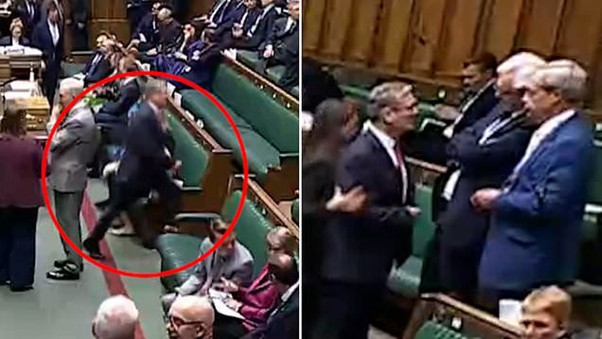
Keir Starmer used Labour’s biggest stage not to set out a vision but to attack Nigel Farage—granting his rival the oxygen of free publicity. By Adel Darwish
The Labour Party’s annual conference this year was meant to be a decisive moment, a chance to remind its members, supporters and the wider electorate that Labour is ready to govern. Instead, it closed with more disappointment than inspiration. Speeches by party leaders are usually designed to be rallying cries, moments of energy that fire up activists and volunteers and arm them with a clear narrative to take to the doorstep. Keir Starmer, however, chose to spend the bulk of his address not outlining Labour’s vision for Britain but attacking Reform UK and its leader, Nigel Farage. In doing so, he handed his rival the one thing every politician craves—free publicity on the biggest stage available to Labour.
Nor was it only Starmer who fell into this trap. Several of his cabinet colleagues followed his lead, devoting large sections of their own speeches to attacks on Farage. The effect was to shift the image of the conference away from a confident party showcasing its programme of government, towards the spectacle of an anxious leadership rattled by a challenger advancing fast in the polls. It was an error of tone and judgement that made Labour look reactive rather than authoritative.
Alongside these speeches came policy announcements that seemed tailored more to mimic Reform’s rhetoric than to present Labour’s original ideas. Tougher migration policies were unveiled, including extending the waiting period before long-term visa holders can apply for British citizenship. These were clearly designed to signal that Labour, too, could be firm on immigration. Yet the question inevitably arises: will the public believe these are born of genuine conviction, or dismiss them as panicked reactions to Farage’s rise?
The polling numbers paint a sobering picture. Reform UK is projected to be ahead by between 100 and 170 seats in the next parliament, a gap that looks less like a swing of the pendulum and more like a landslide in waiting. Inside Labour itself, discontent is spreading: 54% of members want Starmer to go, while 34% of the party’s own MPs are also reported to favour his replacement. These are not marginal murmurs of dissent but signs of a party that no longer trusts its leader.
Starmer’s response to these pressures—attacking Farage harder and borrowing parts of his agenda—seems doomed to fail. Voters are unlikely to reward imitation. They may reasonably ask: why support a leader who shifts position under pressure, when they could vote for the original brand? By pursuing this path, Starmer risks strengthening Farage’s legitimacy instead of undermining it.
The deeper danger lies in what this conference says about Labour’s identity. Instead of presenting itself as the natural party of government, ready to step in after years of Conservative turmoil, Labour came across as nervous, uninspired and lacking in courage. The stage that should have projected authority and vision was reduced to a platform for settling scores with a rising rival.
What Labour urgently needs is not reactionary mimicry but authenticity: bold, convincing policies that feel rooted in its own values and a narrative that inspires confidence. It requires a leadership capable of finding a language (not just to scare the electorate of Reform), reflecting the hopes of ordinary Britons. Until that happens, Farage and his party will continue to fill the vacuum, gathering strength in both public opinion and parliamentary projections. Starmer, meanwhile, will go on squandering chances—perhaps the last chances—for Labour to reassert itself as a credible alternative government.
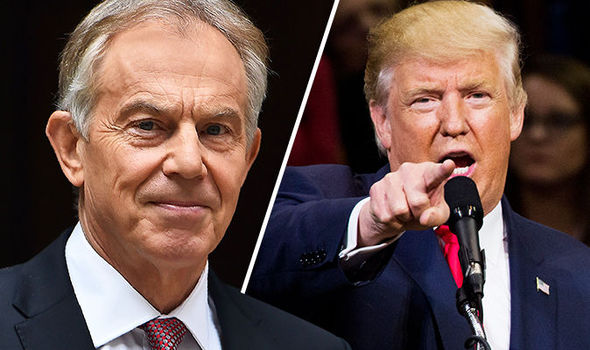
Donald Trump is a man who prefers the theatre of grand deals, and his latest performance was no exception. Flanked by Benjamin Netanyahu at the White House, the former president rolled out a 20-point plan for Gaza that aspires to achieve nothing less than a ceasefire, the release of hostages, the end of Hamas rule, and the reconstruction of the shattered strip. To lend the proposal gravitas, Trump announced that he would personally chair a “Board of Peace” and that Tony Blair would serve as one of its international members. It is a formula that combines Trump’s flair for control with Blair’s reputation as an experienced fixer of intractable conflicts. Yet for all its boldness, the plan is fraught with contradictions that will test both men’s skills—and the patience of the region.
The merits of the proposal are clear enough. It offers a path out of stalemate: an immediate ceasefire, swift release of hostages, and a framework for reconstruction funded largely by Gulf monarchies eager to stabilise their neighbourhood. It speaks to weary Israelis who long for respite, to Palestinians desperate for aid, and to Western allies who demand visible progress. The inclusion of a technocratic Palestinian committee to manage daily life is an attempt to sidestep factional politics while promising the eventual return of a reformed Palestinian Authority. The deployment of an international stabilisation force, though undefined in composition, is designed to assure both sides that Gaza will not collapse into anarchy the moment guns fall silent. There is also a method in appointing Blair. For two decades, he has cultivated relationships with Gulf rulers, Israelis, and Americans, even while being despised by many on the Arab street for his role in the 2003 controversial Iraq war. He understands the language of power, the mechanics of reconstruction, and the rhythms of diplomacy. His presence may reassure donors that their billions will not vanish into the sinkhole of corruption that has long plagued Palestinian governance. For Netanyahu, it offers a credible envoy who is not hostile to Israeli concerns; for Trump, it provides a seasoned partner who can shoulder the technical burdens of implementation.
But the liabilities are glaring. Trump’s decision to chair the Board of Peace is vintage showmanship but risks reducing diplomacy to a campaign prop. Critics will suspect that deadlines are timed to his own political calendar, and allies may hesitate to invest in a scheme so tied to one man’s fortunes. Blair’s involvement, meanwhile, revives bitter memories among Palestinians of Western intervention cloaked in paternalism. Extremist factions will seize on his role to argue that the plan is colonialism by another name. The Palestinian Authority, supposedly reformed and waiting in the wings, may find itself delegitimised before it even returns.
The practical hurdles are formidable. Disarming Hamas is easier to decree than to execute. The composition of the international security force is unresolved—will it be a UN-mandated mission, a coalition of Arab League states, or a patchwork of volunteers? Each option carries its own diplomatic baggage. The promise of Gulf funding is real, but conditional; Riyadh, Abu Dhabi, and Doha will expect political concessions in return. Even the ceasefire itself could collapse under the weight of spoilers, from rockets fired by splinter groups to provocations by Iran’s regional proxies. The clause that gives Israel carte blanche to resume military action if terms are breached may reassure Israelis but could also unravel the fragile truce at the first test.
Still, there is a deeper truth in the plan’s logic. Perfect mediators do not exist. Diplomacy is often carried out by flawed men with baggage, and by structures that are improvised and imperfect. Blair’s reputation in the Middle East is chequered, yet his access and experience remain rare commodities. Trump’s methods are brash and self-serving, yet his willingness to act boldly contrasts with the incrementalism that has too often paralysed others. If the alternative is endless war and Gaza’s continued descent into misery, then even a risky, personality-driven plan deserves consideration.
History will not indulge excuses if this opportunity is squandered. The hostages cannot wait, Gaza cannot rebuild itself, and Israel cannot forever live under fire. Whether this initiative proves to be a serious roadmap or another exercise in theatrics will depend less on its authors’ egos than on the willingness of regional actors to seize it. For now, the world can only watch as Trump and Blair, improbable partners, attempt to wrest order from chaos.