
Category Archives: Uncategorized

Rachel from Accounts and the Death of Labour’s Soul

By Adel Darwish

There was a time when the Labour Party could summon idealists, intellectuals, and political giants from the pavements of Britain. The Fabian Society debated the future of civilisation, not the future price of printer toner. Its members wrote books, not bullet points; they dealt in ideas, not invoices. They spoke of building a better world, not balancing the petty cash drawer. Today, the party’s intellectual inheritance has been pawned for a stack of spreadsheets, and its ideological flame entrusted to a woman we now know, affectionately and despairingly, as Rachel from Accounts.

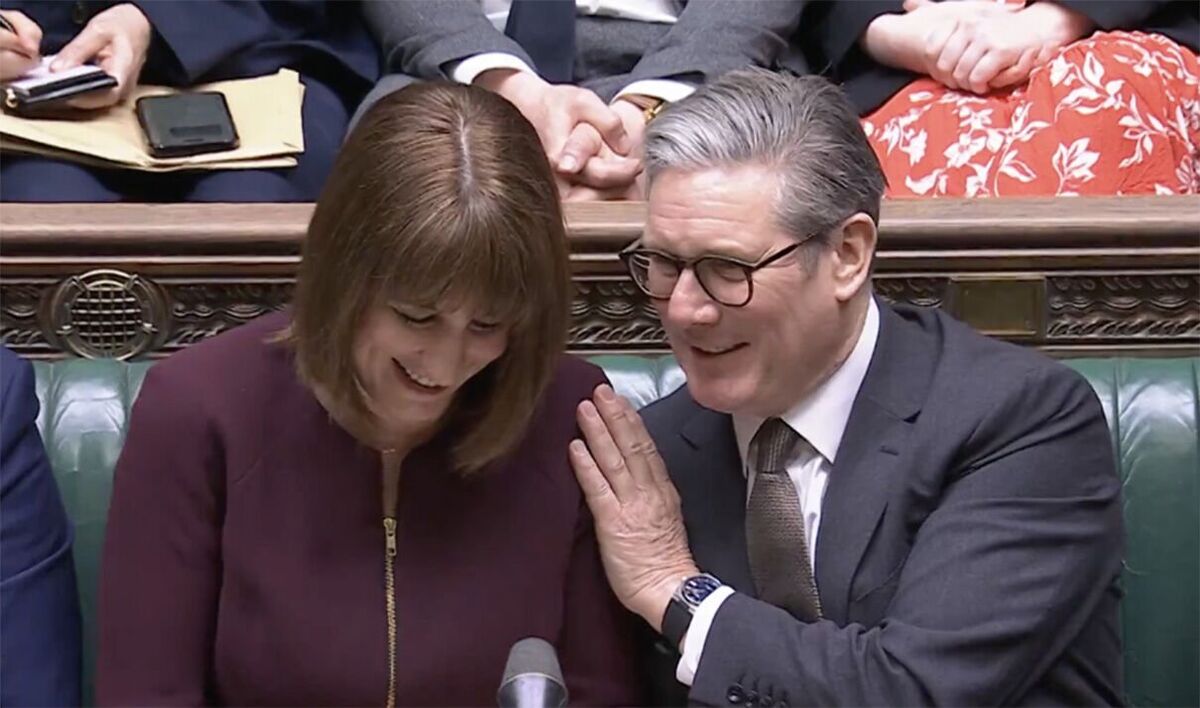
(The Express picture)

Political nicknames rarely land with such devastating accuracy. This one encapsulates not merely her demeanour but her method: the belief that government is a question of reconciled columns rather than reconciled ambitions. The Budget she delivered on Wednesday did not feel like a national plan. It felt like an internal memo leaked from an HR director defending cuts to the biscuits fund. And yet this is the moment Labour promised would herald a “new era” — a Britain rejuvenated, reenergised, and ready to lead. Instead, Rachel Reeves produced the long talked about written with the emotional range of a procurement manual. It wasn’t a Budget; it was a defibrillator applied to the dying political career of Sir Keir Starmer. It bought him time, nothing more. The economy was merely the collateral.

Let us be clear: Reeves did not govern — she bargained. Her primary audience was not Britain but Labour’s backbenches. The Budget was one long bribe disguised as fiscal discipline, designed to placate the party’s left flank, who, having mistaken slogans for policy, now regard taxation as a sacrament and aspiration as a sin. Seven Labour MPs already had the whip withdrawn for rebelling over the two-child benefit policy, only for a U-turn this week; this Budget was the ransom note required to forestall further mutiny.

Meanwhile, Starmer, a man increasingly resembling a hostage reading demands under duress, watched his Chancellor hack away at the country in order to keep the party intact. It is governance in reverse: the Starmer-Reevs regime survives, the nation pays.

Reeves’s media round the morning after confirmed what the Opposition, economists, and even cheery breakfast presenters warned all along: Labour’s election promises were fantasy. Reeves was repeatedly challenged on the simple arithmetic she once dismissed as cynicism. Freezing the income tax threshold at £12,570, she insisted, was not a tax rise. This was a heroic attempt to redefine the English language. Independent think tanks note the threshold freeze will leave families on around £35,000 a year £1,400 worse off — a hit far larger than a modest 1p or 2p rise in income tax would have delivered. In other words, Reeves has achieved the political miracle of taxing the many more painfully than taxing the few.

Then came the leaks — a farce that would embarrass a parish council, let alone the Treasury. Reeves held a Budget press conference two weeks early, despite the long-standing, near-sacred principle of Budget secrecy. Shadow Chancellor Mel Stride pointed out, with barely suppressed disbelief, that releasing market-sensitive fiscal measures ahead of time isn’t merely foolish — it is potentially illegal. Even the Deputy Speaker rebuked her, an act as rare in Parliament as a unicorn sighting.

And then the crowning humiliation: the Office for Budget Responsibility uploaded the entire Budget online forty minutes before she spoke. It vanished shortly thereafter, but the damage was done. Reeves stood at the Despatch Box like someone gamely reading out a surprise party invitation that had already been tweeted by the venue. Ministers once resigned for less. Reeves shrugged.

For context, when Hugh Dalton whispered a few Budget titbits to a journalist while walking into the Commons in 1947, he resigned the next day. When Jimmy Thomas leaked the Budget proposals in 1936, he left the Cabinet and public life. Reeves did not merely whisper; she broadcast — and yet she remains, the beneficiary of a political age that has forgotten what shame feels like.

But the true scandal is not procedure; it is purpose. Labour has raised £26 billion in taxes without allocating a penny to growth. Not a farthing for productivity. Nothing for enterprise. No relief for the industries crippled by the Net Zero policy. Reeves has built a fiscal fortress without an exit — a country where money circulates but does not multiply, where public services are funded but no wealth is created to sustain them.

Consider the property tax raid: heralded as a strike against the idle wealthy, it raises just £400 million — scarcely 1.5% of the total tax take. A drop in the Red Sea. Yet its ideological purpose is vast. It punishes those who are not deemed “working people” — the retired, landlords, homeowners who have saved rather than spent. These individuals will now either increase rents, worsening the housing crisis, or sell assets, withdrawing supply entirely. Schools, orphanages, and hospices with buildings worth more than this arbitrary threshold could be caught in the crossfire. Reeves has taxed philanthropy and called it justice.

Meanwhile, the wealth creators Labour insists have nowhere else to go have, in fact, gone. 10,800 millionaires left the UK in 2024 — many of them business owners and investors. The Adam Smith Institute calculates that replacing the tax contribution of a single millionaire requires 49 ordinary taxpayers. Reeves has effectively exported the fiscal equivalent of the population of Manchester. Britain has become the world’s only country where you are free to make money, provided you do it somewhere else.

Here lies the eulogy for Labour’s soul. The party of Attlee and Bevan sought to expand opportunity; the party of Reeves and Starmer seeks to itemise it. Old Labour asked how to build a future. New Labour asks how to fund yesterday. The Fabians once dreamed of progress. Rachel from Accounts dreams of a tidy balance sheet.

She has not crashed the economy. She has audited it into paralysis.

And the irony? The only growth Labour has delivered is in political nicknames. Reeves may yet go down in history not as Britain’s first female Chancellor but as the woman who proved that when you run a country like a spreadsheet, you eventually discover the nation has clicked “Delete” — and moved abroad.

End

Blair, Trump, and Gaza’s Last Throw of the Dice

By Adel Darwish

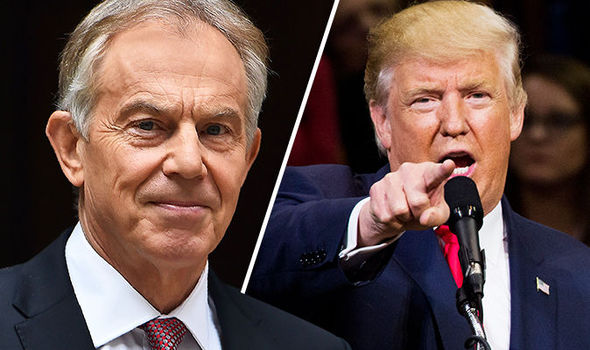
Donald Trump is a man who prefers the theatre of grand deals, and his latest performance was no exception. Flanked by Benjamin Netanyahu at the White House, the former president rolled out a 20-point plan for Gaza that aspires to achieve nothing less than a ceasefire, the release of hostages, the end of Hamas rule, and the reconstruction of the shattered strip. To lend the proposal gravitas, Trump announced that he would personally chair a “Board of Peace” and that Tony Blair would serve as one of its international members. It is a formula that combines Trump’s flair for control with Blair’s reputation as an experienced fixer of intractable conflicts. Yet for all its boldness, the plan is fraught with contradictions that will test both men’s skills—and the patience of the region.

The merits of the proposal are clear enough. It offers a path out of stalemate: an immediate ceasefire, swift release of hostages, and a framework for reconstruction funded largely by Gulf monarchies eager to stabilise their neighbourhood. It speaks to weary Israelis who long for respite, to Palestinians desperate for aid, and to Western allies who demand visible progress. The inclusion of a technocratic Palestinian committee to manage daily life is an attempt to sidestep factional politics while promising the eventual return of a reformed Palestinian Authority. The deployment of an international stabilisation force, though undefined in composition, is designed to assure both sides that Gaza will not collapse into anarchy the moment guns fall silent.
There is also a method in appointing Blair. For two decades, he has cultivated relationships with Gulf rulers, Israelis, and Americans, even while being despised by many on the Arab street for his role in the 2003 controversial Iraq war. He understands the language of power, the mechanics of reconstruction, and the rhythms of diplomacy. His presence may reassure donors that their billions will not vanish into the sinkhole of corruption that has long plagued Palestinian governance. For Netanyahu, it offers a credible envoy who is not hostile to Israeli concerns; for Trump, it provides a seasoned partner who can shoulder the technical burdens of implementation.

But the liabilities are glaring. Trump’s decision to chair the Board of Peace is vintage showmanship but risks reducing diplomacy to a campaign prop. Critics will suspect that deadlines are timed to his own political calendar, and allies may hesitate to invest in a scheme so tied to one man’s fortunes. Blair’s involvement, meanwhile, revives bitter memories among Palestinians of Western intervention cloaked in paternalism. Extremist factions will seize on his role to argue that the plan is colonialism by another name. The Palestinian Authority, supposedly reformed and waiting in the wings, may find itself delegitimised before it even returns.

The practical hurdles are formidable. Disarming Hamas is easier to decree than to execute. The composition of the international security force is unresolved—will it be a UN-mandated mission, a coalition of Arab League states, or a patchwork of volunteers? Each option carries its own diplomatic baggage. The promise of Gulf funding is real, but conditional; Riyadh, Abu Dhabi, and Doha will expect political concessions in return. Even the ceasefire itself could collapse under the weight of spoilers, from rockets fired by splinter groups to provocations by Iran’s regional proxies. The clause that gives Israel carte blanche to resume military action if terms are breached may reassure Israelis but could also unravel the fragile truce at the first test.

Still, there is a deeper truth in the plan’s logic. Perfect mediators do not exist. Diplomacy is often carried out by flawed men with baggage, and by structures that are improvised and imperfect. Blair’s reputation in the Middle East is chequered, yet his access and experience remain rare commodities. Trump’s methods are brash and self-serving, yet his willingness to act boldly contrasts with the incrementalism that has too often paralysed others. If the alternative is endless war and Gaza’s continued descent into misery, then even a risky, personality-driven plan deserves consideration.

History will not indulge excuses if this opportunity is squandered. The hostages cannot wait, Gaza cannot rebuild itself, and Israel cannot forever live under fire. Whether this initiative proves to be a serious roadmap or another exercise in theatrics will depend less on its authors’ egos than on the willingness of regional actors to seize it. For now, the world can only watch as Trump and Blair, improbable partners, attempt to wrest order from chaos.

Ending the Eviction Ban for Rent Arrears is a Crisis of the Government own making

The latest report from Joseph Rowntree Foundation after a large-scale survey reveals that around 400,000 renting households have either been served an eviction notice or have been told they may be evicted, when the eviction (for rent arrears) ends Monday 1 June, is disturbing, but this is not the full picture especially with mostly leftwing-liberal media demonising landlords .
But the picture is far from what you read in the Guardian or hear on the BBC. It is a complex picture. The majority of landlords are small investors, heavily mortgaged., and the gross income from the property is not much higher than the average income before the British taxpayer starts paying tax, while more than half of landlords’ investment is actually their pension . The crisis if of the treasury and the local authorities making and could have been avoided had they paid the rent directly to the landlords and deducted from the tenants’ benefits.

Continue reading

INVESTMENTS TO BOLSTER VACCINE MANUFACTURING CAPACITY

UK Government and Valneva confirm multi-million-pound up-front investment in Livingston manufacturing facility, following agreement to secure 60 million coronavirus vaccine doses. The Valneva’s site in Livingston will manufacture the vaccine, supporting the jobs of more than 100 highly-skilled scientists and technicians. The  Latest deal follows a number of agreements to procure millions of doses of vaccines, ensuring the greatest possible chance of securing access to a safe and effective vaccine.

Continue reading

Egypt’s Mubarak left a mixed legacy, mostly negative.

Hosny Mubarak who was fourth president of Egypt for thirty years left a mixed legacy. He opened the door for changing the personality cult of a president and improved economy; regionally he played a major role in 1990 in building Egypt lead regional coalition forces to liberate Kuwait and was one of several architects who helped the Palestinians and Israelis to reach a peace agreement in 1993.

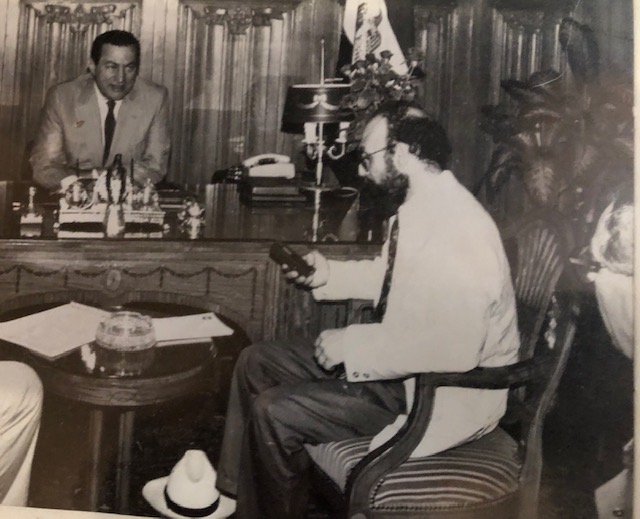
Interviewing President Mubarak, Qubbah Palace, Cairo 1988. But he was responsible for wide corruption and ending 160 years of modernity paving the way for the islamisation of Egypt and ending secular liberalism. I met him several times and this is my personal view as a historian .

Continue reading

HM Government in Full- Update

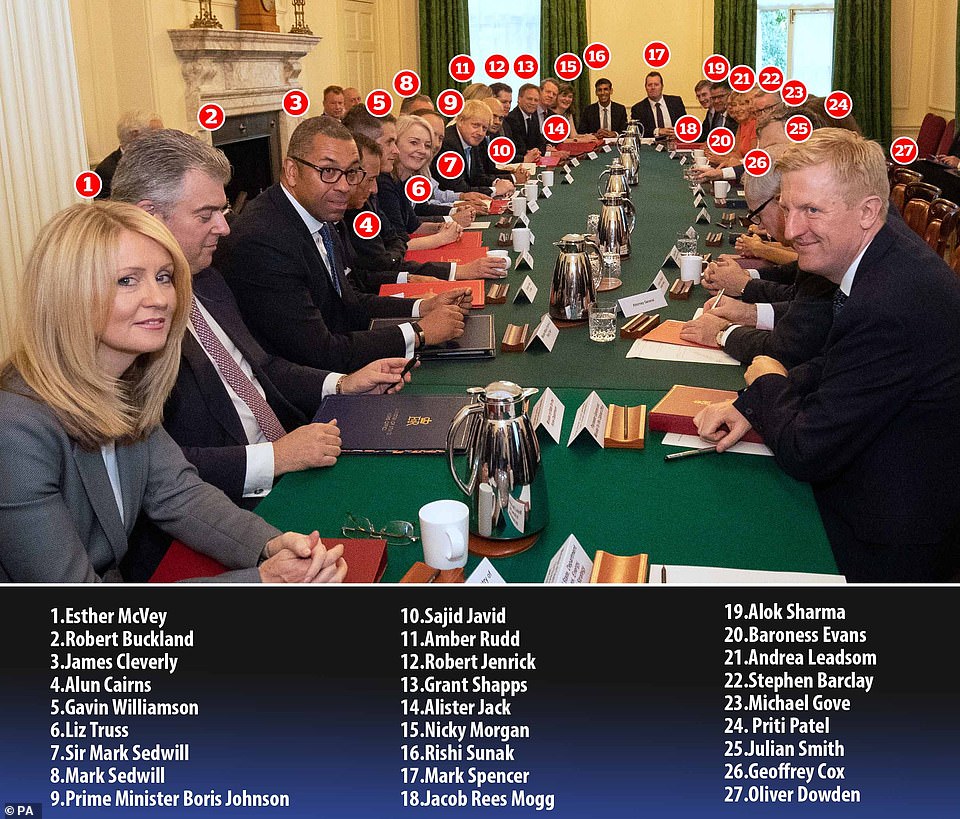
This is Boris Johnson’s full cabinet as on 31 July 2019, there are a few minor posts to fill , but is a strong ethnic and faith mix cabinet, and most important key posts are given to Thatcherite free-market economy and strong pro breast and for national independence from Brussels.

Cabinet First meeting, 23 July 2019 – PA photo

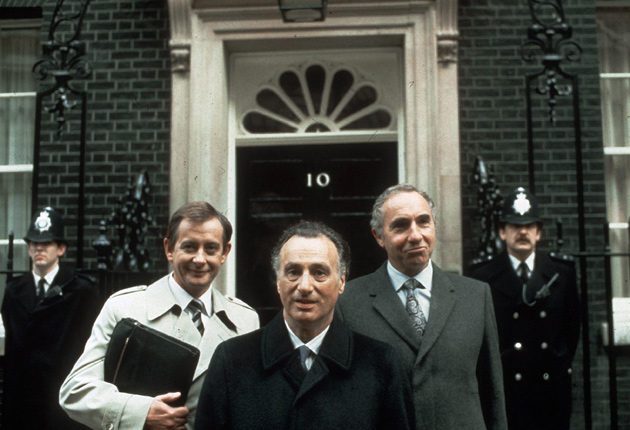
Key posts went to MPs like Sajid Javid at No 11 as Chancellor of the Exchequer , Dominic Raab MP at the Foreign and Commonwealth office; Priti Patel as Home Secretary and Liz Truss MP, who believes in free international trade and free market at Department of international Trade. In Addition, Vote leave activist Andrea Leadsom MP at the helm of Business and Industrial Strategy, while Boris’s old vote leave campaign comrade Michael Gove MP, is in the Cabinet Office as Chancellor of the Duchy of Lancaster, cracking the whip over the heads of the civil services to push for Brexit against sir Humphreys’s brakes-slamming on the Whihtehall machine that want to delay Brexit former.
Continue reading

Parliament’s Acting as a “Shadow Government,” says Tony Blair

Brexit, There is no Third way , says Tony Blair, as he was handed an egg by a Tory Mp, saying, he wouldn’t throw it at him. Blair’s speech in full.

 Former Prime Minister and Labour Leader  the Rt Hon Tony Blair made a dramatic intervention today criticising the way the Tory Government lead by Theresa may conducted the the negotiations with the EU which  was not ” handled very well”, as he said adding it became 2 half in-half out.” .Mr Blair wanted his message, that  parliament was operating as a “shadow government by frustrating Theresa May over her Brexit deal and asserting control over the Government,” would accurately reach the entire nation, he gave a copy of a speech he made today at the Parliamentary Press Gallery monthly lunch, at which he was a guest speaker, to 200 Westminster reporters, MPs, Lords and influential media guests.  The former Prime Minister  backed MPs, arguing there was as much leadership on the backbenches as the frontbenches. He also suggested the Prime Minister  would be better off pulling the Commons vote on her Brexit deal on Tuesday 11 December, as she remains on course for near-certain defeat.

Just before the Westminster crowd sat to Lunch, their was a light hearted touch by Conservative MP for Beckenham, Colonel Bob Stewart who  told the former labour leader, who sent British troops on 12 intervention, the most controversial of them  was the wars in Iraq and Afghanistan, ” I wont be throwing this at you,” presenting him with an egg inscribed with ” to Tony with Love” .

Mr Blair He said  Prime Minster may  had tried to square the circle of Brexit, with a deal that was “pain-less” but “point-full” – but lamented that there was no “acceptable third way” on the issue.

He  argued that voters will feel betrayed by the deal put forward by the Prime Minister, and that a second referendum would be the only option if parliament ends up deadlocked.

Continue reading

Attorney General Legal Advice confirms: UK Locked in Backstop

After Attempts to hide the legal advice over the EU Brexit agreement, the government suffered two defeats, and was forced at the end to publish it. 

Attorney General  Geoffrey Cox defending himself in the commons

Below is the attorney general advice in full.

The  government was forced to release this morning  ( Wed 5 December 2018) after being defeated in the House of Commons last night .

The government first tried to table an amendment to the six opposition parties motion, referring the matter to the privileges committee, which would have taken months to reach conclusion regarding the ministers contempt of parliament. Then the government was defeated in the second vote of contempt of parliament.

The tellers confirm the government defeat in last night’s vote

The leader of the house then gave in . The The Attorney General’s Brexit legal advice  was then  published in full today. It warns the United Kingdom could be left in “protracted and repeated rounds of negotiations” over the Irish backstop. The Attorney General  found that the protocol setting out the terms of the backstop “does not provide for a mechanism that is likely to enable the UK lawfully to exit the UK-wide customs union without a subsequent agreement”. Despite assurances from both London and Brussels that it is intended to be temporary – the protocol would “endure indefinitely” under international law until another agreement takes its place. The advice noted “In the absence of a right of termination, there is a legal risk that the United Kingdom might become subject to protracted and repeating rounds of negotiations.” “This risk must be weighed against the political and economic imperative on both sides to reach an agreement that constitutes a politically stable and permanent basis for their future relationship.” he concluded “This is a political decision for the Government.”

Here is the legal advice in full:

Rt Hon Geoffrey Cox QC MP Attorney General; Attorney General’s Office; W1A 2AA Continue reading

Prime Minister: Russian Military Service Units planned Salisbury Novichok Attack

In strong Statement to  the House of Commons, Prime Minister Theresa May said there was strong material and TV footage evidence linking two officers with the GRU  ( The Russian Military Intelligence) with the Salisbury Poison attack. Traces of the poison was found in their hotel rooms, and CCTV footage showed them in the area.

The UK issued a European arrests warrant and will ask the Interpol to also issue international arrest warrant  against the two suspects who were named as Alexander Petrov and Ruslan Boshirov.  

The United States Ambassador to UK, Woody Johnson,  said his country stands with Britain in holding Russia accountable for its ” act of aggression ” on British soil.

Read The Prime Minister Statement to the House of Commons in ful

Continue reading

The late Scribe of Cairo, remembered on his 12th Anniversary

On the 12th  anniversary of the Nobel Laureate “Scribe of Cairo” death – his obituary revisited, first penned as obituary on 30 August 2006 

The death on 29 August 2006  of Egyptian novelist Naguib Mahfouz generated a quarrel between historians, literary critics and Egyptians on one side, and Arab journalists on the other. It was a re-run of the 1988 controversy, when Mafouz won the world’s most prestigious award–the Nobel Prize for literature–to the outrage of Arab nationalists who had condemned the author for his support of the late President Anwar Sadat’s peace initiative with Israel.

Continue reading