Category Archives: Defence & Security

The Logistics of Power: When War and Oil Markets Converge on the Price of Geography

Signals from Washington D.C., Tehran, Lebanon, and the Strait
By Kate Jones, White House Bureau Chief

Wars are often narrated through explosions, declarations, and fear. In reality, outcomes are decided by quieter forces: logistics, geography, and time.

The unfolding crisis across the Middle East illustrates this principle with unusual clarity. Military movements along the Lebanese border, the strategic signaling emanating from Tehran, and the volatility of global oil markets are all expressions of a single underlying constraint: the movement of supply across geography.

Armies move on logistics. So does the world economy. War planners and oil traders rarely speak the same language, yet strategists from Carl von Clausewitz to Alfred Thayer Mahan understood that power ultimately rests on logistics. On this rare occasion, military conflict involving Iran and global markets converges on the same constraint in parallel. This is one of those moments.

The White House is attempting to reassure markets that the current volatility reflects disruption rather than structural scarcity.

“Under President Trump’s American energy dominance agenda, oil and gas production has hit record highs and prices at the pump had dropped to multi-year lows,” said White House spokeswoman Taylor Rogers in a statement provided today. “President Trump has been clear that these are short-term disruptions. Ultimately, once the military objectives are completed and the Iranian terrorist regime is neutralized, oil and gas prices will drop rapidly again, potentially even lower than before the strikes began. As a result, American families will benefit greatly in the long term.”

Washington has begun exploring several policy options aimed at easing upward pressure on crude prices. Officials have discussed a potential temporary waiver of the Jones Act to allow greater flexibility in transporting crude between U.S. ports, and the administration confirmed that approximately 172 million barrels remain available in the U.S. Strategic Petroleum Reserve. The White House has also signaled a willingness to loosen certain restrictions affecting global supply flows, including allowing greater purchases of Russian crude in global markets, while opening limited new offshore drilling opportunities along the California coast.

In aggregate, however, these incremental policy moves have so far done little to calm markets, where crude prices continue to respond primarily to geopolitical risk surrounding the conflict with Iran and the security of maritime shipping routes. The broader U.S. economic backdrop remains relatively strong. Recent data on employment, trade balances, housing activity, and inflation have generally surprised to the upside, with price pressures remaining comparatively contained. Under normal circumstances such macroeconomic signals might anchor market confidence. Instead, geopolitical risk surrounding the conflict with Iran and the security of maritime shipping routes is dominating price behavior in energy markets. A timely resolution to the conflict would likely reinforce expectations of continued economic resilience.

Yet markets are grappling with a different question: how to price a war whose logistical boundaries remain unclear.

The Psychological Threshold: $100 Per Barrel

West Texas Intermediate crude is approaching $100 per barrel, a level traders view as a psychological threshold capable of spilling quickly into equities, inflation expectations, and broader financial volatility. Policymakers therefore face an immediate question: whether the administration is preparing for that level and how it intends to communicate confidence if the threshold is crossed.

Concerns about market stability have already surfaced within the financial system itself. As the Financial Times reported this week, the chief executive of CME Group, Terry Duffy, warned that direct government intervention in oil futures markets could risk a “biblical disaster” by undermining confidence in the mechanisms used to establish global benchmark prices. Speaking to traders at an industry conference, Duffy cautioned that attempts to influence crude prices through derivatives markets could damage the credibility of the pricing system itself. Traders had begun asking who the large sellers in the market were, reflecting growing speculation that governments might attempt to calm prices during wartime volatility.

For traders and policymakers alike, the initial phases of war involve signals, noise, and the pricing of geopolitical risk amid uncertainty about the duration of disruption. Yet the deeper uncertainty lies in the real price of oil determined by the physical movement of supply.

The United States and members of the International Energy Agency have announced the largest releases from global strategic reserves, a record 400 million barrels, intended to stabilize markets. Yet the practical mechanics remain critical: the timing and volume of those releases and the speed at which those barrels can realistically reach global markets.

Energy traders are confronting a logistical paradox. Global oil production continues, but large volumes of supply may effectively remain offline if tankers cannot safely transit key shipping corridors.

Oil that exists but cannot move. War disrupts logistics before it destroys supply. Surplus builds.

When maritime risk increases through naval confrontation, insurance restrictions, or the mere threat of sea mines, missile strikes, or drone attacks, transport slows and storage pressures begin to build across the system. Production continues while shipping stalls, leaving supply stranded in storage or held at terminals awaiting safe passage.

Eventually producers face a stark choice: shut in wells. There is no simple off switch for production without risking damage to equipment. Refineries face similar constraints. Shutting down units abruptly can take days or weeks and may require costly maintenance before operations can resume.

These are complex chemical plants. Reactors cool. Catalysts destabilize. Pressure systems depressurize. Pipelines must be purged. Heaters must be restarted slowly. Safety systems trigger.

Unlike financial markets, the physical energy system cannot simply take a day off.

Markets struggle to price the situation because two critical variables remain unknown: the volume of disruption and the duration of disruption.

Until one of those variables becomes clearer, volatility persists. Markets are now shifting from signal toward calculating volume. The future calculus of supply surplus, stranded inventories, and potential shutdowns has not yet been fully reflected in price.

For analysts mapping supply chains and physical flows across the energy system, the central challenge is visibility. Disruptions propagate through shipping routes, insurance markets, storage capacity, and refining networks. Governments, traders, and central banks increasingly rely on supply-chain tracking and commodity-flow analysis to understand how shocks travel through the global energy system.

Alternative routes are part of the calculation. Saudi Arabia maintains east–west pipeline infrastructure capable of moving crude from Gulf fields to Red Sea export terminals, bypassing the Strait of Hormuz. The United Arab Emirates operates a similar corridor through the Abu Dhabi Crude Oil Pipeline. These routes reduce vulnerability but cannot eliminate it. The majority of Gulf exports still depend on maritime transit through narrow waterways. The global energy system remains constrained by geography. To understand the moment, however, one must begin not in Washington or in oil markets, but in Tehran.

The View from Tehran

From Tehran’s perspective the confrontation with Israel and the United States is not a conventional war to be won on the battlefield. It is a contest of endurance.

Iran’s leaders understand the asymmetry of power. They cannot match American military strength directly. Instead they have constructed a strategic architecture designed to complicate any confrontation in the region. Rather than relying solely on national forces, Tehran has long cultivated a network of regional partners stretching across the Middle East. These relationships create what Iranian strategists consider strategic depth: layers of pressure that expand the geography of any conflict. Within that architecture, Hezbollah occupies a central role.

For Tehran, Hezbollah is not simply an ally. It is a forward layer of deterrence positioned on Israel’s northern frontier. Any strike against Iran carries the risk of escalation across multiple theaters. The objective is not necessarily to win a war outright. It is to transform the strategic environment in which war occurs.

Lebanon and the Logic of Battlefield Shaping

Recent Israeli strikes in southern Lebanon illustrate this dynamic. Bridges and transportation routes have been targeted near the border. Such actions may appear tactical, but their meaning is operational. Military planners describe these strikes as battlefield shaping.

Infrastructure destruction serves several purposes simultaneously. It isolates the battle space, channels enemy movement into predictable routes, and complicates reinforcement and resupply. Destroying bridges does not necessarily signal an imminent ground invasion. Such strikes may support sustained air campaigns, cross-border raids, or deterrence signaling.

Analysts therefore look beyond individual attacks and instead search for clusters of logistical indicators. Fuel trucks begin staging forward. Ammunition depots appear near the frontier. Supply convoys accumulate. Maintenance units follow armored formations.

Medical infrastructure expands as well. Field hospitals deploy. Medevac helicopters move forward. Casualty evacuation systems prepare for sustained operations. Combat engineers arrive to reshape the terrain itself—clearing mines, breaching obstacles, and constructing crossings for armored units. Artillery positions move into range while drones and reconnaissance patrols map the battlefield. Special operations units often move ahead of main forces to reconnoiter terrain and confirm targets.

Individually none of these indicators proves an invasion is imminent. Together they form a pattern. When logistics staging, reconnaissance activity, engineering preparation, artillery positioning, and maneuver forces align, analysts begin to conclude that combined arms operations may be approaching.

Logistics reveals intent. The same logic governs global energy markets.

The Parallel Battlefield: Energy

Oil production may continue uninterrupted, yet supply can disappear from markets if transport corridors become insecure. In this sense energy markets operate on their own logistical front lines. Nowhere is this more evident than in the Strait of Hormuz. Roughly one-fifth of global oil shipments normally transit this narrow corridor connecting the Persian Gulf to the wider world.

Disruption here need not involve the destruction of tankers. Insurance restrictions, naval confrontation, or the mere threat of sea mines or drone attacks can slow maritime traffic dramatically. As one Wall Street commodities veteran and chief risk officer at a major firm put it, “No missiles, no drones. That has to stop.” Until the attacks stop, the oil won’t move. Fear of potential events alone can slow maritime traffic enough to remove millions of barrels from effective circulation. Supply cannot move logistically.

Traders refer to this phenomenon as held supply. The oil still exists. In such circumstances markets struggle less to price risk accurately. Two variables remain uncertain: the volume of disruption and the duration of disruption.

The uncertainty spreads beyond energy markets. Oil prices influence inflation expectations, central bank policy, and equity valuations. A disruption in maritime logistics therefore transmits financial pressure across the global economy. Other vital products, such as fertilizer, quickly become agricultural and food supply concerns.

The Data Before the Briefing

Wars begin with speeches and strikes. They become intelligible through data. The next important signal will come from Washington. The Pentagon is scheduled to brief at 0800 tomorrow morning. Energy markets, shipping insurers, commodity traders, and central banks will all be listening.

The critical questions are logistical. Can tanker escorts be provided? How quickly can maritime routes reopen? Can alternative pipelines absorb displaced supply? Have mine-clearing operations begun? The answers determine whether disruption is measured in days, weeks, or months.

Reserve releases from the International Energy Agency may soften the immediate shock. But they function primarily as a buffer or a band-aid. They do not reopen shipping lanes or restore maritime confidence. Markets therefore face a dilemma.
Oil supply exists, but its movement remains uncertain.

A trader’s observation captures the problem precisely: markets can absorb a disruption if either the volume or the duration is known. They struggle when both variables remain uncertain. Until those questions are answered, volatility will dominate. Markets can price geopolitical risk immediately. Physical supply takes longer to reveal itself. Eventually the two must meet, and when they do the price settles into reality based on data rather than fear. Markets are now shifting from signal toward calculating volume. Markets price risk first. Logistics sets the price later.

War and the Movement of Supply

The first phase of a crisis is dominated by spectacle. The second phase is governed by logistics.

Tankers moving or not moving. Pipelines operating at capacity or not. Insurance costs rising or stabilizing. These are the signals that determine whether a geopolitical confrontation evolves into a structural economic disruption.

Iran’s strategy relies on complicating logistics across a region and destabilizing global markets. Israel’s strategy seeks to restore operational clarity by isolating battlefields and degrading infrastructure. The United States pursues a broader objective. As President Trump has stated and Special Envoy Steve Witcoff has reiterated, Washington intends to eliminate Iran’s nuclear infrastructure, its long-range strike capability and its defense industrial base, all while ensuring that global trade routes remain open.

In a message posted in the early hours of Friday morning on Truth Social, President Donald Trump said the United States was “totally destroying the terrorist regime of Iran, militarily, economically, and otherwise,” describing Iranian naval, air, and missile capabilities as being rapidly degraded.

The resolution of the conflict ultimately revolves around the same principle. Power must balance. Armies must move. Supplies must move. Energy must move. Logistics win wars and restore markets. Between these forces lies the real terrain of modern conflict.
Oil Markets Swing as Traders Watch War Signals and the Strait of Hormuz

By Kate Jones — White House Bureau Chief

Energy markets have behaved less like traditional commodity markets and more like instruments of geopolitical interpretation in recent days. Within roughly thirty-six hours, prices surged amid fears that the war could disrupt shipping through the Strait of Hormuz long term, before retreating as traders absorbed signals from Washington suggesting the conflict may prove shorter than initially feared. Brent crude was trading around $90–$91 per barrel as of midday EDT Wednesday, after briefly approaching $119 earlier this week before falling sharply as markets reacted to shifting signals about the duration and scope of the war with Iran.

The rapid swings reflect the reality that energy markets during wartime do not simply measure physical supply. They interpret political, military, and news signals to estimate what supply may look like weeks or months ahead.

In that sense, oil markets become a kind of strategic crystal ball, reacting less to the present flow of barrels than to expectations about the future course of the conflict. Even while there is more energy supply than demand, disruption at a strategic chokepoint makes the real flow of energy difficult for markets to price.

Governments Move to Stabilize Markets

Governments are also beginning to move emergency supply into the market.

Officials from major industrial economies have been discussing coordinated releases from strategic petroleum reserves to stabilize prices as the conflict threatens shipping in the Persian Gulf. The effort is being coordinated by the International Energy Agency, which organizes emergency stock releases among advanced industrial economies. This could be up to 400 million barrels total from IEA members.

Japan moved first, announcing plans to release roughly 80 million barrels from government and privately held emergency reserves in an effort to cushion markets from potential supply disruptions. Traders say the announcement itself has already been partially priced into markets.

Strategic reserve releases historically dampen price spikes even before the oil physically reaches the market because traders begin factoring future supply into pricing models. Reserve releases buy time, soften volatility, and increase supply temporarily. They cannot replace the roughly one-fifth of global oil supply that normally passes through the Strait of Hormuz, which remains the central risk driving market swings.


Markets Watching Washington

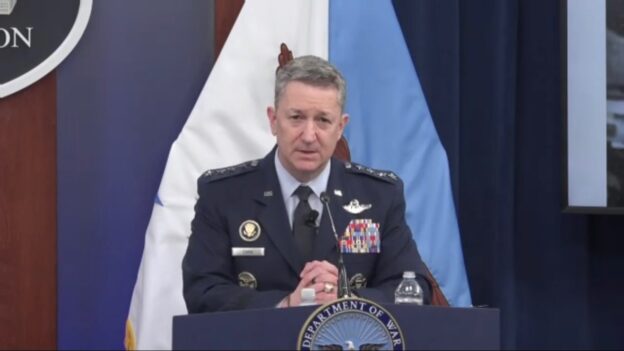
Speaking at the House Republican conference in Doral, Florida, President Donald Trump suggested the campaign against Iran might conclude relatively quickly, saying “We will ensure the routes.” The President later warned that any attempt by Iran to halt oil flows through the Strait of Hormuz would trigger a far stronger response. “If Iran does anything that stops the flow of Oil within the Strait of Hormuz, they will be hit by the United States of America twenty times harder than they have been hit thus far.” This was reiterated by General Caine when asked at a press conference Tuesday morning, when it was safe to do so, the U.S. would ensure safe passage. Development Finance Corporation CEO Ben Black, said, the “DFC is here to provide support and stability in order to ensure there are minimal disruptions to operations and markets,” and “DFC’s Political Risk Insurance and Guaranty products will help ensure commerce, capital, and energy can operate at capacity during the ongoing conflict.”

Battlefield Signals and the Oil Market

Defense officials say U.S. forces have struck more than 5,000 targets inside Iran, focusing primarily on missile systems, defense industrial manufacture, drone infrastructure, and nuclear-related facilities.The nuclear dimension of the conflict also remains central to Washington’s strategic rationale. During negotiations before the escalation, U.S. envoy Steve Witkoff said Iranian negotiators acknowledged that Iran possessed enough highly enriched uranium that, if further enriched to weapons-grade levels, could theoretically produce material for roughly eleven nuclear weapons.

Despite the numbers, and official statements daily that today is the biggest day, there should be caution that the effectiveness of the strikes will take time to fully evaluate. Analysts at the National Geospatial-Intelligence Agency typically require about a week to produce a comprehensive battle-damage assessment, meaning early claims about the impact of strikes remain preliminary. It could take a week from the final hit to know with certainty that shipping can be secured.

Mines, Missiles and Maritime Pressure

New battlefield analysis suggests Iran has explored mining the Strait of Hormuz as a way to disrupt maritime traffic. Yet mining the strait would also threaten Iran’s own exports.

U.S. Central Command reported that American forces destroyed 16 Iranian vessels capable of laying naval mines near the Strait of Hormuz, part of a broader Iranian effort to threaten maritime traffic and impose economic costs on Gulf states and the United States. Iran has historically used naval mines to threaten shipping lanes in the Persian Gulf, and even limited mining could halt commercial traffic because insurers and shipping companies typically suspend transit until mines are cleared. Iran had somewhere between 3000-5000 sea mines stockpiled, predominantly Russian and Chinese made.

Commercial maritime tracking indicates that traffic from vessels associated with Iran’s so-called “ghost fleet” has already dropped sharply in recent days.

Kharg Island and the Oil Lever

One strategic option discussed in Washington involves Iran’s primary export terminal at Kharg Island. The island handles the majority of Iran’s oil exports and represents the central node of Tehran’s energy revenue. President Trump has reportedly suggested the possibility of deploying U.S. forces. Troops could try to neutralize or seize the facility in an operation that could effectively strangle Iran’s oil exports without attempting to occupy Iranian territory.

Such a move would represent a major escalation, but it illustrates how maritime dominance alone can exert enormous economic pressure on an oil-exporting state. Even without physically closing the Strait of Hormuz, controlling the skies and having maritime control can impose similar effects, making such a plan less likely.

The challenge is that Iranian missile batteries, drones, and naval patrol craft positioned along the coast still threaten vessels passing through the narrow corridor. Until every drone is neutralized, insurers and shippers will remain shy of using the waterway.

Kurdish Regions and Internal Pressure

Western Iran may also become an arena for internal instability as the conflict continues. Several provinces along Iran’s border with Iraq including Kurdistan, Kermanshah, and Ilam have seen strikes targeting internal security forces and police facilities.

Reports indicate the Trump administration has encouraged Kurdish leaders in the region to challenge Tehran’s authority, raising the possibility that Kurdish groups could open a second internal pressure point against the Iranian government.

Analysts say Kurdish leaders seem prepared to act, but require external encouragement matched by sustained international support, while a Kurdish uprising could weaken Tehran’s internal control but would also carry risks of regional fragmentation.

Regional Escalation

The conflict widened as Iran and Hezbollah increased attacks on Israel. Israeli officials say that Iranian and Hezbollah forces launched coordinated missile barrages using cluster-munition warheads, weapons that disperse dozens of smaller bomblets over a wide area after a missile detonates at altitude. Military assessments indicate that a significant share of Iranian missiles fired during the conflict have carried cluster submunitions, complicating air-defense interception and increasing the risk to civilians. The coordinated use of such weapons widened the conflict into a broader regional confrontation involving Tehran’s proxy network.

Diplomacy and Intelligence

The war has also raised questions about Russian involvement, but Russian officials have denied sharing intelligence with Iran during the conflict. Asked whether Washington could rely on those assurances, U.S. envoy Steve Witkoff responded cautiously. “I’m not an intelligence officer, so I can’t tell you,” Witkoff said. “Let’s hope that they’re not sharing.”

Markets Waiting for the Next Signal

For traders, the decisive variable remains time. If the conflict proves short and shipping continues to move through the Strait of Hormuz, the geopolitical premium currently embedded in oil prices could fade quickly. The markets are the factor most carefully managed by the Trump administration, one can be sure it is closely watched to ensure stability, consumer confidence in the administration and at the pump, while economic statecraft combines with warfare.

The administration has a timeline on trust, if the war expands into a prolonged struggle over maritime control, insurance markets, and energy infrastructure, oil traders will begin pricing in a reality. This could be a much deeper disruption to global supply. With nearly one-fifth of the world’s oil moving through a corridor only a few miles wide, even the perception of danger in the Strait of Hormuz has proven to move markets and shape the global economy.

In modern energy markets, strategy and price now move together: every missile launch, naval maneuver, or diplomatic signal becomes another data point in the world’s attempt to predict the future. In modern warfare, the balance of power is an act of economic statecraft as much as surgical strikes.

Armistice with Accounting: The Only Gaza Deal That Holds

A failed airstrike on 9 September broke the stalemate, isolated Netanyahu and forced a deal. The only workable outcome now is an armistice with accounting: hostages for corridors, daily monitoring, and real penalties for breaches, Adel Darwish argues.

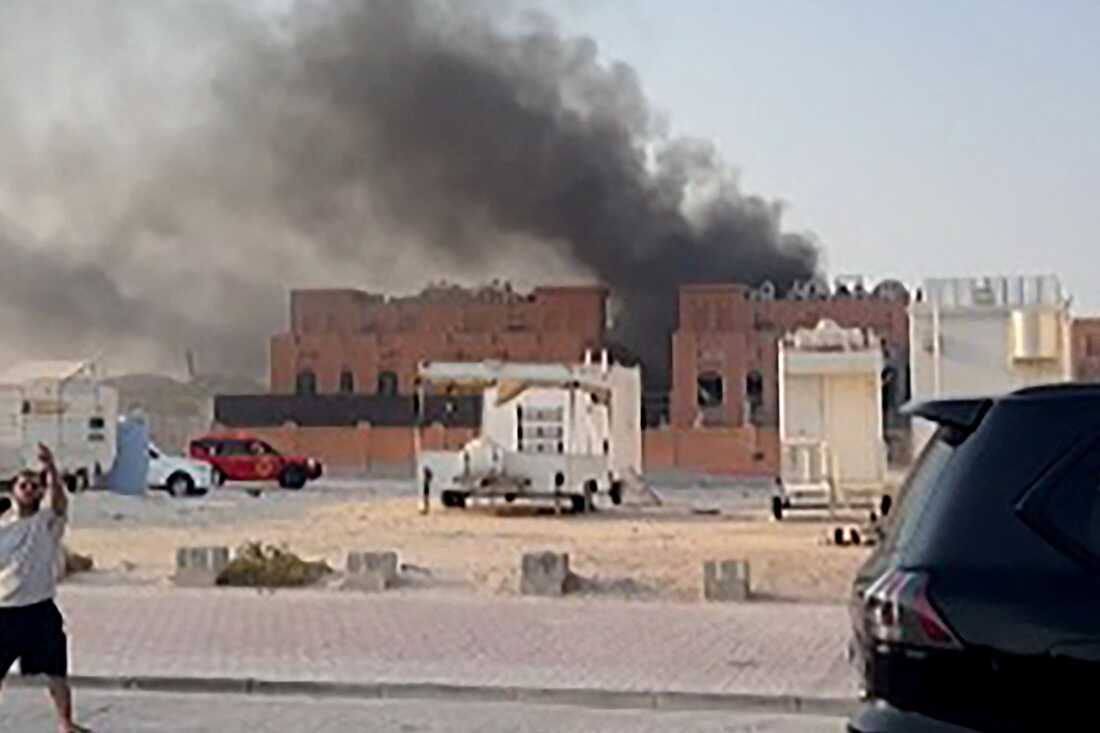
This frame grab taken from an AFPTV footage shows smoke billowing after explosions in Qatar’s capital Doha on September 9, 2025. Israel’s military said it carried out air strikes on September 9 targeting senior Hamas leaders in the Qatari capital Doha, the venue of multiple rounds of talks aimed at ending the Gaza war. (Photo by Jacqueline PENNEY / AFPTV / AFP) (Photo by JACQUELINE PENNEY/AFPTV/AFP via Getty Images)

Dates matter in the Middle East, and many dates became names of important sites and monuments. 9 September 2025 is one of them. An Israeli air strike on Hamas figures meeting in Doha did not decapitate the movement, but it detonated assumptions. It told Hamas there is no sanctuary left. It exposed the political ceiling facing Israel’s Prime Minister Benjamin (Bibi )Netanyahu. And it jolted Washington—President Trump, personally—into blunt engagement that turns fury into leverage. “Bibi, you cannot fight the whole world,” he reportedly said. That is not diplomacy by sonnet; it is the language of a dealmaker who knows when a war aim has outrun the coalition needed to sustain it. The point is not who was persuaded; it is that everyone was cornered by the same facts at the same time.

The strike changed the psychology inside Hamas. Doha had been the last place its leaders believed they could plan and bargain in relative comfort. Once you are targetable anywhere, your margin for waiting it out collapses. Hamas needed a ramp—any ramp—off a burning platform. The same date tolled another bell in Jerusalem. The operation failed to eliminate its intended targets. A failed audacious strike is costlier than no strike at all. It handed critics proof that maximalist rhetoric was outrunning results, while Israel’s allies—from Washington to European capitals—were signalling exhaustion. Several European states then moved to recognise a Palestinian state. Recognition alone does not change realities on the ground, but it sharpened Israel’s isolation just as the war was taxing its economy, its diplomacy and the patience of friends. There is a grim memory in the Israeli debate: when Israel left Gaza, Hamas, the masters of the strip, struck a nasty blow when it had the chance. That October trauma is not a talking point; it is an imprint—quietly understood across regional capitals that will not say it aloud for fear of inflaming their own streets. On 9 September, the arithmetic, not the slogans, mattered: Israel can strike back but cannot, alone, produce an end-state without partners.

Three regional actors suddenly mattered most: Egypt, Qatar and Turkey. Egypt is Israel’s consequential neighbour and Gaza’s only non‑Israeli exit. Since the 1979 peace treaty, Cairo and Jerusalem have been at peace longer than they were at war. Egyptian intelligence knows Gaza inside out and the red lines; when Cairo turns the screws, it hurts. Qatar is where Hamas leaders have sheltered, fund‑raised and politicked. Doha’s leverage is the guest list; without its facilitation, any prisoner‑hostage exchange or stabilisation plan loses the only channel the movement trusts. Turkey is NATO by treaty and Muslim Brotherhood by sympathy. President Erdoğan’s moves conduct Islamists’ calculated steps. Individually, each capital can stall. Together, they can compel. And together is how they came—first separately, then in concert on the margins of the UN—with one message to Washington: do not ask us to defend a process while you tolerate tactics that kill the process. That message landed.

This is the other half of 9 September. The American President’s anger at the strike was not moral theatre; it was transactional. He saw an Israeli move that shredded the coalition needed to stabilise Gaza, protect the hostages, keep the Red Sea from flashing over and prevent Lebanon from sliding from simmer to boil. The lesson of decades of bargaining is simple: coalitions make peace; loners make speeches. A White House that feels its coalition splintering slams the table—and did. Hence the intervention that followed: deal now. Hostages for corridors. Monitors who do monitor. Fuel that goes to bakeries and hospitals—with meters, not platitudes. Sanctions that hit violators, not bystanders. Draw the map. That is not appeasement; it is engineering.

Netanyahu’s critics say he blinked; his supporters say he bought time while keeping pressure on Hamas. Both can be true. What mattered on 9 September was that a loud, visible failure left him naked to his right flank and exposed abroad. A leader can survive one of those, not both. Add the Abraham Accords constituency—Saudi‑aligned and Gulf monarchies that built quiet bridges to Israel. They were livid, not from sudden sentimentality, but because high‑octane strikes with low‑value results wreck the scaffolding they assembled. Those capitals called Washington. Washington called Jerusalem. The conversation was not courteous.

There will be propaganda. Hamas will claim victory; Israeli ministers will claim strategic patience. But the only viable outcome after 9 September was the one that emerged: an enforceable ceasefire with named lines, frozen heavy‑weapon movements and third‑party monitoring that reports daily, not monthly; hostage releases tied to phased opening of land and sea corridors, with barcoded aid and fuel metering at hospitals and water plants; automatic penalties when either side breaches, including suspension of reconstruction funds, targeted sanctions on field commanders and a snap‑back clause for limited defensive action after repeated violations; and regional custodianship—Egypt controlling the Rafah logic, Qatar delivering Hamas compliance, Turkey corralling the Brotherhood wing—while the United States and Europeans underwrite and referee instead of sermonising. Call it a ceasefire if you like; the more honest term is armistice with accounting.

Next? The President’s trip on 12 September to Egypt and Israel will show where the leverage lies. If Cairo publishes corridor schedules and Doha announces a sequence for releases, the hard parts are locked. If Ankara turns conspicuously quiet, pressure has reached where it needed to go. Second, the exchange itself—prisoners for hostages—will test durability. If the first tranche moves cleanly and monitors’ dashboards light with real‑time data, reconstruction escrow can open. If not, penalties fire and we are back to ad hoc. Do not be distracted by triumphalism. The question is not who won. The question is whether enough of the region has decided that permanent mobilisation is more dangerous than managed restraint. On 9 September, that calculus flipped. Hamas learned there is no safe house. Netanyahu learned that bravado without outcome isolates. And the White House learned—again—that you cannot bomb your way to partners, but you can deal your way to compliance if partners know you mean it. The ceasefire is not peace; it is a platform. It buys time for the unglamorous agenda that reduces tomorrow’s violence: clearing unexploded ordnance, restoring water and clinics, reopening schools with real deconfliction and building a border regime that keeps weapons out without suffocating life. 9 September 2025 will sit in the footnotes as the day a strike failed and a deal began—not because anyone had a change of heart, but because everyone ran out of alternatives. That is how history moves here.  // end

Blair, Trump, and Gaza’s Last Throw of the Dice

By Adel Darwish

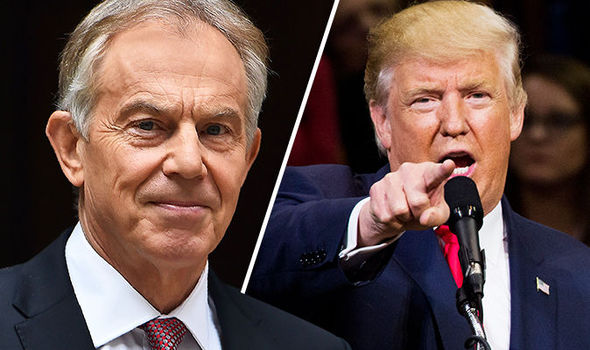
Donald Trump is a man who prefers the theatre of grand deals, and his latest performance was no exception. Flanked by Benjamin Netanyahu at the White House, the former president rolled out a 20-point plan for Gaza that aspires to achieve nothing less than a ceasefire, the release of hostages, the end of Hamas rule, and the reconstruction of the shattered strip. To lend the proposal gravitas, Trump announced that he would personally chair a “Board of Peace” and that Tony Blair would serve as one of its international members. It is a formula that combines Trump’s flair for control with Blair’s reputation as an experienced fixer of intractable conflicts. Yet for all its boldness, the plan is fraught with contradictions that will test both men’s skills—and the patience of the region.

The merits of the proposal are clear enough. It offers a path out of stalemate: an immediate ceasefire, swift release of hostages, and a framework for reconstruction funded largely by Gulf monarchies eager to stabilise their neighbourhood. It speaks to weary Israelis who long for respite, to Palestinians desperate for aid, and to Western allies who demand visible progress. The inclusion of a technocratic Palestinian committee to manage daily life is an attempt to sidestep factional politics while promising the eventual return of a reformed Palestinian Authority. The deployment of an international stabilisation force, though undefined in composition, is designed to assure both sides that Gaza will not collapse into anarchy the moment guns fall silent.
There is also a method in appointing Blair. For two decades, he has cultivated relationships with Gulf rulers, Israelis, and Americans, even while being despised by many on the Arab street for his role in the 2003 controversial Iraq war. He understands the language of power, the mechanics of reconstruction, and the rhythms of diplomacy. His presence may reassure donors that their billions will not vanish into the sinkhole of corruption that has long plagued Palestinian governance. For Netanyahu, it offers a credible envoy who is not hostile to Israeli concerns; for Trump, it provides a seasoned partner who can shoulder the technical burdens of implementation.

But the liabilities are glaring. Trump’s decision to chair the Board of Peace is vintage showmanship but risks reducing diplomacy to a campaign prop. Critics will suspect that deadlines are timed to his own political calendar, and allies may hesitate to invest in a scheme so tied to one man’s fortunes. Blair’s involvement, meanwhile, revives bitter memories among Palestinians of Western intervention cloaked in paternalism. Extremist factions will seize on his role to argue that the plan is colonialism by another name. The Palestinian Authority, supposedly reformed and waiting in the wings, may find itself delegitimised before it even returns.

The practical hurdles are formidable. Disarming Hamas is easier to decree than to execute. The composition of the international security force is unresolved—will it be a UN-mandated mission, a coalition of Arab League states, or a patchwork of volunteers? Each option carries its own diplomatic baggage. The promise of Gulf funding is real, but conditional; Riyadh, Abu Dhabi, and Doha will expect political concessions in return. Even the ceasefire itself could collapse under the weight of spoilers, from rockets fired by splinter groups to provocations by Iran’s regional proxies. The clause that gives Israel carte blanche to resume military action if terms are breached may reassure Israelis but could also unravel the fragile truce at the first test.

Still, there is a deeper truth in the plan’s logic. Perfect mediators do not exist. Diplomacy is often carried out by flawed men with baggage, and by structures that are improvised and imperfect. Blair’s reputation in the Middle East is chequered, yet his access and experience remain rare commodities. Trump’s methods are brash and self-serving, yet his willingness to act boldly contrasts with the incrementalism that has too often paralysed others. If the alternative is endless war and Gaza’s continued descent into misery, then even a risky, personality-driven plan deserves consideration.

History will not indulge excuses if this opportunity is squandered. The hostages cannot wait, Gaza cannot rebuild itself, and Israel cannot forever live under fire. Whether this initiative proves to be a serious roadmap or another exercise in theatrics will depend less on its authors’ egos than on the willingness of regional actors to seize it. For now, the world can only watch as Trump and Blair, improbable partners, attempt to wrest order from chaos.

Donald of Arabia: The Art Of The Deal

President Donald Trump’s first tour of Arabia is the start of a new regional realignment, preparing the Gulf area for a profound transformation: A new Middle East is expected to resemble the global structure, divided between advanced and developing nations. By Adel Darwish

Foreign policy as a main tool to serve national interests has always used diplomacy, both public and covert, besides other means to deal with friends and foes alike, so goes the conventional wisdom of big names in the game like Henry Kissinger (1923-2023), both Secretary of State and National Security Adviser in Republican administrations (1969-1977).

Enter Republican President Donald Trump with his Art Of The Deal, as the latest instrument in foreign policy.  The deals over energy and minerals in Ukraine to reach a ceasefire in its war with Russia have yet to yield any results, while the idea to replace the “Two-State Solution” with a (Gaza) “Real Estate” solution to the Israel-Palestine conflicts hasn’t quite taken off.

However, Mr Trump’s high-profile trip to the Persian Gulf appears to be his most successful foreign trip so far. On day one, he clinched a $600 bn trade deal ( $142 bn military equipment) with Saudi Arabia. There was also a $1.4 trillion investment the United Arab Emirates pledged in March, and on his last day of the visit a total of $200 bn deals were anoonuced.

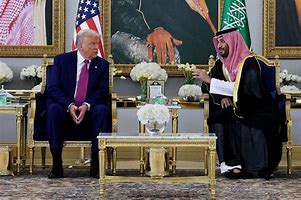
Leaders in the region see a good political return on their hefty investment, say Western diplomats. They see President Trump’s visit as the beginning of a new Middle East realignment and as preparing the Gulf for a profound transformation. A new Middle East is expected to resemble the global structure, divided between advanced and developing nations. The clever leaders of the latter – like the modernising Saudi Crown Prince Muhammad bin Salman, following a path of modernisation and liberalisation, some observers compare with the Egyptian 19th-century modernity project started by Muhammad Ali and his dynasty.   Bin Salman has used the visit to reemphasise his desert kingdom’s role as the rising region’s central power, with Israel as its main contender.  Although some Western diplomats see Trump’s excluding Israel from the visit as a snub to its right-wing leaders, citing the absence of any mention of Gaza or Palestine in the President’s several public speeches.   Other Gulf states such as the UAE and Qatar are joining the ranks of the region’s emerging first-world players.

In contrast, older regional powers like Egypt are slipping behind. The long-standing narrative of Egypt’s military dominance is now obsolete. As the region shifts its focus to artificial intelligence and high technology, conventional armies are losing their strategic relevance. Economic pressure is also contributing to internal decay; local public opinion and social ethos have regressed to pre-First World War conditions thanks to the influence of a reactionary form of Islam. Egypt needs a miracle to catch up; without bold reform or visionary leadership, the country that had led the region for the best part of the 20th century risks entering an uncertain—and potentially grim—chapter in its history, drifting toward the instability and stagnation seen in Libya, Sudan, and war-torn states like Syria and Iraq.

Mr Trump’s surprise recognition of Syria’s new regime led by Ahmed Alshara, who was on the US terrorist list (he led branches of Al-qaeda and Islamic State ISIL) alarmed many. However, the former terrorist rehabilitation makes sense. Trump was persuaded to meet Ashara and lift sanctions on Syria by Bin Salman and by Turkey. Turkey has been pulling the strings of the Islamist groups (including terrorist organisations) in Syria since it facilitated the supplies and arms to their landlocked areas. Those Islamic rebel groups were financed by Sunni Muslim Gulf nations who were wary of Iran’s threats through its regional proxies. Toppling the Iran-allied Alwiyat Shia regime of Assad was part of their long-term strategy to isolate Shia Iran and stop its influence and financing of Shia organisations like Hezbollah in Lebanon and Houthis in Yemen.  Trump’s “renaming” of the Persian Gulf into “Arabian Gulf” was a clear message to Iran on which side he stands.   Regional powers (although not publicly declaring it) are consolidating around Israel and Saudi Arabia, the UAE, and Qatar – the first Gulf nation to have an Israel “trade mission”, the function of an embassy and a home to Hamas leaders, thus playing a central role in negotiations.  Qatar, whose leaders signed a $200 bn deal with Boeing, was the only stop where Mr Trump mentioned the Gaza Strip, saying it should be made into a “freedom zone” where he wanted the United States to be involved.  He held a big rally at the large US military base on the outskirts of Doha. Thousands of cheering service men and women were given an impromptu raise in their salary by their Commander in Chief.

With a  new Middle East emerging, placing trade, AI and advanced technology ahead of backward traditions and ideological conflict, there was one important question regarding Islam.  “How will Islamic institutions and Islamists cope with this new world order?” Asked a veteran Egyptian diplomat, adding that Islamic institutions, which have been a dominant force among the masses of populated countries bordering Israel, were the main opponent of many peace plans and for over a century an obstacle to modernisation.

In Saudi Arabia, Bin Salman clipped the Islamic clergy’s wings, disbanding the morality police and putting an end to their interference in public life. Hopefully,  as those rich nations’ (who in the past funded Islamic groups) priorities evolve, funding for Islamist groups such as the Muslim Brotherhood is likely to disappear. Ideologies that insist on Sharia as the sole basis for governance may find themselves increasingly marginalised. The region is not only being economically restructured, but it could also undergo ideological change.

End

A Palestinian’s take on the current Hamas operations

 An Open Letter to My Palestinian Brethren

by Bassem Eid
Special to IPT News,May 19, 2021

with misinformation, and unclear picture on what is going on in the tragic escalation between Israel and the extremest Islamist group Hamas, many people left with the impression that the conflicts is between Israel and the whole Palestinian people. This is far from the truth and doesn’t reflect reality. Hamas do not represent the Palestinian people. Fed up with the misinformation, Bassem Eid,   a Jerusalem-based Palestinian political analyst, human rights pioneer and expert commentator on Arab and Palestinian affairs, sends a open letter to his people to warn them about Hamas hijacking their cause and spreading fake news (Standfirts by InsideUkPolitics Blog)

Continue reading

Analysis in 2011 of Western attitude to Islamist Terroroism still valid; lessons weren’t learned.

Lessons of 9/10 Ten Years On Ten years passed since  the tragedy of 9/11, during which lesson learned have been learned and lessons missed. The same errors are repeated, especially in not understanding that trying to accommodate Muslims in western societies, various government – and leftist liberal organisations hell bent on political correctness, managed to reach the opposite effect by further alienating them.

Authorities, national and local, fail to understand that multiculturalism deepens division and help isolate Muslims – especially from the Indian subcontinent and the Horn of Africa- into cultural ghettos instead of assimilating into British society. Continue reading

Prime Minister: Russian Military Service Units planned Salisbury Novichok Attack

In strong Statement to  the House of Commons, Prime Minister Theresa May said there was strong material and TV footage evidence linking two officers with the GRU  ( The Russian Military Intelligence) with the Salisbury Poison attack. Traces of the poison was found in their hotel rooms, and CCTV footage showed them in the area.

The UK issued a European arrests warrant and will ask the Interpol to also issue international arrest warrant  against the two suspects who were named as Alexander Petrov and Ruslan Boshirov.  

The United States Ambassador to UK, Woody Johnson,  said his country stands with Britain in holding Russia accountable for its ” act of aggression ” on British soil.

Read The Prime Minister Statement to the House of Commons in ful

Continue reading

Managing the Mediterranean Migrants Mayhem

London August, August 5, 2018

Migrants exploited by human-traffickers drown at sea by the thousands; the crisis threatens the European Union’s “ ever closer union” aim of federalism as the leaders failed in last month’s summit to find a solution.  Adel Darwish suggests a long term strategy to solve the migrant crisis, which would not only save lives, but will also reduce the number of migrants by 90% and lead to economic prosperity in sub saharan African nations. The strategy depends on cooperation and coordination between the EU, the UN migration and refugee agencies, North African members of the Arab League and The African Union. ©

“Give a Man a Fish, and You Feed Him for a Day. Teach a Man To Fish, and You Feed Him for a Lifetime,” the contested origin, thought to be Chinese, saying come to mind as why migrants in their thousands take the dangerous journey to try to reach the promised land in Europe. But another saying also comes to mind, “Turkeys won’t vote for for an early Christmas “, which perhaps explains why very few, if any, thinking of a long term strategy to deal with this crisis rather than managing it, which seems to have become an industry or a taxpayer funded job-creation-scheme for middle class liberals or both.

“Give a Man a Fish, and You Feed Him for a Day. Teach a Man To Fish, and You Feed Him for a Lifetime,” the contested origin, thought to be Chinese, saying come to mind as why migrants in their thousands take the dangerous journey to try to reach the promised land in Europe. But another saying also comes to mind, “Turkeys won’t vote for for an early Christmas “, which perhaps explains why very few, if any, thinking of a long term strategy to deal with this crisis rather than managing it, which seems to have become an industry or a taxpayer funded job-creation-scheme for middle class liberals or both. Continue reading

Flynn Resignation : The US Deep State Back in Control?

Scrutinising Civil Service, Government’s Leaky Bucket, Classified Information Fed to Reporters says Flynn as He Walks out With Trump’s Hand Hard on His Back 

By Kate Burrows-Jones, World Media North America Editor  15-02-2017

Whistleblowers are an important tool for countering corruption, but politically motivated operatives dug in as civil servants should be uprooted from government.   On Monday, Donald Trump’s National Security Advisor, retired General Michael Flynn, resigned after just 24 days into his government post.  He had no intention to resign.  In his final hours, he gave a revealing interview to the Daily Caller which was eerily published, after he had submitted his letter of resignation and stepped down, revealing the ghost of a leaky shadow in the United States government. His departing gift to the American people was to expose what may be an activist impulse, or an organised apparatus within the Civil Service.  

Continue reading