Tag Archives: Iran

The Questions Starmer Would Not Answer

From the Press Gallery, a familiar pattern emerged: precise questions on Mandelson, evasive answers from the Prime Minister, and a growing sense that judgement, not just politics, is now under scrutiny.

By Adel Darwish
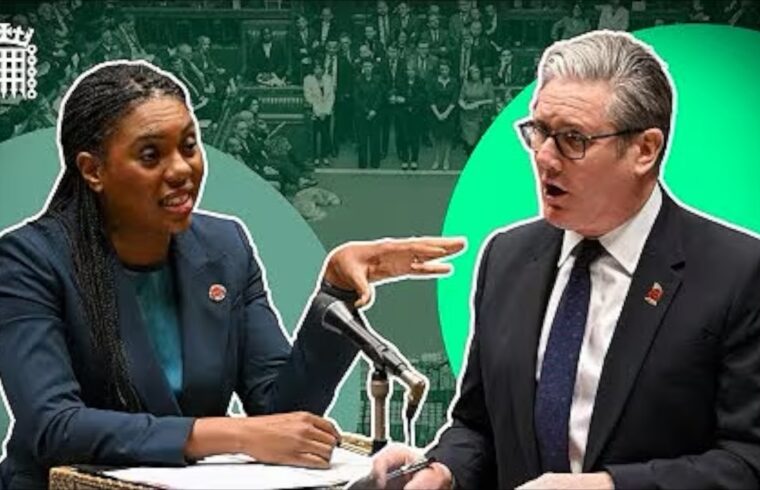
From the Press Gallery, certain patterns are becoming increasingly predictable. Prime Minister’s Questions, once an arena of sharp exchange and occasional clarity, now often follows a familiar script: questions asked, answers diverted, and the argument redirected elsewhere. This week, however, the pattern mattered — because it went to the question of judgement at the top of government.

Kemi Badenoch used all six of her allotted questions to focus on the appointment of Peter Mandelson as ambassador to Washington. Drawing on material released under a Humble Address, her questions were structured to test the Prime Minister’s judgement and the basis on which the appointment had been made, and to probe whether his account to the House could be sustained.

Her line of argument was precise: to establish what the Prime Minister knew, what questions he had asked, and how he could now claim that Peter Mandelson had misled him. If, as Starmer suggested, Mandelson had not been truthful about his past association with Jeffrey Epstein, then the obvious question followed: had that issue been put to him directly at the time of the appointment?

The Prime Minister did not engage with that line of questioning. Instead, he repeatedly shifted the exchange onto Badenoch’s stance on the Iran conflict, accusing her of inconsistency and attempting to recast the session as a debate on foreign policy. By his sixth answer, the tone had hardened into outright attack, extending criticism to Reform UK and what he characterised as its proximity to positions he associated with the far right.

The Speaker intervened twice. On the first occasion, he reminded the House that he was not responsible for the Prime Minister’s replies. On the second, the rebuke was sharpened: nor was he responsible for the questions from the Leader of the Opposition. The message was unmistakable — that the exchange was failing to address the substance of what had been asked.

From the gallery, the reason for that pattern was not difficult to discern. The Prime Minister appeared acutely aware of the risks of what he said — and what he chose not to say. Having already faced questions about the Mandelson appointment, his answers at the despatch box now carry potential weight beyond the chamber. With further papers released under a Humble Address, any inconsistency between what he knew at the time and what he told Parliament could invite the most serious accusation in Westminster: that of having misled the House. That risk may explain the caution — and, at times, the conspicuous evasiveness — that marked his responses.

The difficulty for Downing Street is that the Mandelson affair is not an isolated embarrassment but a question of judgement. Documents now in the public domain indicate that warnings were raised about the reputational risks of the appointment. Yet the decision went ahead, and has since unravelled with striking speed. The subsequent financial settlement, agreed at £75,000, has reinforced the political impression of a decision taken against advice and corrected only under pressure.

That question of judgement extends beyond personnel into policy, particularly in energy. The latest tensions in the Gulf — including attacks on gas infrastructure, have revived concerns about supply vulnerability at precisely the moment Britain’s domestic capacity has been scaled back. Critics argue that successive governments once drew the opposite lesson from earlier crises, maintaining both a strategic naval presence in the region and a degree of domestic resilience. The current approach, which combines reduced North Sea production with continued reliance on imports, is now being tested under pressure. At such moments, the balance between long-term transition and immediate security becomes less theoretical and more immediate.

In another era, a foreign crisis might have provided political cover. Governments have often found that external threats rally domestic support and soften internal divisions. This time, the effect has been more limited. While the Prime Minister’s cautious stance on the conflict with Iran broadly reflects public sentiment, it has not translated into any discernible political dividend. Nor has it eased strategic uncertainty. Britain’s role in the region appears more constrained than in previous decades, when a quieter but consistent naval presence helped secure key shipping routes. The contrast is not merely nostalgic; it raises questions about capability as well as policy.

More troubling for Downing Street is that the pressure is no longer confined to the opposition benches. Within Labour, signs of unease are becoming more visible. Angela Rayner’s recent intervention, widely interpreted as a challenge to elements of the government’s economic direction, has underscored the extent to which internal consensus cannot be taken for granted. At the same time, many Labour MPs have signalled resistance to proposed changes in welfare policy, warning that they may not support measures to curb or freeze benefits. These are not yet coordinated rebellions, but they point to a party that is beginning to test the limits of its own leadership.

Even among Labour-leaning commentators, the tone has shifted. Sympathy for the government’s early difficulties has given way to a more questioning assessment of its choices and priorities. That, perhaps, is the more subtle change. Governments can weather opposition attacks; they find it harder to navigate scepticism from those broadly inclined to support them.

The Prime Minister therefore faces a convergence of pressures: scrutiny over decisions already taken, uncertainty over policies still unfolding, and a party that is no longer entirely aligned behind him. None of these challenges is, in isolation, insurmountable. Together, they form a pattern that is becoming increasingly difficult to dismiss.

In politics, individual missteps can often be contained. Patterns, once established, are far harder to break.
Starmer’s Recognition of a Palestinian State ?

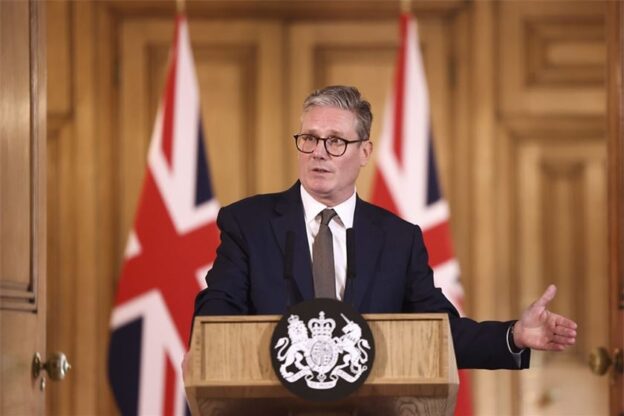
The UK’s decision under Prime Minister Keir Starmer to recognise a Palestinian state has drawn sharply conflicting views. Supporters present it as a moral and political step towards peace; critics see it as a symbolic gesture driven by domestic party pressures rather than diplomacy. Most assessments converge on a sobering point: little will change on the ground. Pessimists, who clearly outnumber optimists, argue that recognition will not bring relief to Gazans, will not help secure the release of Israeli hostages held by Hamas, and will not push either side closer to negotiations. Nor, in the current climate of maximalism on both sides, is it likely to revive the moribund two-state solution or lead to Israelis and Palestinians living side by side in peace. Adel Darwish writes


Many observers see Prime Minister Keir Starmer’s decision to recognise a Palestinian state as a misguided step, driven less by principle than by pressure from his own back-benchers, the hard left, and Islamist voices within his party. By framing the move as a response to Israel’s actions — even suggesting recognition as a form of ‘punishment’ when he first floated the idea two months ago — Starmer has turned one of the world’s most sensitive international issues into a political gesture for domestic consumption.
Having reported on the Middle East for decades, I can say with regret that nothing in this gesture will alter the grim realities on the ground. The extreme right-wing settlers entrenched in the occupied West Bank will react in their customary reckless manner, fuelling further instability. Hamas will present it as vindication, declaring that terrorism pays. Ordinary Gazans will see no relief from their misery, and the Israeli hostages still held by Hamas will remain beyond reach. Far from advancing peace, this recognition risks deepening the conflict, because the historic causes remain unresolved and, indeed, inflamed.
The fundamental obstacle is that power on both sides is concentrated in the hands of the maximalists, not the pragmatists who dared to reach an accommodation in Oslo in 1993 between the PLO, led by Yasser Arafat,  and a more liberal Israeli government led by Yitzhak Rabin, who was later shot dead by a far-right religious nationalist law student objecting to peace in 1995. The Israeli government of  Benjamin Netanyahu’s coalition has no intention of entertaining the creation of a Palestinian state. At the same time, large segments of Palestinian opinion, and indeed public discourse in neighbouring countries, still cling to the demand of ‘a state from the river to the sea’ — code for erasing the Jewish presence altogether.
The so-called ‘two-state solution’ — now reduced to an empty slogan — was first enshrined in the United Nations Partition Plan of 1947. It was rejected outright by Egypt and her allies. Egypt, Israel’s most powerful neighbour, mobilised forces from the newly created Arab League — itself a British wartime creation to bolster Allied influence on the southern Mediterranean during the Second World War — with the clear aim of destroying the fledgling Jewish state.
Israel fought for survival and, against the odds, prevailed. The only Arab force to perform with any effectiveness was the Jordanian Army, then still largely officered and trained by the British since it was the empire’s Arab Legion. They held on to the West Bank and East Jerusalem.
Among Arabs and Muslims, a folkloric belief took hold that the whole of historic Mandate Palestine must be ‘liberated.’ Colonel Gamal Abdel Nasser transformed Egypt from a Mediterranean state with strong European ties into the spearhead of Pan-Arabism, with anti-Israel sentiment as the adhesive that held his project together.
In 1967, Nasser expelled the UN peacekeepers who had been stationed since the Suez War of 1956, blockaded Israeli ports, and massed his armies. His pretext was a water dispute involving Israel and Syria. The war that followed ended in another devastating defeat for the Arab side. Israel emerged in control of East Jerusalem, the West Bank, Gaza, Sinai, and the Golan Heights. Rather than move towards accommodation, the Arab League met in Khartoum and pushed by Colonel Nasser to issue the famous ‘Three No’s’: no peace, no recognition, and no negotiations with Israel.
Since then, the pattern has repeated itself. Neighbours attack; Israel defends, wins, and gains more territory. For Arabs, this reinforced the belief that Israel was an expansionist colonial project, a prophecy seemingly fulfilled by every lost war. For Israelis, each concession became a source of renewed danger.
When Israel dismantled settlements and withdrew from Gaza, the territory became a launch pad for rocket attacks by Hamas. When Israel pulled out of South Lebanon, Hezbollah filled the vacuum. Iran and its proxies — Hezbollah in Lebanon, the Houthis in Yemen — continue to stoke conflict, deepening Israeli fears of encirclement.
There is little evidence of a change in mindset on the Arab side. Even in moments when Arab leaders issue statements about peace, there is seldom a clear condemnation of Hamas’s terrorism-  including 7 October  2023 massacre, one of the darkest days in the conflict. Without a fundamental shift in Arab political rhetoric, state-controlled media, and public opinion — one that convinces ordinary Israelis that coexistence is truly accepted — it will be impossible for a more flexible government to  be elected by enough number of voters who believe that there is a mass  of public opinion or trends on the Arab side who truly believe in co-existence with a Jewish state .
This is the background against which Starmer’s move must be judged. Recognition at this moment does not advance peace; it entrenches the deadlock. It signals to Hamas and its allies that violence and terror reap rewards. It signals to Israeli extremists that the world will move against them no matter what, bolstering their own rejectionist narrative.
The timing could not be worse. Israeli politics are dominated by Netanyahu’s right-wing coalition, which treats the very idea of a Palestinian state as an existential threat. On the Palestinian side, governance is split between the Palestinian Authority in the West Bank, whose legitimacy is fading, and Hamas in Gaza, which rules by fear and the gun. A gesture from London, or even from European capitals, cannot bridge this chasm.
Recognition, to be meaningful, must come as the product of negotiations and mutual concessions, not as a symbolic flourish to placate domestic party factions. Otherwise, it becomes another brick in the wall of mistrust, another excuse for extremists to declare victory, and another disappointment for moderates who still hope for peace.
I wish it were otherwise. I wish one could say that Britain’s recognition of Palestine will open the way to peace. But history — a history I have witnessed at close hand across wars, uprisings, and failed summits — shows the opposite. Gestures without substance deepen division. Declarations without groundwork create illusions that shatter into violence.
If Arab and Muslim leaders were to openly and consistently condemn terrorism, if they were to shift public opinion towards genuine acceptance of Israel, if Israeli politics were to bring pragmatists back to the fore — then recognition might play its part as the final seal on a negotiated settlement. But in the absence of such changes, it is, at best, an empty slogan; at worst, it is dangerously counter-productive.

–end–

Donald of Arabia: The Art Of The Deal

President Donald Trump’s first tour of Arabia is the start of a new regional realignment, preparing the Gulf area for a profound transformation: A new Middle East is expected to resemble the global structure, divided between advanced and developing nations. By Adel Darwish

Foreign policy as a main tool to serve national interests has always used diplomacy, both public and covert, besides other means to deal with friends and foes alike, so goes the conventional wisdom of big names in the game like Henry Kissinger (1923-2023), both Secretary of State and National Security Adviser in Republican administrations (1969-1977).

Enter Republican President Donald Trump with his Art Of The Deal, as the latest instrument in foreign policy.  The deals over energy and minerals in Ukraine to reach a ceasefire in its war with Russia have yet to yield any results, while the idea to replace the “Two-State Solution” with a (Gaza) “Real Estate” solution to the Israel-Palestine conflicts hasn’t quite taken off.

However, Mr Trump’s high-profile trip to the Persian Gulf appears to be his most successful foreign trip so far. On day one, he clinched a $600 bn trade deal ( $142 bn military equipment) with Saudi Arabia. There was also a $1.4 trillion investment the United Arab Emirates pledged in March, and on his last day of the visit a total of $200 bn deals were anoonuced.

Leaders in the region see a good political return on their hefty investment, say Western diplomats. They see President Trump’s visit as the beginning of a new Middle East realignment and as preparing the Gulf for a profound transformation. A new Middle East is expected to resemble the global structure, divided between advanced and developing nations. The clever leaders of the latter – like the modernising Saudi Crown Prince Muhammad bin Salman, following a path of modernisation and liberalisation, some observers compare with the Egyptian 19th-century modernity project started by Muhammad Ali and his dynasty.   Bin Salman has used the visit to reemphasise his desert kingdom’s role as the rising region’s central power, with Israel as its main contender.  Although some Western diplomats see Trump’s excluding Israel from the visit as a snub to its right-wing leaders, citing the absence of any mention of Gaza or Palestine in the President’s several public speeches.   Other Gulf states such as the UAE and Qatar are joining the ranks of the region’s emerging first-world players.

In contrast, older regional powers like Egypt are slipping behind. The long-standing narrative of Egypt’s military dominance is now obsolete. As the region shifts its focus to artificial intelligence and high technology, conventional armies are losing their strategic relevance. Economic pressure is also contributing to internal decay; local public opinion and social ethos have regressed to pre-First World War conditions thanks to the influence of a reactionary form of Islam. Egypt needs a miracle to catch up; without bold reform or visionary leadership, the country that had led the region for the best part of the 20th century risks entering an uncertain—and potentially grim—chapter in its history, drifting toward the instability and stagnation seen in Libya, Sudan, and war-torn states like Syria and Iraq.

Mr Trump’s surprise recognition of Syria’s new regime led by Ahmed Alshara, who was on the US terrorist list (he led branches of Al-qaeda and Islamic State ISIL) alarmed many. However, the former terrorist rehabilitation makes sense. Trump was persuaded to meet Ashara and lift sanctions on Syria by Bin Salman and by Turkey. Turkey has been pulling the strings of the Islamist groups (including terrorist organisations) in Syria since it facilitated the supplies and arms to their landlocked areas. Those Islamic rebel groups were financed by Sunni Muslim Gulf nations who were wary of Iran’s threats through its regional proxies. Toppling the Iran-allied Alwiyat Shia regime of Assad was part of their long-term strategy to isolate Shia Iran and stop its influence and financing of Shia organisations like Hezbollah in Lebanon and Houthis in Yemen.  Trump’s “renaming” of the Persian Gulf into “Arabian Gulf” was a clear message to Iran on which side he stands.   Regional powers (although not publicly declaring it) are consolidating around Israel and Saudi Arabia, the UAE, and Qatar – the first Gulf nation to have an Israel “trade mission”, the function of an embassy and a home to Hamas leaders, thus playing a central role in negotiations.  Qatar, whose leaders signed a $200 bn deal with Boeing, was the only stop where Mr Trump mentioned the Gaza Strip, saying it should be made into a “freedom zone” where he wanted the United States to be involved.  He held a big rally at the large US military base on the outskirts of Doha. Thousands of cheering service men and women were given an impromptu raise in their salary by their Commander in Chief.

With a  new Middle East emerging, placing trade, AI and advanced technology ahead of backward traditions and ideological conflict, there was one important question regarding Islam.  “How will Islamic institutions and Islamists cope with this new world order?” Asked a veteran Egyptian diplomat, adding that Islamic institutions, which have been a dominant force among the masses of populated countries bordering Israel, were the main opponent of many peace plans and for over a century an obstacle to modernisation.

In Saudi Arabia, Bin Salman clipped the Islamic clergy’s wings, disbanding the morality police and putting an end to their interference in public life. Hopefully,  as those rich nations’ (who in the past funded Islamic groups) priorities evolve, funding for Islamist groups such as the Muslim Brotherhood is likely to disappear. Ideologies that insist on Sharia as the sole basis for governance may find themselves increasingly marginalised. The region is not only being economically restructured, but it could also undergo ideological change.

End