
Category Archives: Foreign Affairs

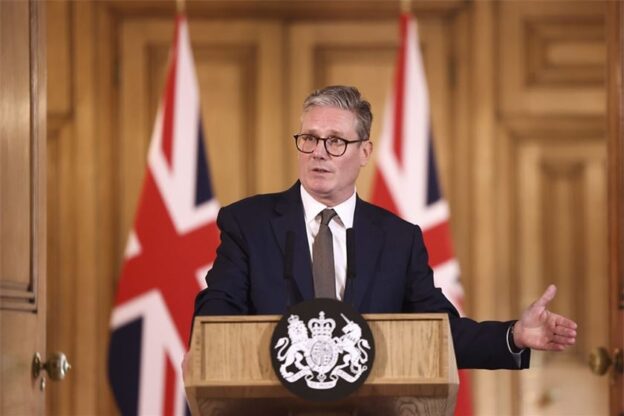
Starmer speaking at a nursery school in Belfast 12 March

Even Hecklers Start Small

After a bruising week in Westminster, the Prime Minister found his most honest audience in a Belfast nursery.

By Adel Darwish 

A prime minister who finds himself aligned with public opinion during a foreign crisis might reasonably expect a little political relief. Keir Starmer’s cautious distancing from the American strikes on Iran reflects the instinct of most British voters, who remain wary of another Middle Eastern war. Yet even this rare moment of alignment has done little to improve the government’s political fortunes.

The latest polling suggests a remarkably stagnant landscape. A seven-poll rolling average published this week places Reform UK on 27.4 per cent, Labour on 19.4, the Conservatives on 17.9, the Greens on 14.9, and the Liberal Democrats on 11.9. Despite rising oil prices and the geopolitical tensions surrounding the Iran conflict, there has been no sudden movement in public opinion. Labour has even edged slightly upward over the week. If higher petrol prices were provoking a backlash against the government, we would expect the opposite: a sharp fall in Labour support and a surge for opposition parties. Instead, the numbers suggest voters currently blame global events rather than domestic policy.

That did not spare Starmer a bruising encounter in the Commons. At Wednesday’s Prime Minister’s Questions, Kemi Badenoch used all six of her allotted questions to focus on fuel prices and the looming prospect of higher fuel duty. With Brent crude fluctuating sharply in response to Middle East tensions, petrol and diesel costs are once again creeping upward. For millions of people outside London, Badenoch argued, driving is not a luxury but a necessity — especially for tradesmen, delivery drivers and small businesses whose vans keep the economy moving.

Starmer attempted to deflect the pressure by attacking the opposition’s stance on Iran, accusing Badenoch of shifting positions and suggesting she had previously called for Britain to support American strikes. The exchange grew increasingly heated. At one point the Speaker intervened to remind the Prime Minister that his task was to answer questions rather than ask them of the Leader of the Opposition.

Fuel prices are not a trivial political issue. Rising oil costs ripple quickly through the economy: transport, food distribution, and ultimately inflation itself. Should the surge in energy prices persist, the Bank of England may hesitate before cutting interest rates, delaying the relief many mortgage holders had hoped for this spring. It is precisely this chain reaction that makes petrol prices such a sensitive political subject.

The government’s response has been to summon oil company representatives to Downing Street. Chancellor Rachel Reeves and Energy Secretary Ed Miliband called the industry in for talks at No.11, warning them against “profiteering” by raising prices at the pump. The Prime Minister’s spokesman said ministers were monitoring the situation closely and hinted that companies could face referral to the competition authorities if evidence of manipulation emerged.

The meeting itself became contentious. Retailers accused ministers of using “inflammatory language” about alleged profiteering, warning that it had led to members of the public abusing staff at petrol stations. Some companies even threatened to boycott the talks unless the government agreed that the opening of the meeting would not be filmed by television cameras.

Yet the week’s most awkward development for Downing Street came not from global oil markets but from Westminster itself. Documents released under parliamentary pressure revealed that officials had warned about the reputational risks of appointing Peter Mandelson as Britain’s ambassador to Washington. Mandelson is no stranger to controversy. During Tony Blair’s government he was twice forced to resign from cabinet — first in 1998 after failing to disclose a £373,000 loan from fellow minister Geoffrey Robinson, and again in 2001 after contacting the Home Office about the passport application of the wealthy Hinduja brothers. His post as ambassador quickly became politically untenable once questions resurfaced about his past association with the convicted sex offender Jeffrey Epstein, an association Mandelson had earlier sought to minimise. Despite those concerns, the appointment went ahead. The saga took another turn when it emerged that Mandelson had sought compensation reportedly exceeding £500,000, before eventually agreeing to a settlement of £75,000 — a figure Downing Street insists represented “good value for money” compared with the potential cost of litigation.

The episode culminated in an unusual moment of contrition. On Thursday, the Prime Minister acknowledged that appointing Mandelson had been a mistake and apologised to victims connected to the Epstein scandal. It was a rare public admission of error from a sitting prime minister, though whether it draws a line under the affair remains to be seen.

At Friday’s lobby briefing, Downing Street declined to elaborate on what lessons the Prime Minister had drawn from the episode, with the spokesman cautioning journalists against speculation until the remaining documents are released.

By then, Starmer had already left Westminster for Belfast, that familiar corner of the kingdom where ministers sometimes find themselves dispatched when the political temperature rises in London. Hilary Benn, the Northern Ireland Secretary, stood dutifully beside him like a silent chaperone. The once formidable Downing Street spin machine of the Blair years, when communications were run by Alastair Campbell with Mandelson advising discreetly in the background, might have handled the optics differently. This week the Prime Minister’s team made a simpler logistical decision: Parliament lobby reporters were left behind and Starmer took questions only from local media in an off-camera informal huddle. After a bruising week in Parliament, the controlled environment was perhaps understandable. A nursery classroom, after all, offers a famously undemanding audience — one unlikely to ask awkward questions about fuel duty, oil prices, or the wisdom of appointing Peter Mandelson.

He took refuge in Belfast, well away from Westminster’s turbulence, and, not insignificantly, from the lobby journalists whose questions had been sharpening throughout the week. There, during a visit to a nursery school, he acknowledged he had made a mistake in appointing Mandelson and apologised to Epstein’s victims. Whether the wider public will be quite so forgiving remains uncertain. While he spoke, several toddlers began crying and fidgeting. “I know… I’m nearly finished,” he reassured them. Westminster instincts, including heckling, it seems, can develop remarkably early.
The Logistics of Power: When War and Oil Markets Converge on the Price of Geography

Signals from Washington D.C., Tehran, Lebanon, and the Strait
By Kate Jones, White House Bureau Chief

Wars are often narrated through explosions, declarations, and fear. In reality, outcomes are decided by quieter forces: logistics, geography, and time.

The unfolding crisis across the Middle East illustrates this principle with unusual clarity. Military movements along the Lebanese border, the strategic signaling emanating from Tehran, and the volatility of global oil markets are all expressions of a single underlying constraint: the movement of supply across geography.

Armies move on logistics. So does the world economy. War planners and oil traders rarely speak the same language, yet strategists from Carl von Clausewitz to Alfred Thayer Mahan understood that power ultimately rests on logistics. On this rare occasion, military conflict involving Iran and global markets converges on the same constraint in parallel. This is one of those moments.

The White House is attempting to reassure markets that the current volatility reflects disruption rather than structural scarcity.

“Under President Trump’s American energy dominance agenda, oil and gas production has hit record highs and prices at the pump had dropped to multi-year lows,” said White House spokeswoman Taylor Rogers in a statement provided today. “President Trump has been clear that these are short-term disruptions. Ultimately, once the military objectives are completed and the Iranian terrorist regime is neutralized, oil and gas prices will drop rapidly again, potentially even lower than before the strikes began. As a result, American families will benefit greatly in the long term.”

Washington has begun exploring several policy options aimed at easing upward pressure on crude prices. Officials have discussed a potential temporary waiver of the Jones Act to allow greater flexibility in transporting crude between U.S. ports, and the administration confirmed that approximately 172 million barrels remain available in the U.S. Strategic Petroleum Reserve. The White House has also signaled a willingness to loosen certain restrictions affecting global supply flows, including allowing greater purchases of Russian crude in global markets, while opening limited new offshore drilling opportunities along the California coast.

In aggregate, however, these incremental policy moves have so far done little to calm markets, where crude prices continue to respond primarily to geopolitical risk surrounding the conflict with Iran and the security of maritime shipping routes. Global demand growth had slowed modestly while supply across major producers continues at historically strong levels, leaving markets structurally well supplied. For United States, the economic backdrop remains relatively strong. Recent data on employment, trade balances, housing activity, and inflation have generally surprised to the upside, with price pressures remaining comparatively contained. Under normal circumstances such macroeconomic signals might anchor market confidence. Instead, geopolitical risk surrounding the conflict with Iran and the security of maritime shipping routes is dominating price behavior in global markets. A timely resolution to the conflict would likely reinforce expectations of continued economic resilience.

Global energy markets are grappling with a different question: how to price a war whose logistical boundaries remain unclear. Volatility is not coming from macro weakness, but from logistics of uncertainty.

The Psychological Threshold: $100 Per Barrel

West Texas Intermediate crude is approaching $100 per barrel, a level traders view as a psychological threshold capable of spilling quickly into equities, inflation expectations, and broader financial volatility. Policymakers therefore face an immediate question: whether the administration is preparing for that level and how it intends to communicate confidence if the threshold is crossed.

Concerns about market stability have already surfaced within the financial system itself. As the Financial Times reported this week, the chief executive of CME Group, Terry Duffy, warned that direct government intervention in oil futures markets could risk a “biblical disaster” by undermining confidence in the mechanisms used to establish global benchmark prices. Speaking to traders at an industry conference, Duffy cautioned that attempts to influence crude prices through derivatives markets could damage the credibility of the pricing system itself. Traders had begun asking who the large sellers in the market were, reflecting growing speculation that governments might attempt to calm prices during wartime volatility.

For traders and policymakers alike, the initial phases of war involve signals, noise, and the pricing of geopolitical risk amid uncertainty about the duration of disruption. Yet the deeper uncertainty lies in the real price of oil determined by the physical movement of supply.

The United States and members of the International Energy Agency have announced the largest releases from global strategic reserves, a record 400 million barrels, intended to stabilize markets. Yet the practical mechanics remain critical: the timing and volume of those releases and the speed at which those barrels can realistically reach global markets.

Energy traders are confronting a logistical paradox. Global oil production continues, but large volumes of supply may effectively remain offline if tankers cannot safely transit key shipping corridors.

Oil that exists but cannot move. War disrupts logistics before it destroys supply. Surplus builds.

When maritime risk increases through naval confrontation, insurance restrictions, or the mere threat of sea mines, missile strikes, or drone attacks, transport slows and storage pressures begin to build across the system. Production continues while shipping stalls, leaving supply stranded in storage or held at terminals awaiting safe passage.

Eventually producers face a stark choice: shut in wells. There is no simple off switch for production without risking damage to equipment. Refineries face similar constraints. Shutting down units abruptly can take days or weeks and may require costly maintenance before operations can resume.

These are complex chemical plants. Reactors cool. Catalysts destabilize. Pressure systems depressurize. Pipelines must be purged. Heaters must be restarted slowly. Safety systems trigger.

Unlike financial markets, the physical energy system cannot simply take a day off.

Markets struggle to price the situation because two critical variables remain unknown: the volume of disruption and the duration of disruption.

Until one of those variables becomes clearer, volatility persists. Markets are now shifting from signal toward calculating volume. The future calculus of supply surplus, stranded inventories, and potential shutdowns has not yet been fully reflected in price.

For analysts mapping supply chains and physical flows across the energy system, the central challenge is visibility. Disruptions propagate through shipping routes, insurance markets, storage capacity, and refining networks. Governments, traders, and central banks increasingly rely on supply-chain tracking and commodity-flow analysis to understand how shocks travel through the global energy system.

Alternative routes are part of the calculation. Saudi Arabia maintains east–west pipeline infrastructure capable of moving crude from Gulf fields to Red Sea export terminals, bypassing the Strait of Hormuz. The United Arab Emirates operates a similar corridor through the Abu Dhabi Crude Oil Pipeline. These routes reduce vulnerability but cannot eliminate it. The majority of Gulf exports still depend on maritime transit through narrow waterways. The global energy system remains constrained by geography. To understand the moment, however, one must begin not in Washington or in oil markets, but in Tehran.

The View from Tehran

From Tehran’s perspective the confrontation with Israel and the United States is not a conventional war to be won on the battlefield. It is a contest of endurance.

Iran’s leaders understand the asymmetry of power. They cannot match American military strength directly. Instead they have constructed a strategic architecture designed to complicate any confrontation in the region. Rather than relying solely on national forces, Tehran has long cultivated a network of regional partners stretching across the Middle East. These relationships create what Iranian strategists consider strategic depth: layers of pressure that expand the geography of any conflict. Within that architecture, Hezbollah occupies a central role.

For Tehran, Hezbollah is not simply an ally. It is a forward layer of deterrence positioned on Israel’s northern frontier. Any strike against Iran carries the risk of escalation across multiple theaters. The objective is not necessarily to win a war outright. It is to transform the strategic environment in which war occurs.

Lebanon and the Logic of Battlefield Shaping

Recent Israeli strikes in southern Lebanon illustrate this dynamic. Bridges and transportation routes have been targeted near the border. Such actions may appear tactical, but their meaning is operational. Military planners describe these strikes as battlefield shaping.

Infrastructure destruction serves several purposes simultaneously. It isolates the battle space, channels enemy movement into predictable routes, and complicates reinforcement and resupply. Destroying bridges does not necessarily signal an imminent ground invasion. Such strikes may support sustained air campaigns, cross-border raids, or deterrence signaling.

Analysts therefore look beyond individual attacks and instead search for clusters of logistical indicators. Fuel trucks begin staging forward. Ammunition depots appear near the frontier. Supply convoys accumulate. Maintenance units follow armored formations.

Medical infrastructure expands as well. Field hospitals deploy. Medevac helicopters move forward. Casualty evacuation systems prepare for sustained operations. Combat engineers arrive to reshape the terrain itself—clearing mines, breaching obstacles, and constructing crossings for armored units. Artillery positions move into range while drones and reconnaissance patrols map the battlefield. Special operations units often move ahead of main forces to reconnoiter terrain and confirm targets.

Individually none of these indicators proves an invasion is imminent. Together they form a pattern. When logistics staging, reconnaissance activity, engineering preparation, artillery positioning, and maneuver forces align, analysts begin to conclude that combined arms operations may be approaching.

Logistics reveals intent. The same logic governs global energy markets.

The Parallel Battlefield: Energy

Oil production may continue uninterrupted, yet supply can disappear from markets if transport corridors become insecure. In this sense energy markets operate on their own logistical front lines. Nowhere is this more evident than in the Strait of Hormuz. Roughly one-fifth of global oil shipments normally transit this narrow corridor connecting the Persian Gulf to the wider world.

Disruption here need not involve the destruction of tankers. Insurance restrictions, naval confrontation, or the mere threat of sea mines or drone attacks can slow maritime traffic dramatically. As one Wall Street commodities veteran and chief risk officer at a major firm put it, “No missiles, no drones. That has to stop.” Until the attacks stop, the oil won’t move. Fear of potential events alone can slow maritime traffic enough to remove millions of barrels from effective circulation. Supply cannot move logistically.

Traders refer to this phenomenon as held supply. The oil still exists. In such circumstances markets struggle less to price risk accurately. Two variables remain uncertain: the volume of disruption and the duration of disruption.

The uncertainty spreads beyond energy markets. Oil prices influence inflation expectations, central bank policy, and equity valuations. A disruption in maritime logistics therefore transmits financial pressure across the global economy. Other vital products, such as fertilizer, quickly become agricultural and food supply concerns.

The Data Before the Briefing

Wars begin with speeches and strikes. They become intelligible through data. The next important signal will come from Washington. The Pentagon is scheduled to brief at 0800 tomorrow morning. Energy markets, shipping insurers, commodity traders, and central banks will all be listening.

The critical questions are logistical. Can tanker escorts be provided? How quickly can maritime routes reopen? Can alternative pipelines absorb displaced supply? Have mine-clearing operations begun? The answers determine whether disruption is measured in days, weeks, or months.

Reserve releases from the International Energy Agency may soften the immediate shock. But they function primarily as a buffer or a band-aid. They do not reopen shipping lanes or restore maritime confidence. Markets therefore face a dilemma.
Oil supply exists, but its movement remains uncertain.

A trader’s observation captures the problem precisely: markets can absorb a disruption if either the volume or the duration is known. They struggle when both variables remain uncertain. Until those questions are answered, volatility will dominate. Markets can price geopolitical risk immediately. Physical supply takes longer to reveal itself. Eventually the two must meet, and when they do the price settles into reality based on data rather than fear. Markets are now shifting from signal toward calculating volume. Markets price risk first. Logistics sets the price later.

War and the Movement of Supply

The first phase of a crisis is dominated by spectacle. The second phase is governed by logistics.

Tankers moving or not moving. Pipelines operating at capacity or not. Insurance costs rising or stabilizing. These are the signals that determine whether a geopolitical confrontation evolves into a structural economic disruption.

Iran’s strategy relies on complicating logistics across a region and destabilizing global markets. Israel’s strategy seeks to restore operational clarity by isolating battlefields and degrading infrastructure. The United States pursues a broader objective. As President Trump has stated and Special Envoy Steve Witcoff has reiterated, Washington intends to eliminate Iran’s nuclear infrastructure, its long-range strike capability and its defense industrial base, all while ensuring that global trade routes remain open.

In a message posted in the early hours of Friday morning on Truth Social, President Donald Trump said the United States was “totally destroying the terrorist regime of Iran, militarily, economically, and otherwise,” describing Iranian naval, air, and missile capabilities as being rapidly degraded.

The resolution of the conflict ultimately revolves around the same principle. Power must balance. Armies must move. Supplies must move. Energy must move. Logistics win wars and restore markets. Between these forces lies the real terrain of modern conflict.

Oil Markets Swing as Traders Watch War Signals and the Strait of Hormuz

By Kate Jones — White House Bureau Chief

Energy markets have behaved less like traditional commodity markets and more like instruments of geopolitical interpretation in recent days. Within roughly thirty-six hours, prices surged amid fears that the war could disrupt shipping through the Strait of Hormuz long term, before retreating as traders absorbed signals from Washington suggesting the conflict may prove shorter than initially feared. Brent crude was trading around $90–$91 per barrel as of midday EDT Wednesday, after briefly approaching $119 earlier this week before falling sharply as markets reacted to shifting signals about the duration and scope of the war with Iran.

The rapid swings reflect the reality that energy markets during wartime do not simply measure physical supply. They interpret political, military, and news signals to estimate what supply may look like weeks or months ahead.

In that sense, oil markets become a kind of strategic crystal ball, reacting less to the present flow of barrels than to expectations about the future course of the conflict. Even while there is more energy supply than demand, disruption at a strategic chokepoint makes the real flow of energy difficult for markets to price.

Governments Move to Stabilize Markets

Governments are also beginning to move emergency supply into the market.

Officials from major industrial economies have been discussing coordinated releases from strategic petroleum reserves to stabilize prices as the conflict threatens shipping in the Persian Gulf. The effort is being coordinated by the International Energy Agency, which organizes emergency stock releases among advanced industrial economies. This could be up to 400 million barrels total from IEA members.

Japan moved first, announcing plans to release roughly 80 million barrels from government and privately held emergency reserves in an effort to cushion markets from potential supply disruptions. Traders say the announcement itself has already been partially priced into markets.

Strategic reserve releases historically dampen price spikes even before the oil physically reaches the market because traders begin factoring future supply into pricing models. Reserve releases buy time, soften volatility, and increase supply temporarily. They cannot replace the roughly one-fifth of global oil supply that normally passes through the Strait of Hormuz, which remains the central risk driving market swings.


Markets Watching Washington

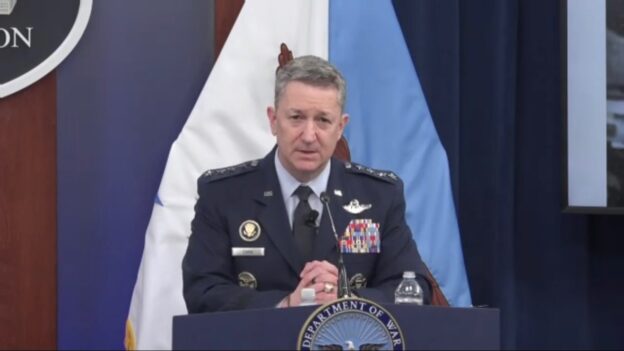
Speaking at the House Republican conference in Doral, Florida, President Donald Trump suggested the campaign against Iran might conclude relatively quickly, saying “We will ensure the routes.” The President later warned that any attempt by Iran to halt oil flows through the Strait of Hormuz would trigger a far stronger response. “If Iran does anything that stops the flow of Oil within the Strait of Hormuz, they will be hit by the United States of America twenty times harder than they have been hit thus far.” This was reiterated by General Caine when asked at a press conference Tuesday morning, when it was safe to do so, the U.S. would ensure safe passage. Development Finance Corporation CEO Ben Black, said, the “DFC is here to provide support and stability in order to ensure there are minimal disruptions to operations and markets,” and “DFC’s Political Risk Insurance and Guaranty products will help ensure commerce, capital, and energy can operate at capacity during the ongoing conflict.”

Battlefield Signals and the Oil Market

Defense officials say U.S. forces have struck more than 5,000 targets inside Iran, focusing primarily on missile systems, defense industrial manufacture, drone infrastructure, and nuclear-related facilities.The nuclear dimension of the conflict also remains central to Washington’s strategic rationale. During negotiations before the escalation, U.S. envoy Steve Witkoff said Iranian negotiators acknowledged that Iran possessed enough highly enriched uranium that, if further enriched to weapons-grade levels, could theoretically produce material for roughly eleven nuclear weapons.

Despite the numbers, and official statements daily that today is the biggest day, there should be caution that the effectiveness of the strikes will take time to fully evaluate. Analysts at the National Geospatial-Intelligence Agency typically require about a week to produce a comprehensive battle-damage assessment, meaning early claims about the impact of strikes remain preliminary. It could take a week from the final hit to know with certainty that shipping can be secured.

Mines, Missiles and Maritime Pressure

New battlefield analysis suggests Iran has explored mining the Strait of Hormuz as a way to disrupt maritime traffic. Yet mining the strait would also threaten Iran’s own exports.

U.S. Central Command reported that American forces destroyed 16 Iranian vessels capable of laying naval mines near the Strait of Hormuz, part of a broader Iranian effort to threaten maritime traffic and impose economic costs on Gulf states and the United States. Iran has historically used naval mines to threaten shipping lanes in the Persian Gulf, and even limited mining could halt commercial traffic because insurers and shipping companies typically suspend transit until mines are cleared. Iran had somewhere between 3000-5000 sea mines stockpiled, predominantly Russian and Chinese made.

Commercial maritime tracking indicates that traffic from vessels associated with Iran’s so-called “ghost fleet” has already dropped sharply in recent days.

Kharg Island and the Oil Lever

One strategic option discussed in Washington involves Iran’s primary export terminal at Kharg Island. The island handles the majority of Iran’s oil exports and represents the central node of Tehran’s energy revenue. President Trump has reportedly suggested the possibility of deploying U.S. forces. Troops could try to neutralize or seize the facility in an operation that could effectively strangle Iran’s oil exports without attempting to occupy Iranian territory.

Such a move would represent a major escalation, but it illustrates how maritime dominance alone can exert enormous economic pressure on an oil-exporting state. Even without physically closing the Strait of Hormuz, controlling the skies and having maritime control can impose similar effects, making such a plan less likely.

The challenge is that Iranian missile batteries, drones, and naval patrol craft positioned along the coast still threaten vessels passing through the narrow corridor. Until every drone is neutralized, insurers and shippers will remain shy of using the waterway.

Kurdish Regions and Internal Pressure

Western Iran may also become an arena for internal instability as the conflict continues. Several provinces along Iran’s border with Iraq including Kurdistan, Kermanshah, and Ilam have seen strikes targeting internal security forces and police facilities.

Reports indicate the Trump administration has encouraged Kurdish leaders in the region to challenge Tehran’s authority, raising the possibility that Kurdish groups could open a second internal pressure point against the Iranian government.

Analysts say Kurdish leaders seem prepared to act, but require external encouragement matched by sustained international support, while a Kurdish uprising could weaken Tehran’s internal control but would also carry risks of regional fragmentation.

Regional Escalation

The conflict widened as Iran and Hezbollah increased attacks on Israel. Israeli officials say that Iranian and Hezbollah forces launched coordinated missile barrages using cluster-munition warheads, weapons that disperse dozens of smaller bomblets over a wide area after a missile detonates at altitude. Military assessments indicate that a significant share of Iranian missiles fired during the conflict have carried cluster submunitions, complicating air-defense interception and increasing the risk to civilians. The coordinated use of such weapons widened the conflict into a broader regional confrontation involving Tehran’s proxy network.

Diplomacy and Intelligence

The war has also raised questions about Russian involvement, but Russian officials have denied sharing intelligence with Iran during the conflict. Asked whether Washington could rely on those assurances, U.S. envoy Steve Witkoff responded cautiously. “I’m not an intelligence officer, so I can’t tell you,” Witkoff said. “Let’s hope that they’re not sharing.”

Markets Waiting for the Next Signal

For traders, the decisive variable remains time. If the conflict proves short and shipping continues to move through the Strait of Hormuz, the geopolitical premium currently embedded in oil prices could fade quickly. The markets are the factor most carefully managed by the Trump administration, one can be sure it is closely watched to ensure stability, consumer confidence in the administration and at the pump, while economic statecraft combines with warfare.

The administration has a timeline on trust, if the war expands into a prolonged struggle over maritime control, insurance markets, and energy infrastructure, oil traders will begin pricing in a reality. This could be a much deeper disruption to global supply. With nearly one-fifth of the world’s oil moving through a corridor only a few miles wide, even the perception of danger in the Strait of Hormuz has proven to move markets and shape the global economy.

In modern energy markets, strategy and price now move together: every missile launch, naval maneuver, or diplomatic signal becomes another data point in the world’s attempt to predict the future. In modern warfare, the balance of power is an act of economic statecraft as much as surgical strikes.

Armistice with Accounting: The Only Gaza Deal That Holds

A failed airstrike on 9 September broke the stalemate, isolated Netanyahu and forced a deal. The only workable outcome now is an armistice with accounting: hostages for corridors, daily monitoring, and real penalties for breaches, Adel Darwish argues.

This frame grab taken from an AFPTV footage shows smoke billowing after explosions in Qatar’s capital Doha on September 9, 2025. Israel’s military said it carried out air strikes on September 9 targeting senior Hamas leaders in the Qatari capital Doha, the venue of multiple rounds of talks aimed at ending the Gaza war. (Photo by Jacqueline PENNEY / AFPTV / AFP) (Photo by JACQUELINE PENNEY/AFPTV/AFP via Getty Images)

Dates matter in the Middle East, and many dates became names of important sites and monuments. 9 September 2025 is one of them. An Israeli air strike on Hamas figures meeting in Doha did not decapitate the movement, but it detonated assumptions. It told Hamas there is no sanctuary left. It exposed the political ceiling facing Israel’s Prime Minister Benjamin (Bibi )Netanyahu. And it jolted Washington—President Trump, personally—into blunt engagement that turns fury into leverage. “Bibi, you cannot fight the whole world,” he reportedly said. That is not diplomacy by sonnet; it is the language of a dealmaker who knows when a war aim has outrun the coalition needed to sustain it. The point is not who was persuaded; it is that everyone was cornered by the same facts at the same time.

The strike changed the psychology inside Hamas. Doha had been the last place its leaders believed they could plan and bargain in relative comfort. Once you are targetable anywhere, your margin for waiting it out collapses. Hamas needed a ramp—any ramp—off a burning platform. The same date tolled another bell in Jerusalem. The operation failed to eliminate its intended targets. A failed audacious strike is costlier than no strike at all. It handed critics proof that maximalist rhetoric was outrunning results, while Israel’s allies—from Washington to European capitals—were signalling exhaustion. Several European states then moved to recognise a Palestinian state. Recognition alone does not change realities on the ground, but it sharpened Israel’s isolation just as the war was taxing its economy, its diplomacy and the patience of friends. There is a grim memory in the Israeli debate: when Israel left Gaza, Hamas, the masters of the strip, struck a nasty blow when it had the chance. That October trauma is not a talking point; it is an imprint—quietly understood across regional capitals that will not say it aloud for fear of inflaming their own streets. On 9 September, the arithmetic, not the slogans, mattered: Israel can strike back but cannot, alone, produce an end-state without partners.

Three regional actors suddenly mattered most: Egypt, Qatar and Turkey. Egypt is Israel’s consequential neighbour and Gaza’s only non‑Israeli exit. Since the 1979 peace treaty, Cairo and Jerusalem have been at peace longer than they were at war. Egyptian intelligence knows Gaza inside out and the red lines; when Cairo turns the screws, it hurts. Qatar is where Hamas leaders have sheltered, fund‑raised and politicked. Doha’s leverage is the guest list; without its facilitation, any prisoner‑hostage exchange or stabilisation plan loses the only channel the movement trusts. Turkey is NATO by treaty and Muslim Brotherhood by sympathy. President Erdoğan’s moves conduct Islamists’ calculated steps. Individually, each capital can stall. Together, they can compel. And together is how they came—first separately, then in concert on the margins of the UN—with one message to Washington: do not ask us to defend a process while you tolerate tactics that kill the process. That message landed.

This is the other half of 9 September. The American President’s anger at the strike was not moral theatre; it was transactional. He saw an Israeli move that shredded the coalition needed to stabilise Gaza, protect the hostages, keep the Red Sea from flashing over and prevent Lebanon from sliding from simmer to boil. The lesson of decades of bargaining is simple: coalitions make peace; loners make speeches. A White House that feels its coalition splintering slams the table—and did. Hence the intervention that followed: deal now. Hostages for corridors. Monitors who do monitor. Fuel that goes to bakeries and hospitals—with meters, not platitudes. Sanctions that hit violators, not bystanders. Draw the map. That is not appeasement; it is engineering.

Netanyahu’s critics say he blinked; his supporters say he bought time while keeping pressure on Hamas. Both can be true. What mattered on 9 September was that a loud, visible failure left him naked to his right flank and exposed abroad. A leader can survive one of those, not both. Add the Abraham Accords constituency—Saudi‑aligned and Gulf monarchies that built quiet bridges to Israel. They were livid, not from sudden sentimentality, but because high‑octane strikes with low‑value results wreck the scaffolding they assembled. Those capitals called Washington. Washington called Jerusalem. The conversation was not courteous.

There will be propaganda. Hamas will claim victory; Israeli ministers will claim strategic patience. But the only viable outcome after 9 September was the one that emerged: an enforceable ceasefire with named lines, frozen heavy‑weapon movements and third‑party monitoring that reports daily, not monthly; hostage releases tied to phased opening of land and sea corridors, with barcoded aid and fuel metering at hospitals and water plants; automatic penalties when either side breaches, including suspension of reconstruction funds, targeted sanctions on field commanders and a snap‑back clause for limited defensive action after repeated violations; and regional custodianship—Egypt controlling the Rafah logic, Qatar delivering Hamas compliance, Turkey corralling the Brotherhood wing—while the United States and Europeans underwrite and referee instead of sermonising. Call it a ceasefire if you like; the more honest term is armistice with accounting.

Next? The President’s trip on 12 September to Egypt and Israel will show where the leverage lies. If Cairo publishes corridor schedules and Doha announces a sequence for releases, the hard parts are locked. If Ankara turns conspicuously quiet, pressure has reached where it needed to go. Second, the exchange itself—prisoners for hostages—will test durability. If the first tranche moves cleanly and monitors’ dashboards light with real‑time data, reconstruction escrow can open. If not, penalties fire and we are back to ad hoc. Do not be distracted by triumphalism. The question is not who won. The question is whether enough of the region has decided that permanent mobilisation is more dangerous than managed restraint. On 9 September, that calculus flipped. Hamas learned there is no safe house. Netanyahu learned that bravado without outcome isolates. And the White House learned—again—that you cannot bomb your way to partners, but you can deal your way to compliance if partners know you mean it. The ceasefire is not peace; it is a platform. It buys time for the unglamorous agenda that reduces tomorrow’s violence: clearing unexploded ordnance, restoring water and clinics, reopening schools with real deconfliction and building a border regime that keeps weapons out without suffocating life. 9 September 2025 will sit in the footnotes as the day a strike failed and a deal began—not because anyone had a change of heart, but because everyone ran out of alternatives. That is how history moves here.  // end

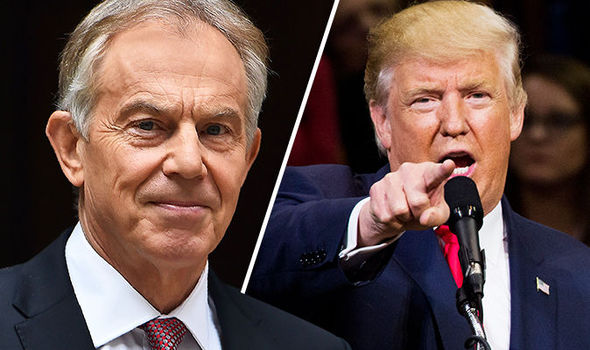
Blair, Trump, and Gaza’s Last Throw of the Dice

By Adel Darwish

Donald Trump is a man who prefers the theatre of grand deals, and his latest performance was no exception. Flanked by Benjamin Netanyahu at the White House, the former president rolled out a 20-point plan for Gaza that aspires to achieve nothing less than a ceasefire, the release of hostages, the end of Hamas rule, and the reconstruction of the shattered strip. To lend the proposal gravitas, Trump announced that he would personally chair a “Board of Peace” and that Tony Blair would serve as one of its international members. It is a formula that combines Trump’s flair for control with Blair’s reputation as an experienced fixer of intractable conflicts. Yet for all its boldness, the plan is fraught with contradictions that will test both men’s skills—and the patience of the region.

The merits of the proposal are clear enough. It offers a path out of stalemate: an immediate ceasefire, swift release of hostages, and a framework for reconstruction funded largely by Gulf monarchies eager to stabilise their neighbourhood. It speaks to weary Israelis who long for respite, to Palestinians desperate for aid, and to Western allies who demand visible progress. The inclusion of a technocratic Palestinian committee to manage daily life is an attempt to sidestep factional politics while promising the eventual return of a reformed Palestinian Authority. The deployment of an international stabilisation force, though undefined in composition, is designed to assure both sides that Gaza will not collapse into anarchy the moment guns fall silent.
There is also a method in appointing Blair. For two decades, he has cultivated relationships with Gulf rulers, Israelis, and Americans, even while being despised by many on the Arab street for his role in the 2003 controversial Iraq war. He understands the language of power, the mechanics of reconstruction, and the rhythms of diplomacy. His presence may reassure donors that their billions will not vanish into the sinkhole of corruption that has long plagued Palestinian governance. For Netanyahu, it offers a credible envoy who is not hostile to Israeli concerns; for Trump, it provides a seasoned partner who can shoulder the technical burdens of implementation.

But the liabilities are glaring. Trump’s decision to chair the Board of Peace is vintage showmanship but risks reducing diplomacy to a campaign prop. Critics will suspect that deadlines are timed to his own political calendar, and allies may hesitate to invest in a scheme so tied to one man’s fortunes. Blair’s involvement, meanwhile, revives bitter memories among Palestinians of Western intervention cloaked in paternalism. Extremist factions will seize on his role to argue that the plan is colonialism by another name. The Palestinian Authority, supposedly reformed and waiting in the wings, may find itself delegitimised before it even returns.

The practical hurdles are formidable. Disarming Hamas is easier to decree than to execute. The composition of the international security force is unresolved—will it be a UN-mandated mission, a coalition of Arab League states, or a patchwork of volunteers? Each option carries its own diplomatic baggage. The promise of Gulf funding is real, but conditional; Riyadh, Abu Dhabi, and Doha will expect political concessions in return. Even the ceasefire itself could collapse under the weight of spoilers, from rockets fired by splinter groups to provocations by Iran’s regional proxies. The clause that gives Israel carte blanche to resume military action if terms are breached may reassure Israelis but could also unravel the fragile truce at the first test.

Still, there is a deeper truth in the plan’s logic. Perfect mediators do not exist. Diplomacy is often carried out by flawed men with baggage, and by structures that are improvised and imperfect. Blair’s reputation in the Middle East is chequered, yet his access and experience remain rare commodities. Trump’s methods are brash and self-serving, yet his willingness to act boldly contrasts with the incrementalism that has too often paralysed others. If the alternative is endless war and Gaza’s continued descent into misery, then even a risky, personality-driven plan deserves consideration.

History will not indulge excuses if this opportunity is squandered. The hostages cannot wait, Gaza cannot rebuild itself, and Israel cannot forever live under fire. Whether this initiative proves to be a serious roadmap or another exercise in theatrics will depend less on its authors’ egos than on the willingness of regional actors to seize it. For now, the world can only watch as Trump and Blair, improbable partners, attempt to wrest order from chaos.

Starmer’s Recognition of a Palestinian State ?

The UK’s decision under Prime Minister Keir Starmer to recognise a Palestinian state has drawn sharply conflicting views. Supporters present it as a moral and political step towards peace; critics see it as a symbolic gesture driven by domestic party pressures rather than diplomacy. Most assessments converge on a sobering point: little will change on the ground. Pessimists, who clearly outnumber optimists, argue that recognition will not bring relief to Gazans, will not help secure the release of Israeli hostages held by Hamas, and will not push either side closer to negotiations. Nor, in the current climate of maximalism on both sides, is it likely to revive the moribund two-state solution or lead to Israelis and Palestinians living side by side in peace. Adel Darwish writes


Many observers see Prime Minister Keir Starmer’s decision to recognise a Palestinian state as a misguided step, driven less by principle than by pressure from his own back-benchers, the hard left, and Islamist voices within his party. By framing the move as a response to Israel’s actions — even suggesting recognition as a form of ‘punishment’ when he first floated the idea two months ago — Starmer has turned one of the world’s most sensitive international issues into a political gesture for domestic consumption.
Having reported on the Middle East for decades, I can say with regret that nothing in this gesture will alter the grim realities on the ground. The extreme right-wing settlers entrenched in the occupied West Bank will react in their customary reckless manner, fuelling further instability. Hamas will present it as vindication, declaring that terrorism pays. Ordinary Gazans will see no relief from their misery, and the Israeli hostages still held by Hamas will remain beyond reach. Far from advancing peace, this recognition risks deepening the conflict, because the historic causes remain unresolved and, indeed, inflamed.
The fundamental obstacle is that power on both sides is concentrated in the hands of the maximalists, not the pragmatists who dared to reach an accommodation in Oslo in 1993 between the PLO, led by Yasser Arafat,  and a more liberal Israeli government led by Yitzhak Rabin, who was later shot dead by a far-right religious nationalist law student objecting to peace in 1995. The Israeli government of  Benjamin Netanyahu’s coalition has no intention of entertaining the creation of a Palestinian state. At the same time, large segments of Palestinian opinion, and indeed public discourse in neighbouring countries, still cling to the demand of ‘a state from the river to the sea’ — code for erasing the Jewish presence altogether.
The so-called ‘two-state solution’ — now reduced to an empty slogan — was first enshrined in the United Nations Partition Plan of 1947. It was rejected outright by Egypt and her allies. Egypt, Israel’s most powerful neighbour, mobilised forces from the newly created Arab League — itself a British wartime creation to bolster Allied influence on the southern Mediterranean during the Second World War — with the clear aim of destroying the fledgling Jewish state.
Israel fought for survival and, against the odds, prevailed. The only Arab force to perform with any effectiveness was the Jordanian Army, then still largely officered and trained by the British since it was the empire’s Arab Legion. They held on to the West Bank and East Jerusalem.
Among Arabs and Muslims, a folkloric belief took hold that the whole of historic Mandate Palestine must be ‘liberated.’ Colonel Gamal Abdel Nasser transformed Egypt from a Mediterranean state with strong European ties into the spearhead of Pan-Arabism, with anti-Israel sentiment as the adhesive that held his project together.
In 1967, Nasser expelled the UN peacekeepers who had been stationed since the Suez War of 1956, blockaded Israeli ports, and massed his armies. His pretext was a water dispute involving Israel and Syria. The war that followed ended in another devastating defeat for the Arab side. Israel emerged in control of East Jerusalem, the West Bank, Gaza, Sinai, and the Golan Heights. Rather than move towards accommodation, the Arab League met in Khartoum and pushed by Colonel Nasser to issue the famous ‘Three No’s’: no peace, no recognition, and no negotiations with Israel.
Since then, the pattern has repeated itself. Neighbours attack; Israel defends, wins, and gains more territory. For Arabs, this reinforced the belief that Israel was an expansionist colonial project, a prophecy seemingly fulfilled by every lost war. For Israelis, each concession became a source of renewed danger.
When Israel dismantled settlements and withdrew from Gaza, the territory became a launch pad for rocket attacks by Hamas. When Israel pulled out of South Lebanon, Hezbollah filled the vacuum. Iran and its proxies — Hezbollah in Lebanon, the Houthis in Yemen — continue to stoke conflict, deepening Israeli fears of encirclement.
There is little evidence of a change in mindset on the Arab side. Even in moments when Arab leaders issue statements about peace, there is seldom a clear condemnation of Hamas’s terrorism-  including 7 October  2023 massacre, one of the darkest days in the conflict. Without a fundamental shift in Arab political rhetoric, state-controlled media, and public opinion — one that convinces ordinary Israelis that coexistence is truly accepted — it will be impossible for a more flexible government to  be elected by enough number of voters who believe that there is a mass  of public opinion or trends on the Arab side who truly believe in co-existence with a Jewish state .
This is the background against which Starmer’s move must be judged. Recognition at this moment does not advance peace; it entrenches the deadlock. It signals to Hamas and its allies that violence and terror reap rewards. It signals to Israeli extremists that the world will move against them no matter what, bolstering their own rejectionist narrative.
The timing could not be worse. Israeli politics are dominated by Netanyahu’s right-wing coalition, which treats the very idea of a Palestinian state as an existential threat. On the Palestinian side, governance is split between the Palestinian Authority in the West Bank, whose legitimacy is fading, and Hamas in Gaza, which rules by fear and the gun. A gesture from London, or even from European capitals, cannot bridge this chasm.
Recognition, to be meaningful, must come as the product of negotiations and mutual concessions, not as a symbolic flourish to placate domestic party factions. Otherwise, it becomes another brick in the wall of mistrust, another excuse for extremists to declare victory, and another disappointment for moderates who still hope for peace.
I wish it were otherwise. I wish one could say that Britain’s recognition of Palestine will open the way to peace. But history — a history I have witnessed at close hand across wars, uprisings, and failed summits — shows the opposite. Gestures without substance deepen division. Declarations without groundwork create illusions that shatter into violence.
If Arab and Muslim leaders were to openly and consistently condemn terrorism, if they were to shift public opinion towards genuine acceptance of Israel, if Israeli politics were to bring pragmatists back to the fore — then recognition might play its part as the final seal on a negotiated settlement. But in the absence of such changes, it is, at best, an empty slogan; at worst, it is dangerously counter-productive.

–end–

Donald of Arabia: The Art Of The Deal

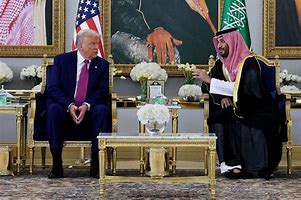
President Donald Trump’s first tour of Arabia is the start of a new regional realignment, preparing the Gulf area for a profound transformation: A new Middle East is expected to resemble the global structure, divided between advanced and developing nations. By Adel Darwish

Foreign policy as a main tool to serve national interests has always used diplomacy, both public and covert, besides other means to deal with friends and foes alike, so goes the conventional wisdom of big names in the game like Henry Kissinger (1923-2023), both Secretary of State and National Security Adviser in Republican administrations (1969-1977).

Enter Republican President Donald Trump with his Art Of The Deal, as the latest instrument in foreign policy.  The deals over energy and minerals in Ukraine to reach a ceasefire in its war with Russia have yet to yield any results, while the idea to replace the “Two-State Solution” with a (Gaza) “Real Estate” solution to the Israel-Palestine conflicts hasn’t quite taken off.

However, Mr Trump’s high-profile trip to the Persian Gulf appears to be his most successful foreign trip so far. On day one, he clinched a $600 bn trade deal ( $142 bn military equipment) with Saudi Arabia. There was also a $1.4 trillion investment the United Arab Emirates pledged in March, and on his last day of the visit a total of $200 bn deals were anoonuced.

Leaders in the region see a good political return on their hefty investment, say Western diplomats. They see President Trump’s visit as the beginning of a new Middle East realignment and as preparing the Gulf for a profound transformation. A new Middle East is expected to resemble the global structure, divided between advanced and developing nations. The clever leaders of the latter – like the modernising Saudi Crown Prince Muhammad bin Salman, following a path of modernisation and liberalisation, some observers compare with the Egyptian 19th-century modernity project started by Muhammad Ali and his dynasty.   Bin Salman has used the visit to reemphasise his desert kingdom’s role as the rising region’s central power, with Israel as its main contender.  Although some Western diplomats see Trump’s excluding Israel from the visit as a snub to its right-wing leaders, citing the absence of any mention of Gaza or Palestine in the President’s several public speeches.   Other Gulf states such as the UAE and Qatar are joining the ranks of the region’s emerging first-world players.

In contrast, older regional powers like Egypt are slipping behind. The long-standing narrative of Egypt’s military dominance is now obsolete. As the region shifts its focus to artificial intelligence and high technology, conventional armies are losing their strategic relevance. Economic pressure is also contributing to internal decay; local public opinion and social ethos have regressed to pre-First World War conditions thanks to the influence of a reactionary form of Islam. Egypt needs a miracle to catch up; without bold reform or visionary leadership, the country that had led the region for the best part of the 20th century risks entering an uncertain—and potentially grim—chapter in its history, drifting toward the instability and stagnation seen in Libya, Sudan, and war-torn states like Syria and Iraq.

Mr Trump’s surprise recognition of Syria’s new regime led by Ahmed Alshara, who was on the US terrorist list (he led branches of Al-qaeda and Islamic State ISIL) alarmed many. However, the former terrorist rehabilitation makes sense. Trump was persuaded to meet Ashara and lift sanctions on Syria by Bin Salman and by Turkey. Turkey has been pulling the strings of the Islamist groups (including terrorist organisations) in Syria since it facilitated the supplies and arms to their landlocked areas. Those Islamic rebel groups were financed by Sunni Muslim Gulf nations who were wary of Iran’s threats through its regional proxies. Toppling the Iran-allied Alwiyat Shia regime of Assad was part of their long-term strategy to isolate Shia Iran and stop its influence and financing of Shia organisations like Hezbollah in Lebanon and Houthis in Yemen.  Trump’s “renaming” of the Persian Gulf into “Arabian Gulf” was a clear message to Iran on which side he stands.   Regional powers (although not publicly declaring it) are consolidating around Israel and Saudi Arabia, the UAE, and Qatar – the first Gulf nation to have an Israel “trade mission”, the function of an embassy and a home to Hamas leaders, thus playing a central role in negotiations.  Qatar, whose leaders signed a $200 bn deal with Boeing, was the only stop where Mr Trump mentioned the Gaza Strip, saying it should be made into a “freedom zone” where he wanted the United States to be involved.  He held a big rally at the large US military base on the outskirts of Doha. Thousands of cheering service men and women were given an impromptu raise in their salary by their Commander in Chief.

With a  new Middle East emerging, placing trade, AI and advanced technology ahead of backward traditions and ideological conflict, there was one important question regarding Islam.  “How will Islamic institutions and Islamists cope with this new world order?” Asked a veteran Egyptian diplomat, adding that Islamic institutions, which have been a dominant force among the masses of populated countries bordering Israel, were the main opponent of many peace plans and for over a century an obstacle to modernisation.

In Saudi Arabia, Bin Salman clipped the Islamic clergy’s wings, disbanding the morality police and putting an end to their interference in public life. Hopefully,  as those rich nations’ (who in the past funded Islamic groups) priorities evolve, funding for Islamist groups such as the Muslim Brotherhood is likely to disappear. Ideologies that insist on Sharia as the sole basis for governance may find themselves increasingly marginalised. The region is not only being economically restructured, but it could also undergo ideological change.

End

Observations on Kuwait Parliamentary Elections 2022

Kuwaitis voted to replace over half of their MPs in the country’s 50-member National Assembly and elected two women to the legislature last Thursday (29 September 2022); Kuwaitis voted to replace over half of their MPs in the country’s 50-member National Assembly and elected two women to the legislature last Thursday (29 September 2022); while only two women were elected. only two women were elected.

The new Kuwaiti National Assembly    will include 27 new members, around a dozen of whom were part of previous parliaments. Although twenty two women stood and many of whom received a high percentage of votes, only two were elected. The previous parliament, dissolved after a stand off with government over budget and mass protests led by women, were all male since December 2020 when the only female MP lost her seat in a byelection.

The country’s Shia sect strengthened its position in the new parliament increasing their share to 18 percent ( from six to nine seats). The ultra-conservative Islamic Constitutional Movement also made good gains while the tribes MPs share declined to 46 per cent after losing six of their 29 seats. Younger candidates are on the increase, according to local media observers continuing the trend of the last parliament elected two years ago.

However, many doubt whether the new parliament will change the awkward three way lock between the ruling Sabah family, their appointed executive cabinet ( 16 members. 15 of whom can also sit in the Assembly )  and the elected 50 MPs that has often played the role of opposition. This customary deadlock with the cabinet, which has delayed the approval of a state budget for the fiscal year 2022/2023 and other economic reforms, is unlikely to get any better. The budget, which has to be voted on before November, had set spending at 23.65 billion dinars ($77.2 billion) compared with 23.48 billion for the 2021/2022 budget. But observers are not too optimistic about ending the stand-off. Political analyst Naser al-Abdali, told Reuters news agency the rise of MPs from Islamist movements in these elections will have a great impact in the next National Assembly.

It is worth noting a few other observations I made during a four day to the oil rich OPEC member country, which had the first elected parliament in the Arabian Peninsula.  

Hardly any of the candidates during the campaign bothered with regional or security issues, since all were campaigning on local demands; which, apparently, is a healthy phenomenon; however, I noticed that Middle Eastern reporters saying candidates not taking grave regional, and international issues seriously. But it is worth bearing in mind the that the parliament, in general, has little say in foreign policy or defence under the current constitution.

The slogan, or the catchphrase of this election season, endlessly repeated in the state media and copied by the independent outlets, was ‘correcting [ or readjusting] the path’ : ” تصحيح المسار… This was a bold statement indicating that the previous  ( dissolved ) parliament and the way it was performing and the process of electing it had gone wrong somehow; although there has been no change in the electoral law, this is something up to the parliament itself to address. But with an assembly with a majority opposing the government reforms, little is likely to be corrected in order to push the process on the desired path.

At the international press centre, the TV tape put on loop on the election channel was about the resistance during the 1990-1991 Iraqi occupation of Kuwait, and the ‘martyrs’ especially women murdered by the Iraqis. This was a departure from the visual and TV message in previous elections, thus the emphasis was on regional threats and security.

Since it is government controlled press centre, this is likely to reflect government and state strategic thinking in forming the next government and sending this message out as what  should be the priority and what emphasise they should put.  on the list of priorities

 speaking with senior Kuwaiti politicians and diplomats ( both  in office and in experience of long serving in office ) , they emphasise that ‘ national security is a prime issue that has been ” neglected ” for two decades . Although they did not spell out directly where is the threat coming from; western diplomats I managed to meet suggest they see now threat from Iraq and Iran as ‘ one  threat with two heads’.

Furthermore, what I managed to glean, was a strong desire (some said ‘determination ‘ )  from the top, to go back to the traditional Kuwaiti doctrine of security through a bilateral defence pact with a superpower .  They prefer this superpower to be America (since UK , the traditional ally ,  can’t afford it any more, as one veteran Kuwaiti diplomat  put it ) but they are also weary and suspicious of the USA commitment during  the Biden democratic administration , thus they hope for a republican administration and a major British role  . Some senior Kuwaiti diplomats  were critical of the regional policy ( which they saw as inseparable from national security)  of  the late Emir, Sheikh Sabah Al-Ahmad (1929-2020) who ruled for fourteen years, who carried a deep Pan-Arabism sentiment  with some unrealistic expectations (, and being  too involved, some said) in  in Pan-Arab commitment,. Some said his obsession with the idea of collective Arab interest and security through collective Arab solidarity was neither realistic nor healthy. Veteran Kuwaiti politicians who were involved in the country’s  defence and foreign policy for decades, and some were active in the resistance during Iraq’s occupation of Kuwait thirty years ago, emphasised that ‘ Kuwait must prioritise its national interests, mostly security regionally and internally’.  Given that those officials and diplomats are still in office; I take it that this must have got some official approval from the top.  This explains that lack of multiple Arab flags at the entrance of the hotel where world media has been packed into a national press centre; and also the loop tape emphasising the dangers and  ” list of martyrs ( mostly women) ” and sacrifices during the Kuwait invasion by Iraq .  However, the question remains – how much this message is taken in by ministers and officials and fully understood, especially the message of ” correcting the path ” ?

Media and many officials still mouth the old clichés… even top officials briefing the foreign press where using clichés that only a new independent third world country would raise when they hold elections for the first time . Meanwhile the secretary general of Parliament (-

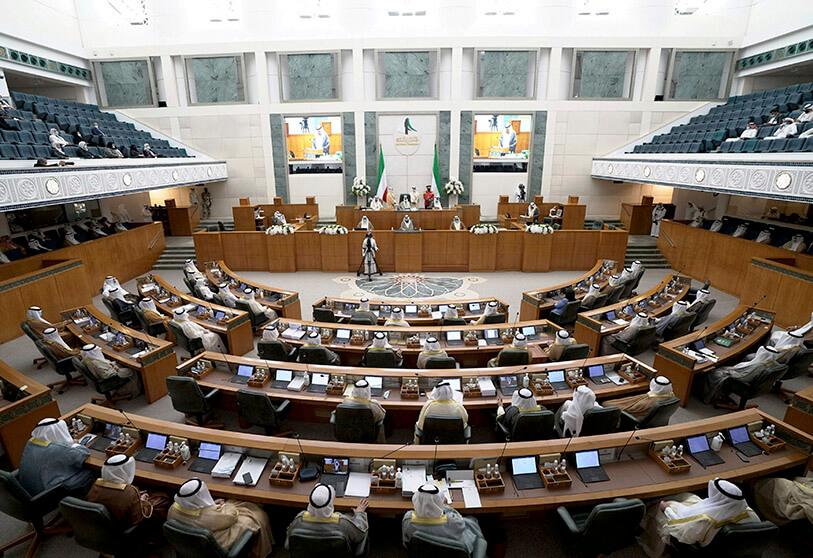
 I guess the equivalent to the  Clerk of  the House of Commons- )  was emphasising something different with his modernisation focusing on administrative and MPs services  issues. The Assembly set accommodations like the US congress, where the MPs can physically sleep in, and good space for each member’s staff and researchers. However the new MPs quarters’ design resembles portcullis House, but smaller and half a circle shape with the other half into another building  with large auditorium and modern digitalised reactive screens and other facilities including members library- and there is no traditional vote office like in Westminster. There was a talk about bringing  back a veteran parliamentarian, the  retired speaker Ahmad al-Sadoun ( speaker 1985-1999 and Feb-June 2012 ) who, in 2012,  resigned his post declaring that the elections were invalid. The hope was Sadoun would help reform the electoral law ( ie from each voter voting for a single candidate, they would give a list of preference  of four candidates ) , the idea was to combat tactical voting via bribing constituents with lavish gifts and grants Strangely there is no ceiling of how much a candidate could spend on their campaign.

Rushdie’s The Satanic Verses, 1989 revisited

Just a reminder of how the Islamists are thirsting for Salman Rushdie’s blood ( and for anyone’s who dare to think ); and how did we get there. Here are some of what I remember from various reports and reviews I published in 1988 and 1989 .

Leave a Reply

Rushdie with his  book The Satanic Verses

 The 1988 (September) published The Satanic Verses , part historical , novel ( by Viking-Penguin) was contemporary to the 1980s and the decade’s social and political events and events. It was a satirical criticism of Thatcher’s Britain, strongly anti-racist, anti-colonial and dealt with the issues of  of migrants and how they lived in cultural ghettos. The book was specifically about Britain of the 1980s. The novel’s narrative is set by turns in the London of Conservative Government that came to power in 1979 led  by Margaret Thatcher (1925-1013) which Rushdie calls in the novel ‘ Mrs Torture ‘ – this is the conscious realism part- and the second ‘ location (if we can it as such) the imaginary   ancient desert city of Jahiliyah ( interpreted as Mecca), taken by Muslims as their  holiest site. The bits relating to the latter location is  an imaginary time and place ( many interpreted as Arabia in the seventh century during Muhammad’s conflict with the merchants Mecca who were resisting his teaching as they thought it was bad for their trade. The latter location’s events was part of a dream of the two main characters; the dream of Gibreel Farishta, a movie star in Bollywood. The other was the English educated very British Saladin Shamsha. Their hijacked plane explodes over the English Channel. They survive the blast and fall from the sky and re-emerge on an English beach and mix with immigrants in London, the story unfolding in surreal sequences reflecting Rushdie’s magic realism style. Saladin later grows horns metamorphosing into a Satan-like creature, and hides with a self-isolating Muslim family in Brick Lane. Sofian the former school teachers in India reduced to helping hand in his wife, Hind’s restaurant. Sofian and Hind, seventh century Mecca aristocratic couple, are prominent figures in Muslim history.

Salman Rushdi
Rushdie used a story from Early Islamic history to symbolise the leader’s dilemma in appeasing radicals and trying to be pragmatic

Rushdie’s narrative employs a story from Islamic faith early history ( the 7th century satanic verses from the Quran 53d Chapter the al-Najm/Nagm Surah ( or swrat) or The Star Chapter . The Quran is believed by Muslims to be words of their god, Allah, delivered, as revelation, to Muhammed by the archangel Gibreer ( Gebril) . Rushdie uses this story  to symbolise the Neil Kinnock ( the then leader of HM opposition) dilemma of choosing between the radical left in the 1980s labour party and the pragmatic centre to get elected . The story of Muslim historic references to the satanic verses as recorded by Muslim historians and scholars was interpreted as a compromise that Muhammed reached with the ruling elite in Mecca to elevate three of their goddesses ( Al-lat, Al-Uzza, and Manat ) to the status of ” Allah’s daughters”,  which achieved a temporary short lived peace in Mecca. But the radical wing of the movement, when the Mohammed followers got stronger rejected that compromise based on an earlier lesson he preached them that Allah was a monolithic deity  with no siblings, offspring or relatives. In response, Muhammed then said it was Satan that put those words on his tongue hence known as the “satanic verses” by historians . The whole section about Mecca and the prophet Mahound’s mission (Muslims interpreted as it was Mohammed ) was a dream in the head of Farishta ( the name means Angel, hence Gibreel Farishta) . So, the personae, and events were all symbolic and nothing really about Islam except in the terms of the patrician of India and the revolutionary radicals against the pragmatists . Ironically, the first nation to ban the Satanic Verses was his birthplace India by the then Prime Minister Rajiv Gandhi (1944-1991), immediately after Pretoria banned it and and cancelled Rushdie’s visa. He was supposed to be visiting apartheid South Africa to give some lectures on the subject of “racism as a legacy of colonialism.” The South African regime came up with the excuse that the novel disrespected Muslims (before Muslims thought of it ) and cancelled his visa and banned the book.

Gandhi banned the book in October 1988 to attract Muslim voters before elections

Indian politics also played a large part in this, when Prime Minster Gandhi  banned the book from India in October 1988, ahead of  elections . The reason was a it had become an issue in a by-election in Tamil Nadu who the congress party candidate used it successfully to win the constituency.

The others jumped on the bandwagon ; another 20 countries followed India in banning the book and declaring that Rushdie would be banned from entering their countries. It is worth noting that hardly any of protestors who burnt the book in public bothered to read it. The novel is a gigantic effort with a massive amount  of research    ( the satanic verses event of the 7th century AD was a subject of Rushdie’s essay for his master at Cambridge ). Although the novel itself, as a work of fiction and satirising contemporary politics by drawing on real events is quite remarkable literary work, you also need a vast knowledge of Indian culture, Bollywood industry as a national institution, the history of sectarian conflict and partition of India; also detailed knowledge of Islamic scholars’ studies of the early conflicts between the revolutionary Mohammed mission and his followers on one side, and with the establishment in Mecca on on the other, and of course a detailed knowledge of British politics in the 1980s, the split in the labour party and the decline of inner cities in UK.  It is in this context and the vast complex subjects the novel dealt with, some might find book and some might find it overbearing or uninteresting. Others, familiar with Rushdie magical world, his style of writing and interested in one or more of those issues, couldn’t put the book down.

The late Iranian leader Ayatollah Khomeini (1902-1989) only targeted Rushdie after  other countries competing for influence among British Muslims ( Pakistan, Libya, Saudi Arabia, Turkey, Egypt and other lesser players ) funded groups started the protests .

In February 1989, thousands of Pakistanis attacked the US Information Centre in Islamabad, shouting “American dogs” and “hang Salman Rushdie”. Police opened fire, killing five. Radical Shia’s told Khomeini of the incident and that there was  a section in the Satanic Verses depicting an Imam exiled  in London who was plotting against the empress in his home country, which they interpreted as Rushdie’s ridiculing him. The Fatwa came in February 1989.

To understand how the protests started in UK, specifically in the towns with Muslim populations, one needs to put it in context of the time . There was a case of blasphemy tried in English courts 10 years earlier that was launched by Dame Mary Whitehouse CBE (1910-2001) . The Mary Whitehouse winning the blasphemy case ( 11 July 1977) against Gay News was ( and still is abroad) has been quoted at the time as precedent to incite agitation and protest .

Bradford Protest
In January 1989 Muslim protesters publicly burnt The Satanic Verses in Bradford , England UK

 The first burning of the book in Bradford was January 1989 (a month before Khomeini’s fatwa ) was, allegedly , in response to CPO  rejecting a petition from some self-styled Muslim committee ( later evolved into the Muslim Council of Great Britain) to ban the book and put Viking-Penguin books and Rushdie on trial for blasphemy citing Whitehouse V. Gay News ( blasphemy laws weren’t abolished in England & Wales until My 2008) .

Khomeini’s fatwa provoked horror around the Western world.

There were protests in Europe, and London and Tehran broke off diplomatic relations for nearly two years.

Although there were attempts to find a compromise with the Iranians and other Muslim countries, especially those having big trade deals, there were also many of us supporting Rushdie and urging for protecting Freedom of Speech.   

A few of us were warning about the long-term implications if we bowed to the mob calling for censorship . We organised a big event at the Conway Hall in spring 1989 when Radical Islamists had already flown abroad to Lebanon and some to Iran to meet with Hezbollah and Khamenei’s men . At the same time people like Kelim Sadiqi and the like were funded by Islamist institutions from abroad, and the six years Gulf war between Iran and Arabs and USA backed Iran that ended in summer, found a new cultural and social battle ground in UK as rivalry between Shia and Sunni heated up. Rich powerful Sunni Arab originations  & Iran’s proxies would fund and exploit the ( some true, some imaginary and some made up) grievances voiced by some British Muslims ( most of them were living in cultural ghettos isolated from mainstream British culture and society). The players included Egyptian, Turkish. Libyan and UAE intelligence too were funding Islamic centres and Islamic activists in UK . The Conway Hall event was significant as we had a long list of artists, musicians, writers and poets from various faiths ( at least five or may be six) and ethnic background. ( UK, USA, Australia, Sudan, Nigeria, South Africa, Egypt, Israel, Iran, India etc) as well as reading from the Satanic Verses we also deliberately told blasphemous jokes and verses. The faiths that weren’t present on the stage, audience from other faiths participated with their blasphemy. It was successful; and largely ignored by BBC and other left-wing media which surprisingly were more sympathetic to  Muslims than backing the principles of free expression. There are complicated reasons for such bias but I will mention two main ones : The left wing media and BBC were anti-Tory seeing them as too pro-Saudi Arabia ( the main reason Thatcher Government was a bit hesitant ) ; and the left were pushing the idea of multicultural society ( I am very much against this concept which deepens division and prevents integration and assimilation since we are multiracial or multi-ethnics but we should be all under one culture called British culture ) . During the Conway hall event; there were loud protests (but verbal and largely non-abusive) from mostly younger Muslims . When I challenged them to discuss any specific passages in The Satanic Verses that upset them, it turned out that none of them has read the book. Back in 1988-1989,  there was very few of us who were thinking of the long-term implications if the protesters got away with it . I was right. Self-censorship ( also known as political correctness) , thought police ( the police forces now investigate more of alleged ‘ hate speech’ on twitter than they do robberies and car theft ) and the cancel culture.

Francophone Egyptian philosopher Taha Hussein whose book cast doubt on the authenticity of the Quran

The worst of all:  You cannot publish a book like The Satanic Verses today or like the 1926 Taha Hussein’s “fi-el-Sher El Gaheli ” ( on pre-Islamic Poetry) . in which the great francophone Egyptian thinker and writer argued that some pre-Islamic poetry was inauthentic, and cast doubt on the authenticity of the Quran. ( by the way the Azhar – which is the de-facto official Muslim church in Egypt) tried via the courts to ban the book and charge Dr Hussein with incitement of hatred against Islam. Egyptian Courts at the time threw out the case on the ground that ‘ courts aren’t the place nor the institution to rule on academic and literary works ‘. The outcome today will be different. Not only British publishers won’t touch a book like The Satanic Verses , they wont even dare to discuss  publishing a book that the courts in Egypt praised  100 years ago… Hence when you start on the slippery slope of censorship, the entire foundation of our civilisation could be washed away when the drip-drip- of being ‘ sensitive to cultural difference ‘ (another expression for intolerance generated self-censorship) turns into a flood, then turns into a tsunami. Just think now of un-platforming, banning speakers from universities campuses, the cancel culture, the Orwellian rewriting of history and BBC & CO blacklisting guest commentators who dare to question the prevailing orthodoxy ( as dictated by the loudest lynch-mobs favoured by MSM ) . Sorry to sound gloomy, in post 1984 Britain ,but, as the cliché goes ‘ we saw it coming 40 years ago but the captain placed the spyglass on his patched eye !’

FCDO minister Wendy Morton in Evidence Session 13 July

Foreign and Commonwealth Office ( and international development) minister, Wendy Morton, (who is undersecretary of state for foreign affairs), is expected to give evidence on Tuesday 13 July (13:30 GMT) to the Foreign Affairs Committee, as the final evidence session in the committee inquiry into global health security.

The session is the final one a series of sessions that started in March this year and was followed on 30 April and 22 June as part of the committee inquiry into global health security.

Those participants are:  

  • Wendy Morton – Minister for European Neighbourhood and the Americas, FCDO
  • Darren Welch – Director of Global Health, FCDO
  • Robert Tinline – Director for Covid-19, FCDO

The Committee is expected to discuss the lessons learnt from the Covid-19 pandemic, and the prospects of reform to the World Health Organisation (WHO) following criticism of its handling of the pandemic. The session will likely cover the impact of the merger between the Department for International Development (DFID) and the Foreign & Commonwealth Office (FCO), and recent aid cuts. Additionally, the Committee is likely to explore concerns over disinformation and vaccine diplomacy, particularly in relation to Russia and China. The Committee will hear from Minister Wendy Morton, and officials Rob Tinline and Darren Welch.

Wendy Morton is the Minister for European Neighbourhood and the Americas at the Foreign, Commonwealth & Development Office (FCDO). Her responsibilities include health, global health security, multilateral health organisations including the WHO, and international organisations such as the Global Fund and GAVI. Wendy was appointed as a Parliamentary Under-Secretary of State in the FCO and DFID in February 2020. She was elected as an MP in 2015.

Tom Tugendhat (Chair) (Tonbridge and Malling), Conservative; Chris Bryant (Rhondda), Labour; Neil Coyle (Bermondsey and Old Southwark), Labour; Alicia Kearns (Rutland and Melton), Conservative; Stewart Malcolm McDonald (Glasgow South), Scottish National Party; Andrew Rosindell (Romford), Conservative; Bob Seely (Isle of Wight), Conservative; Henry Smith (Crawley), Conservative; Royston Smith (Southampton, Itchen), Conservative; Graham Stringer (Blackley and Broughton), Labour; Claudia Webbe (Leicester East), Independent.