Signals from Washington D.C., Tehran, Lebanon, and the Strait
By Kate Jones, White House Bureau Chief
Wars are often narrated through explosions, declarations, and fear. In reality, outcomes are decided by quieter forces: logistics, geography, and time.
The unfolding crisis across the Middle East illustrates this principle with unusual clarity. Military movements along the Lebanese border, the strategic signaling emanating from Tehran, and the volatility of global oil markets are all expressions of a single underlying constraint: the movement of supply across geography.
Armies move on logistics. So does the world economy. War planners and oil traders rarely speak the same language, yet strategists from Carl von Clausewitz to Alfred Thayer Mahan understood that power ultimately rests on logistics. On this rare occasion, military conflict involving Iran and global markets converges on the same constraint in parallel. This is one of those moments.
The White House is attempting to reassure markets that the current volatility reflects disruption rather than structural scarcity.
“Under President Trump’s American energy dominance agenda, oil and gas production has hit record highs and prices at the pump had dropped to multi-year lows,” said White House spokeswoman Taylor Rogers in a statement provided today. “President Trump has been clear that these are short-term disruptions. Ultimately, once the military objectives are completed and the Iranian terrorist regime is neutralized, oil and gas prices will drop rapidly again, potentially even lower than before the strikes began. As a result, American families will benefit greatly in the long term.”
Washington has begun exploring several policy options aimed at easing upward pressure on crude prices. Officials have discussed a potential temporary waiver of the Jones Act to allow greater flexibility in transporting crude between U.S. ports, and the administration confirmed that approximately 172 million barrels remain available in the U.S. Strategic Petroleum Reserve. The White House has also signaled a willingness to loosen certain restrictions affecting global supply flows, including allowing greater purchases of Russian crude in global markets, while opening limited new offshore drilling opportunities along the California coast.
In aggregate, however, these incremental policy moves have so far done little to calm markets, where crude prices continue to respond primarily to geopolitical risk surrounding the conflict with Iran and the security of maritime shipping routes. Global demand growth had slowed modestly while supply across major producers continues at historically strong levels, leaving markets structurally well supplied. For United States, the economic backdrop remains relatively strong. Recent data on employment, trade balances, housing activity, and inflation have generally surprised to the upside, with price pressures remaining comparatively contained. Under normal circumstances such macroeconomic signals might anchor market confidence. Instead, geopolitical risk surrounding the conflict with Iran and the security of maritime shipping routes is dominating price behavior in global markets. A timely resolution to the conflict would likely reinforce expectations of continued economic resilience.
Global energy markets are grappling with a different question: how to price a war whose logistical boundaries remain unclear. Volatility is not coming from macro weakness, but from logistics of uncertainty.
The Psychological Threshold: $100 Per Barrel
West Texas Intermediate crude is approaching $100 per barrel, a level traders view as a psychological threshold capable of spilling quickly into equities, inflation expectations, and broader financial volatility. Policymakers therefore face an immediate question: whether the administration is preparing for that level and how it intends to communicate confidence if the threshold is crossed.
Concerns about market stability have already surfaced within the financial system itself. As the Financial Times reported this week, the chief executive of CME Group, Terry Duffy, warned that direct government intervention in oil futures markets could risk a “biblical disaster” by undermining confidence in the mechanisms used to establish global benchmark prices. Speaking to traders at an industry conference, Duffy cautioned that attempts to influence crude prices through derivatives markets could damage the credibility of the pricing system itself. Traders had begun asking who the large sellers in the market were, reflecting growing speculation that governments might attempt to calm prices during wartime volatility.
For traders and policymakers alike, the initial phases of war involve signals, noise, and the pricing of geopolitical risk amid uncertainty about the duration of disruption. Yet the deeper uncertainty lies in the real price of oil determined by the physical movement of supply.
The United States and members of the International Energy Agency have announced the largest releases from global strategic reserves, a record 400 million barrels, intended to stabilize markets. Yet the practical mechanics remain critical: the timing and volume of those releases and the speed at which those barrels can realistically reach global markets.
Energy traders are confronting a logistical paradox. Global oil production continues, but large volumes of supply may effectively remain offline if tankers cannot safely transit key shipping corridors.
Oil that exists but cannot move. War disrupts logistics before it destroys supply. Surplus builds.
When maritime risk increases through naval confrontation, insurance restrictions, or the mere threat of sea mines, missile strikes, or drone attacks, transport slows and storage pressures begin to build across the system. Production continues while shipping stalls, leaving supply stranded in storage or held at terminals awaiting safe passage.
Eventually producers face a stark choice: shut in wells. There is no simple off switch for production without risking damage to equipment. Refineries face similar constraints. Shutting down units abruptly can take days or weeks and may require costly maintenance before operations can resume.
These are complex chemical plants. Reactors cool. Catalysts destabilize. Pressure systems depressurize. Pipelines must be purged. Heaters must be restarted slowly. Safety systems trigger.
Unlike financial markets, the physical energy system cannot simply take a day off.
Markets struggle to price the situation because two critical variables remain unknown: the volume of disruption and the duration of disruption.
Until one of those variables becomes clearer, volatility persists. Markets are now shifting from signal toward calculating volume. The future calculus of supply surplus, stranded inventories, and potential shutdowns has not yet been fully reflected in price.
For analysts mapping supply chains and physical flows across the energy system, the central challenge is visibility. Disruptions propagate through shipping routes, insurance markets, storage capacity, and refining networks. Governments, traders, and central banks increasingly rely on supply-chain tracking and commodity-flow analysis to understand how shocks travel through the global energy system.
Alternative routes are part of the calculation. Saudi Arabia maintains east–west pipeline infrastructure capable of moving crude from Gulf fields to Red Sea export terminals, bypassing the Strait of Hormuz. The United Arab Emirates operates a similar corridor through the Abu Dhabi Crude Oil Pipeline. These routes reduce vulnerability but cannot eliminate it. The majority of Gulf exports still depend on maritime transit through narrow waterways. The global energy system remains constrained by geography. To understand the moment, however, one must begin not in Washington or in oil markets, but in Tehran.
The View from Tehran
From Tehran’s perspective the confrontation with Israel and the United States is not a conventional war to be won on the battlefield. It is a contest of endurance.
Iran’s leaders understand the asymmetry of power. They cannot match American military strength directly. Instead they have constructed a strategic architecture designed to complicate any confrontation in the region. Rather than relying solely on national forces, Tehran has long cultivated a network of regional partners stretching across the Middle East. These relationships create what Iranian strategists consider strategic depth: layers of pressure that expand the geography of any conflict. Within that architecture, Hezbollah occupies a central role.
For Tehran, Hezbollah is not simply an ally. It is a forward layer of deterrence positioned on Israel’s northern frontier. Any strike against Iran carries the risk of escalation across multiple theaters. The objective is not necessarily to win a war outright. It is to transform the strategic environment in which war occurs.
Lebanon and the Logic of Battlefield Shaping
Recent Israeli strikes in southern Lebanon illustrate this dynamic. Bridges and transportation routes have been targeted near the border. Such actions may appear tactical, but their meaning is operational. Military planners describe these strikes as battlefield shaping.
Infrastructure destruction serves several purposes simultaneously. It isolates the battle space, channels enemy movement into predictable routes, and complicates reinforcement and resupply. Destroying bridges does not necessarily signal an imminent ground invasion. Such strikes may support sustained air campaigns, cross-border raids, or deterrence signaling.
Analysts therefore look beyond individual attacks and instead search for clusters of logistical indicators. Fuel trucks begin staging forward. Ammunition depots appear near the frontier. Supply convoys accumulate. Maintenance units follow armored formations.
Medical infrastructure expands as well. Field hospitals deploy. Medevac helicopters move forward. Casualty evacuation systems prepare for sustained operations. Combat engineers arrive to reshape the terrain itself—clearing mines, breaching obstacles, and constructing crossings for armored units. Artillery positions move into range while drones and reconnaissance patrols map the battlefield. Special operations units often move ahead of main forces to reconnoiter terrain and confirm targets.
Individually none of these indicators proves an invasion is imminent. Together they form a pattern. When logistics staging, reconnaissance activity, engineering preparation, artillery positioning, and maneuver forces align, analysts begin to conclude that combined arms operations may be approaching.
Logistics reveals intent. The same logic governs global energy markets.
The Parallel Battlefield: Energy
Oil production may continue uninterrupted, yet supply can disappear from markets if transport corridors become insecure. In this sense energy markets operate on their own logistical front lines. Nowhere is this more evident than in the Strait of Hormuz. Roughly one-fifth of global oil shipments normally transit this narrow corridor connecting the Persian Gulf to the wider world.
Disruption here need not involve the destruction of tankers. Insurance restrictions, naval confrontation, or the mere threat of sea mines or drone attacks can slow maritime traffic dramatically. As one Wall Street commodities veteran and chief risk officer at a major firm put it, “No missiles, no drones. That has to stop.” Until the attacks stop, the oil won’t move. Fear of potential events alone can slow maritime traffic enough to remove millions of barrels from effective circulation. Supply cannot move logistically.
Traders refer to this phenomenon as held supply. The oil still exists. In such circumstances markets struggle less to price risk accurately. Two variables remain uncertain: the volume of disruption and the duration of disruption.
The uncertainty spreads beyond energy markets. Oil prices influence inflation expectations, central bank policy, and equity valuations. A disruption in maritime logistics therefore transmits financial pressure across the global economy. Other vital products, such as fertilizer, quickly become agricultural and food supply concerns.
The Data Before the Briefing
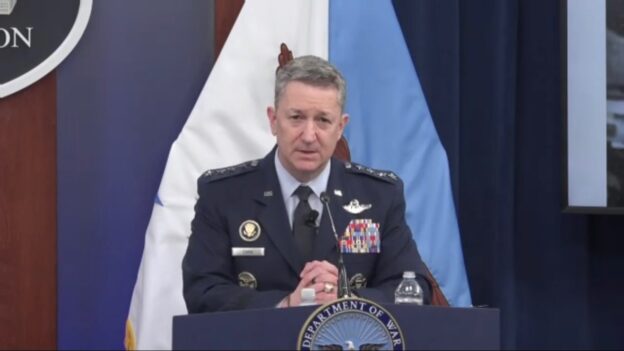
Wars begin with speeches and strikes. They become intelligible through data. The next important signal will come from Washington. The Pentagon is scheduled to brief at 0800 tomorrow morning. Energy markets, shipping insurers, commodity traders, and central banks will all be listening.
The critical questions are logistical. Can tanker escorts be provided? How quickly can maritime routes reopen? Can alternative pipelines absorb displaced supply? Have mine-clearing operations begun? The answers determine whether disruption is measured in days, weeks, or months.
Reserve releases from the International Energy Agency may soften the immediate shock. But they function primarily as a buffer or a band-aid. They do not reopen shipping lanes or restore maritime confidence. Markets therefore face a dilemma.
Oil supply exists, but its movement remains uncertain.
A trader’s observation captures the problem precisely: markets can absorb a disruption if either the volume or the duration is known. They struggle when both variables remain uncertain. Until those questions are answered, volatility will dominate. Markets can price geopolitical risk immediately. Physical supply takes longer to reveal itself. Eventually the two must meet, and when they do the price settles into reality based on data rather than fear. Markets are now shifting from signal toward calculating volume. Markets price risk first. Logistics sets the price later.
War and the Movement of Supply
The first phase of a crisis is dominated by spectacle. The second phase is governed by logistics.
Tankers moving or not moving. Pipelines operating at capacity or not. Insurance costs rising or stabilizing. These are the signals that determine whether a geopolitical confrontation evolves into a structural economic disruption.
Iran’s strategy relies on complicating logistics across a region and destabilizing global markets. Israel’s strategy seeks to restore operational clarity by isolating battlefields and degrading infrastructure. The United States pursues a broader objective. As President Trump has stated and Special Envoy Steve Witcoff has reiterated, Washington intends to eliminate Iran’s nuclear infrastructure, its long-range strike capability and its defense industrial base, all while ensuring that global trade routes remain open.
In a message posted in the early hours of Friday morning on Truth Social, President Donald Trump said the United States was “totally destroying the terrorist regime of Iran, militarily, economically, and otherwise,” describing Iranian naval, air, and missile capabilities as being rapidly degraded.
The resolution of the conflict ultimately revolves around the same principle. Power must balance. Armies must move. Supplies must move. Energy must move. Logistics win wars and restore markets. Between these forces lies the real terrain of modern conflict.